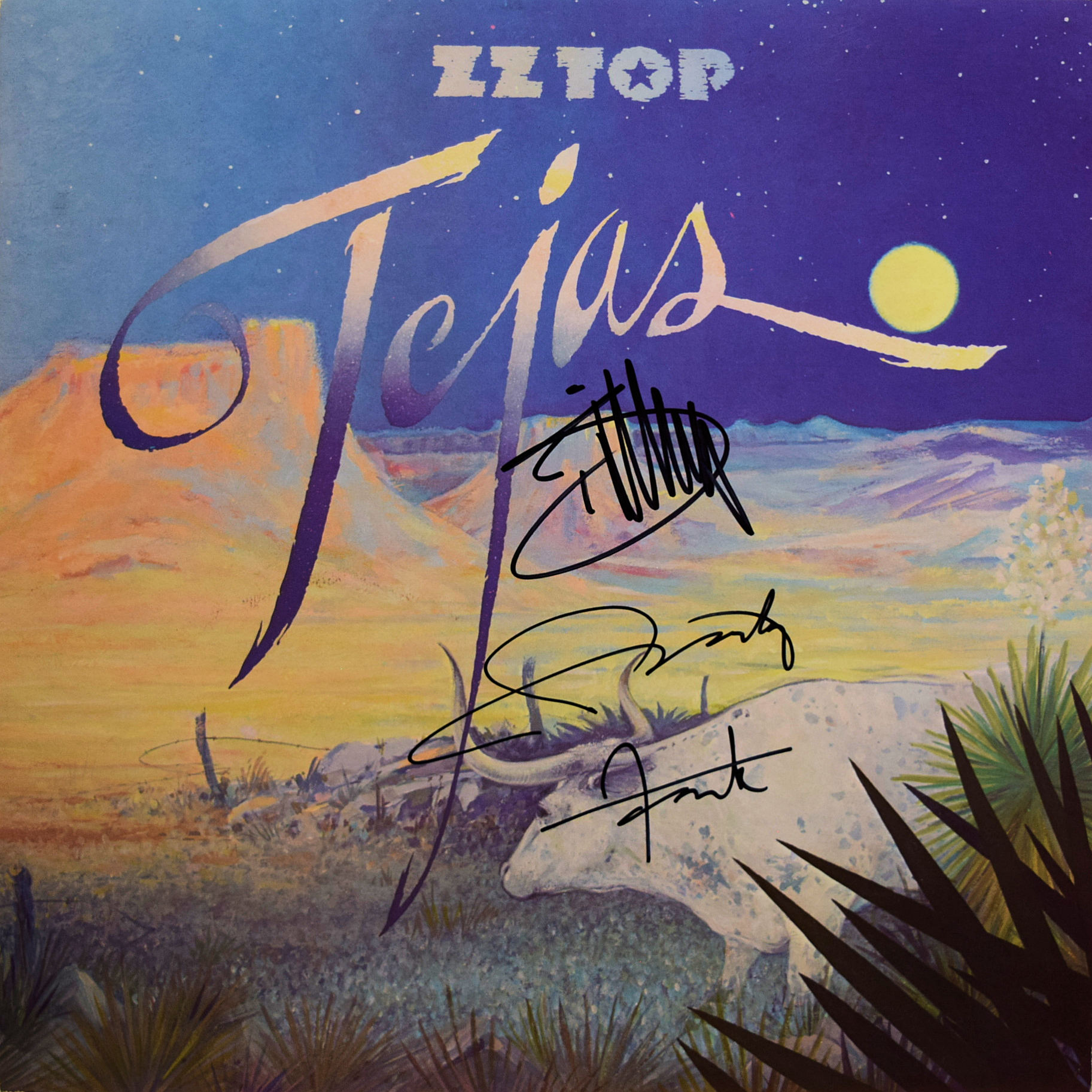
If you ask a casual fan about ZZ Top, they’re going to talk about the beards. Or the fuzzy guitars. Maybe that red Ford Coupe from the 1980s. But if you sit down with a hardcore blues-rock nerd and bring up the ZZ Top Tejas album, you’re going to see their eyes light up. Honestly, it's the "forgotten" record that actually explains everything about how three guys from Houston went from playing bars to owning MTV.
Released in late November 1976, Tejas is basically the weird, moody middle child of the band's discography. It had the impossible task of following up Tres Hombres and Fandango!, which were massive hits. Most people at the time didn’t know what to make of it. Some critics called it "too country." Others thought the band was losing their edge. But looking back at it now? It’s arguably the most experimental and atmospheric thing they ever did. In similar news, read about: When Time Stops Standing Inside the Sound of Jill Scott.
The Transitional "Wrinkle" in the Rug
Billy Gibbons has famously called Tejas a "transitional" record. You can hear it in every track. The band was moving away from the straight-up boogie-woogie of their early days and starting to mess around with studio technology. They weren't using synthesizers yet—that came later—but they were getting adventurous with how they layered guitars and messed with vocal effects.
It’s a bit of a mystery why this album gets sidelined. When the band released The Best of ZZ Top in 1977, not a single song from Tejas made the cut. Not one. That’s a bizarre move for a record that hit number 17 on the Billboard 200. It’s like the band or the label wanted to sweep it under the rug while they figured out their next move. Rolling Stone has provided coverage on this critical issue in great detail.
What’s in a Name?
The word Tejas actually comes from the Caddo language. It means "friends" or "allies," which is where the state of Texas got its name. For a band that basically acted as the unofficial ambassadors of the Lone Star State, the title was a homecoming. But the music inside? That was a departure.
Tracking the Desert Vibes
The album kicks off with "It's Only Love," and right away, you hear that "countrified" twang everyone complained about. It’s got a fiddle. It’s got a rolling, dusty rhythm. But if you skip it because it’s not "La Grange," you’re missing the point. The song transitions into this tense, harmonica-driven bridge that feels like a sunset in the middle of nowhere.
Then you get "Arrested for Driving While Blind." This is the "hit" that wasn't quite a hit. It's a classic ZZ Top boogie, but the lyrics are pure 1970s rebellion. They’re singing about "proof 102" and Jack Daniels. It’s greasy, it’s loud, and it’s probably the most "normal" song on the record.
The Weird Stuff
"El Diablo" is where things get genuinely spooky. It’s a nocturnal desert tale about a Mexican outlaw. The chord changes are weird. The vibe is haunting. Barry Cain of Record Mirror once called it one of the most haunting songs he’d ever heard, and he wasn't wrong. It feels like a precursor to the "psychedelic strut" they’d perfected on Degüello a few years later.
Then there’s "Snappy Kakkie." What even is that? It’s not quite blues, not quite funk. It’s just... ZZ Top being weird in a room together. Frank Beard’s drumming is incredibly creative here—he’s busy without being distracting.
The Mystery of the "Six Pack" Remix
If you bought Tejas on CD in the late 80s or 90s, you probably hated it.
There’s a reason for that. In 1987, Warner Bros. released the Six Pack box set. They took the first five albums and "modernized" them. They added digital reverb to the drums and messed with the EQ to make the 70s records sound like the 80s records. It was a disaster for Tejas. The original 1976 mix—engineered by Terry Manning—was dry, woody, and intimate. The remix turned it into a tinny, echoey mess.
Pro Tip: If you want to actually hear the ZZ Top Tejas album the way it was intended, look for the 2013 Complete Studio Albums box set or the original vinyl. The difference is night and day. You can actually hear the "Tubey Magic" (as audiophiles call it) in Billy’s guitar.
Why Tejas Still Matters in 2026
We’re living in an era where everyone wants "authentic" lo-fi sounds. That’s exactly what Tejas is. It’s the sound of three guys who had been on the road for years—specifically the "Worldwide Texas Tour" where they traveled with a live buffalo and a rattlesnake—and were starting to feel the exhaustion.
Dusty Hill actually took a job at the Dallas-Fort Worth airport after this album came out. No joke. The band went on a three-year hiatus, and Dusty wanted to feel like a "normal" person for a while. He put on a jumpsuit, tucked his beard in, and threw luggage. That’s the headspace this album came from. It’s the sound of a band at the end of their first chapter.
The Hidden Gems
- "Ten Dollar Man": Dusty takes the lead vocals here. It’s a ripper.
- "Asleep in the Desert": A beautiful, lonely instrumental closer. Billy plays acoustic and electric, and it sounds like the credits rolling on a Western movie.
- "She's a Heartbreaker": A total fusion of country and rock that works way better than it should.
Actionable Insights for the Modern Listener
If you’ve only ever heard "Sharp Dressed Man," you’re only getting half the story. To truly appreciate the ZZ Top Tejas album, you have to change how you listen to it.
- Seek the Original Mix: Avoid the Six Pack digital versions at all costs. The original 1976 mastering is where the soul is.
- Listen to it as a Soundtrack: This isn't a "party" album like Fandango!. It’s a road trip album. It’s meant for long drives through open spaces.
- Pay Attention to the Bass: Dusty Hill’s work on "El Diablo" and "Pan Am Highway Blues" is some of his most melodic and adventurous.
- Check out the Gear: Billy was starting to experiment with different Fender Strats and different layering techniques here. If you’re a guitar player, the tones on "Avalon Hideaway" are a masterclass in "greasy" blues.
Tejas isn't the band's most popular album, but it might be their most honest. It’s the "wrinkle" in their history that allowed them to become the legends they are today. If they hadn't taken this weird, country-blues detour in '76, they might never have found the creative freedom to reinvent themselves in the 80s.
Go back and give it a spin. It’s a lot better than the critics told you it was.
Next Step: Compare the opening track "It's Only Love" with "Tush" from the previous album. Notice how the band swapped the high-energy boogie for a more complex, layered sound. You'll hear the exact moment the "Lil' Ol' Band from Texas" decided to grow up.