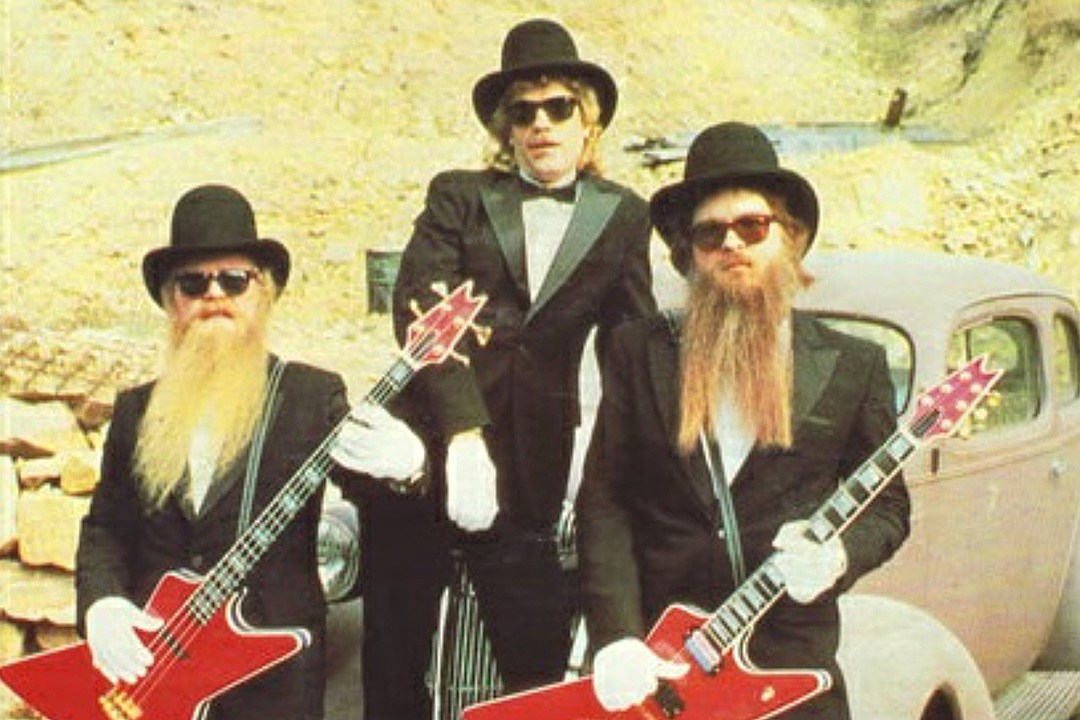
You know that growling, greasy guitar tone that sounds like it was dragged through a Houston swamp and then polished with a silk handkerchief? That’s ZZ Top. For over 50 years, the trio of Billy Gibbons, Frank Beard, and the late, great Dusty Hill defined a very specific brand of American cool. They weren't just a blues band; they were a cultural phenomenon that managed to conquer the grit of 1970s roadhouses and the neon gloss of 1980s MTV without ever losing their soul.
Honestly, it’s rare for a band to have two completely different "prime" eras. Most groups fade out or become legacy acts. Not these guys. They reinvented themselves using synthesizers and drum machines in the early '80s and somehow ended up sounding even more like themselves. When we talk about ZZ Top popular songs, we’re looking at a catalog that bridges the gap between Muddy Waters and Depeche Mode. In similar news, read about: When Time Stops Standing Inside the Sound of Jill Scott.
The 1970s: Beer Drinkers and Hell Raisers
Before the fuzzy guitars and the matching Ford Coupes, ZZ Top was a lean, mean boogie machine. They spent the early 70s touring the South in cars, writing songs about cheap sunglasses and border radio stations.
Take "La Grange," for instance. Released in 1973 on the Tres Hombres album, it’s basically the blueprint for Texas shuffle. The song is a tribute to the Chicken Ranch, a real-life brothel in La Grange, Texas, that had been operating since 1905. Billy Gibbons deliver those iconic, gutteral "haw-haw-haw" vocals over a riff that—let’s be real—owes a massive debt to John Lee Hooker’s "Boogie Chillen." It hit #41 on the Billboard Hot 100, but its cultural footprint is way bigger than that chart position suggests. Deadline has also covered this important issue in extensive detail.
Then you’ve got "Tush." This one is pure adrenaline. Dusty Hill takes the lead vocals here, and it’s a masterclass in 12-bar blues energy. Fun fact: "Tush" has a double meaning. In Texas, it could mean exactly what you think it means (the Yiddish "tushy"), but it was also slang for something lavish or "cherry," like a high-end car.
Essential Early Hits
- Waitin' for the Bus / Jesus Just Left Chicago: Technically two songs, but if you hear one on the radio without the other, it feels like a crime. The transition is seamless.
- Cheap Sunglasses: Inspired by those $20 racks of shades you’d find at gas stations while touring through the desert.
- I'm Bad, I'm Nationwide: A tribute to bluesman Joey Long, featuring some of the most "stinging" guitar work Gibbons ever recorded.
The Eliminator Era: The Synthesizer Gamble
By 1983, the music landscape had changed. Hair metal was rising, and MTV was the new kingmaker. Most 70s rock bands were looking like dinosaurs. ZZ Top? They just bought a 1933 Ford and some drum machines.
The album Eliminator is a diamond-certified beast. It sold over 10 million copies in the US alone. Why? Because they found a way to marry the blues with a 124 BPM (beats per minute) dance floor pulse. Credit where it's due: engineer Linden Hudson played a huge role in this "space-age" makeover, helping the band integrate sequencers that made songs like "Gimme All Your Lovin’" feel modern without losing the grease.
"Sharp Dressed Man" and "Legs" became the anthems of the decade. Those music videos—featuring the "ZZ Top girls" and the magical car—were in such heavy rotation that a whole generation of kids thought the band members were basically wizards who appeared out of thin air to help people out.
Beyond the Beards: Deep Cuts and Late Success
The momentum didn't stop with Eliminator. The 1985 follow-up, Afterburner, gave us "Sleeping Bag" and the surprisingly soulful "Rough Boy." People forget how good of a ballad "Rough Boy" actually is. It’s got this slow, soaring guitar solo that reminds you Gibbons is one of the best to ever do it.
Even in the 90s, they were still hitting #1 on the Mainstream Rock charts with tracks like "My Head’s in Mississippi" and "Pincushion." They never really stopped being "the little ol’ band from Texas." They just got bigger stages.
ZZ Top popular songs aren't just hits; they're part of the American landscape. Whether it's the raw crunch of "Just Got Paid" or the polished thump of "Velcro Fly," the music remains timeless because it doesn't take itself too seriously.
How to Listen Like a Pro
If you want to actually understand the evolution of the band, don’t just stick to the Greatest Hits.
- Listen to Tres Hombres start to finish. It’s the peak of their organic 70s sound.
- Compare "La Grange" to John Lee Hooker’s "Boogie Chillen." You’ll see the DNA of the blues right there.
- Watch the Eliminator trilogy of videos. It's a time capsule of 1983 aesthetics.
- Check out their 2012 album La Futura. Produced by Rick Rubin, it returns to a heavy, distorted sound that proves they never lost their edge.
The best way to experience ZZ Top is to turn it up loud. This isn't background music for a dinner party; it’s music for driving too fast on a highway or working in a garage. Go find a copy of Deguello or Rio Grande Mud and see why everyone from Jimi Hendrix to Keith Richards has praised Billy Gibbons’ hands. The beards might be the trademark, but the tone is the truth.