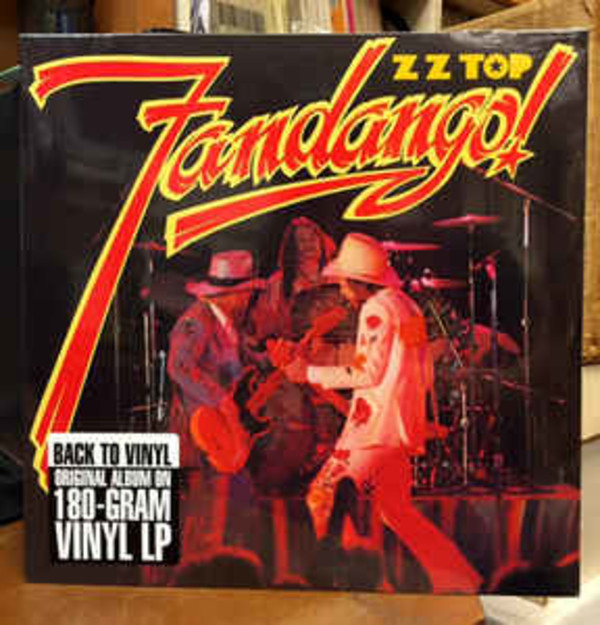
You know that feeling when you're driving through West Texas at midnight and the radio starts picking up a signal from across the border? That’s basically the spirit of Fandango!. Released in 1975, it’s arguably the weirdest record in the ZZ Top catalog. It isn't a full studio album. It isn't a full live album. It’s a Frankenstein’s monster of greasy blues and high-octane boogie that somehow managed to sell over a million copies.
Most people remember it for "Tush," the song that pretty much paid for Billy Gibbons’ car collection. But if you look at the ZZ Top Fandango songs as a whole, you see a band trying to capture lightning in a bottle while they were still young, hungry, and relatively beard-free.
The Chaos of the Live Side
The first half of the record is a total curveball. It was recorded live at The Warehouse in New Orleans on April 12, 1974. Why did they do it? Billy Gibbons later admitted they just had the "live capture" in the can first and decided to run with it. It starts with "Thunderbird," a song that actually got them sued. The Nightcaps, a Dallas band from the 50s, wrote the original. ZZ Top basically played it note-for-note and registered the copyright because the original guys never did.
Then you’ve got "Jailhouse Rock." It’s Elvis, but it sounds like it was dragged through a swamp. Dusty Hill takes the lead vocals here, and honestly, his voice has that perfect high-register grit that balanced out Billy’s low-end growl.
That Massive Nine-Minute Medley
Then there’s the "Backdoor Medley." It’s nearly ten minutes of the band just vamping. It weaves through "Backdoor Love Affair," "Mellow Down Easy," and "Long Distance Boogie." Some critics hated it. They called it "a mess." But if you’re a fan of Frank Beard’s drumming, this is where you hear him really holding the floor. It’s loose. It’s sloppy in the right way. It feels like a bar fight that turned into a party.
Why the Studio Side Hits Differently
Flip the record over and everything changes. The production gets tight. This is where the ZZ Top Fandango songs transition from a rowdy club vibe to the "Little Ol' Band from Texas" sound that would eventually conquer MTV.
"Nasty Dogs and Funky Kings" is the opener on Side B. It’s only two and a half minutes long, but that riff is thick enough to chew on. Billy’s guitar tone here—achieved through a combination of vintage Pearly Gates (his 1959 Gibson Les Paul) and whatever secret sauce producer Bill Ham was cooking—is basically the blueprint for southern rock.
The Mystery of Mexican Blackbird
Then there's "Mexican Blackbird." Honestly, it’s a bit of a weird one. It’s a shuffle about a lady in a border town, and it features a vocal delivery from Billy that sounds almost like a cartoon character. It hasn't aged perfectly in terms of lyrical content, but musically, the slide guitar work is some of the most "tasty" stuff Gibbons ever put on tape.
The Radio Legacy of "Heard It on the X"
You can't talk about this album without mentioning the "border blasters." Back in the day, stations like XERF and XERB broadcast from Mexico with massive 150,000-watt transmitters. They were so loud they could be heard in 44 states. They played everything from preachers selling goat-gland cures to the rawest blues you could imagine.
"Heard It on the X" is a love letter to that era.
- It features Dusty and Billy trading lines, which they didn't do often enough.
- The tempo is breakneck.
- It captures the exact moment when the band's influences (blues and R&B) met their future (hard rock).
The Ten-Minute Masterpiece: Tush
And then, there’s "Tush." It’s the final track. Legend has it they wrote it during a soundcheck in Florence, Alabama, in about ten minutes. They were playing in a rodeo arena with a dirt floor.
Dusty Hill just started shouting about looking for some "tush," which had a double meaning in the South back then. It meant "deluxe" or "plush," but also... well, you know. It’s a simple 12-bar blues in G. Nothing fancy. But that opening slide lick is one of the most recognizable moments in rock history. After Dusty passed away in 2021, the band started playing this song with a recording of his vocals as a tribute. It’s the definitive Dusty Hill moment.
The Controversy of the "Six Pack" Remix
If you bought the CD version of Fandango! in the late 80s or early 90s, you probably hated it. For some reason, the band’s management decided to remix the album with 80s-style digital drums to make it sound more like Eliminator. It was a disaster. It sounded thin, echoey, and completely wrong.
Thankfully, the 2006 remaster restored the original Terry Manning mixes. If you're going to listen to these songs today, make sure you're hearing the original analog-style mix. The difference is night and day. The original has "weight." The remix sounds like a toy.
How to Actually Experience Fandango Today
If you really want to understand why these songs matter, don't just put them on a playlist. Try this instead:
- Listen to Side B first. If you aren't into the live medley, the studio tracks are much more accessible and show the band at their peak technical prowess.
- Check out the Nightcaps' version of Thunderbird. It’s worth hearing where the DNA of that song came from before ZZ Top "borrowed" it.
- Watch the 1980 Capitol Theatre footage. The 2006 expanded edition includes live tracks from 1980. They are much higher quality than the 1974 recordings on the original album and show how much the band evolved in just six years.
- Focus on the bass lines. On tracks like "Balinese," Dusty Hill isn't just playing root notes; he's dancing around Frank Beard’s kick drum. It’s a masterclass in trio dynamics.
The ZZ Top Fandango songs aren't just a bridge between their early blues days and their 80s synth-pop era. They are the sound of a band that didn't care about "concepts" or "perfection." They just wanted to boogie.