Zurich is weird. People think it’s just a vault for gold and a place where trains run with terrifying precision. They aren't wrong, but they're missing the point. If you only look at the surface, you’ll see expensive watches and a lot of bankers in navy suits. But honestly? Zurich places of interest are actually about the tension between "Old World" Protestant work ethics and a surprisingly gritty, industrial creative scene that most tourists walk right past because they’re too busy staring at the price of a coffee on Bahnhofstrasse.
You’ve got to understand the vibe here. It’s a city that stayed neutral while Europe burned, which means the architecture isn't just "pretty"—it’s a continuous timeline stretching back centuries without the interruption of bombs. But then you have places like Zürich West, where they’ve turned old shipping containers and viaducts into the coolest spots in the country. It’s this weird mix of pristine lake water and rusted steel.
The Classics Everyone Goes To (And Whether They’re Worth It)
Most people start at the Grossmünster. You can’t miss it. Those twin towers are basically the logo of the city. Legend says Charlemagne discovered the graves of the city’s patron saints here. It’s heavy, Romanesque, and serious. If you climb the tower, your legs will burn, but the view of the Alps is legit.
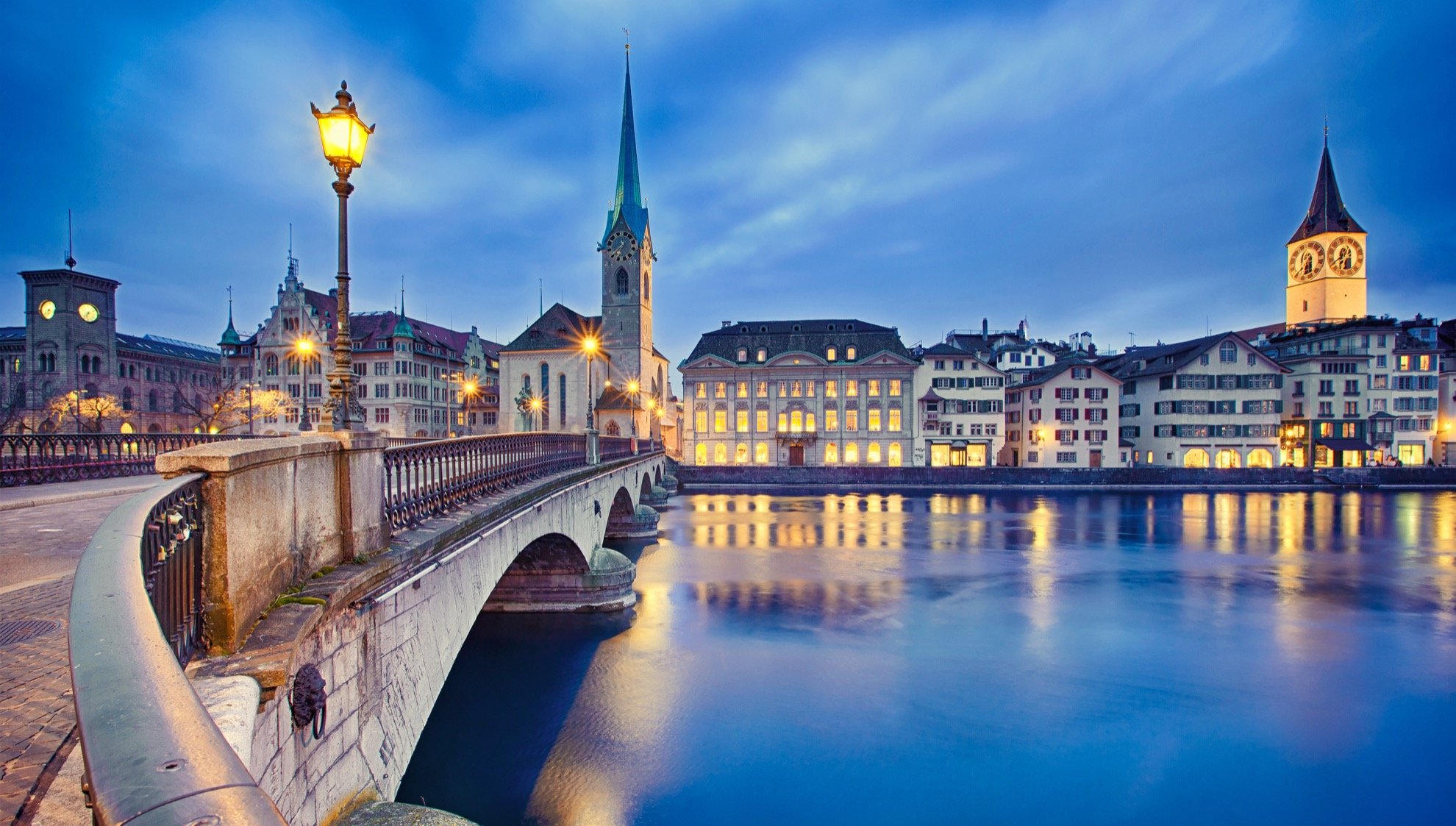
Right across the river is the Fraumünster. From the outside, it looks like just another church. But go inside. The stained glass windows by Marc Chagall are genuinely moving, even if you aren't religious. The colors are so vivid they feel like they’re vibrating against the old stone. It’s a quiet, reflective contrast to the chaos of the shopping streets nearby.
Then there’s Bahnhofstrasse. It’s one of the world's most expensive shopping avenues. Is it a "place of interest"? Sure. Should you spend your whole day there? Probably not unless you have a five-figure budget for a timepiece. It’s better to duck into the side streets of the Altstadt (Old Town). This is where the real texture of Zurich lives. Narrow alleys, hidden fountains—Zurich has over 1,200 of them—and medieval houses that lean over the cobblestones.
The Zurich Places of Interest Nobody Tells You About
If you want to see where the city actually breathes, you have to leave the center. Zürich West is the former industrial heart. It used to be all about shipbuilding and engines. Now? It’s the home of the Freitag Tower. This thing is made of 19 stacked, rusted shipping containers. It sounds ugly. It’s actually iconic. You climb to the top, look out over the railway tracks, and realize Zurich isn't just a postcard. It’s a working, evolving machine.
Nearby is the Im Viadukt. They took an old railway viaduct and built shops, cafes, and a massive market hall into the arches. It’s brilliant. You can grab a piece of local Bergkäse (mountain cheese) and watch the trains rumble overhead.
The Lake and the "Badi" Culture
You cannot understand Zurich without understanding the Zürichsee. The lake is the city's soul. In the summer, the "Badi" (public baths) are the center of the universe. Places like Frauenbad Stadthausquai (women only during the day) or Flussbad Oberer Letten are where everyone goes to jump into the Limmat river.
The water is clean. Like, remarkably clean. You can see the bottom. It’s one of the few global financial hubs where you can finish a board meeting and be swimming in Alpine meltwater ten minutes later. It’s a lifestyle flex that most cities can’t touch.
Uetliberg: The Local Escape
Take the S10 train. In twenty minutes, you’re on top of Uetliberg. It’s the city’s "house mountain." There’s a lookout tower that gives you a 360-degree view of the city, the lake, and the snow-capped Glarus Alps in the distance.
Most people just take a photo and leave. Don't do that. Walk the Planetenweg (Planet Path). It’s a ridge hike where the distances between models of the planets are scaled to the solar system. It’s a bit nerdy, sure, but the air up there is different. It’s crisp.
Art, Dada, and the Intellectual Undercurrent
A lot of people forget that Zurich was the birthplace of Dadaism. In 1916, at Cabaret Voltaire in the Niederdorf district, a group of artists decided the world had gone mad and responded with nonsense poetry and chaos. You can still visit it. It’s not a dusty museum; it’s a living space with performances and a bar. It represents the rebellious side of Zurich that the banks try to hide.
For the more "established" art lovers, the Kunsthaus Zürich is mandatory. It’s one of the most important art museums in Switzerland. They have an incredible collection of Alberto Giacometti’s spindly, haunting sculptures. The new extension designed by David Chipperfield is a minimalist masterpiece in itself—a huge, light-filled cube of brass and stone.
The Practical Reality of Visiting
Let’s be real: Zurich is expensive. If you walk into a place expecting a cheap lunch, you’re going to get sticker shock. A burger can easily run you $30. But there are ways around it. The tap water is some of the best in the world—don't buy bottled. Use the fountains.
The Zurich Card is actually a decent deal if you're hitting museums and using the trams. Speaking of trams, they are the circulatory system of the city. Clean, frequent, and they go everywhere. You don’t need a car. You shouldn't have a car. The city is designed to punish drivers and reward those who use the blue-and-white streetcars.
Misconceptions About the "Cold" Swiss
There’s this idea that people in Zurich are cold or distant. It’s more like... they’re respectful of your space. It’s a cultural "live and let live" vibe. If you strike up a conversation in a bar in Langstrasse—the former red-light district that is now the center of nightlife—you’ll find people are actually quite open, especially after a couple of local beers.
Langstrasse is where the city’s grit stays visible. It’s where the high-end bankers and the starving artists end up at 3:00 AM eating kebabs. It’s the most honest street in the city.
Zurich Places of Interest: Actionable Steps for Your Trip
To actually experience Zurich rather than just seeing it, you need a plan that balances the high-end polish with the local grime.
- Morning: Hit the Lindt Home of Chocolate. Yes, it’s touristy. Yes, the nine-meter chocolate fountain is ridiculous. But the museum is legitimately high-tech and you get an absurd amount of chocolate at the end. It’s worth the 15-minute train ride to Kilchberg.
- Lunch: Go to Zeughauskeller. It’s an old armory. It’s loud, crowded, and serves massive portions of Kalbsgeschnetzeltes (veal in cream sauce). It’s the quintessential Zurich dining experience.
- Afternoon: Take the Polybahn—a tiny red funicular—up to the ETH Zurich terrace. You get a great view for the price of a tram ticket, and you can wander the halls where Albert Einstein used to study.
- Evening: Head to Weststrasse in District 3. It used to be a transit road; now it’s a quiet neighborhood full of tiny, incredible restaurants and bars. Eat at Wirtschaft Neumarkt if you want something traditional but elevated.
- Late Night: If it’s summer, find a "Badi-Bar." Many of the swimming areas turn into bars at night (called Badi-Bars). Drinking a gin and tonic while sitting on a wooden pier over the dark lake water is the peak Zurich experience.
Zurich isn't a city that shouts about its greatness. It’s subtle. It’s tucked away in the courtyard of the Landesmuseum (Swiss National Museum), which looks like a fairytale castle but contains the brutal, complex history of the Swiss Confederation. It’s in the quiet bells of St. Peter’s church, which has the largest clock face in Europe (larger than Big Ben, actually).
Don't just look at the shops. Look at the lake. Look at the mountains. Look at the way the city handles the transition from 12th-century theology to 21st-century technology. That’s where the real interest lies.