Ever walked into your office and found the police rifling through your trash cans? It sounds like a scene from a gritty 70s detective flick, but for the student staffers at the Stanford Daily in 1971, it was a Tuesday afternoon. This wasn't just a local spat between "town and gown." It became Zurcher v. Stanford Daily, a Supreme Court case that basically told the American press: "You aren't as special as you think."
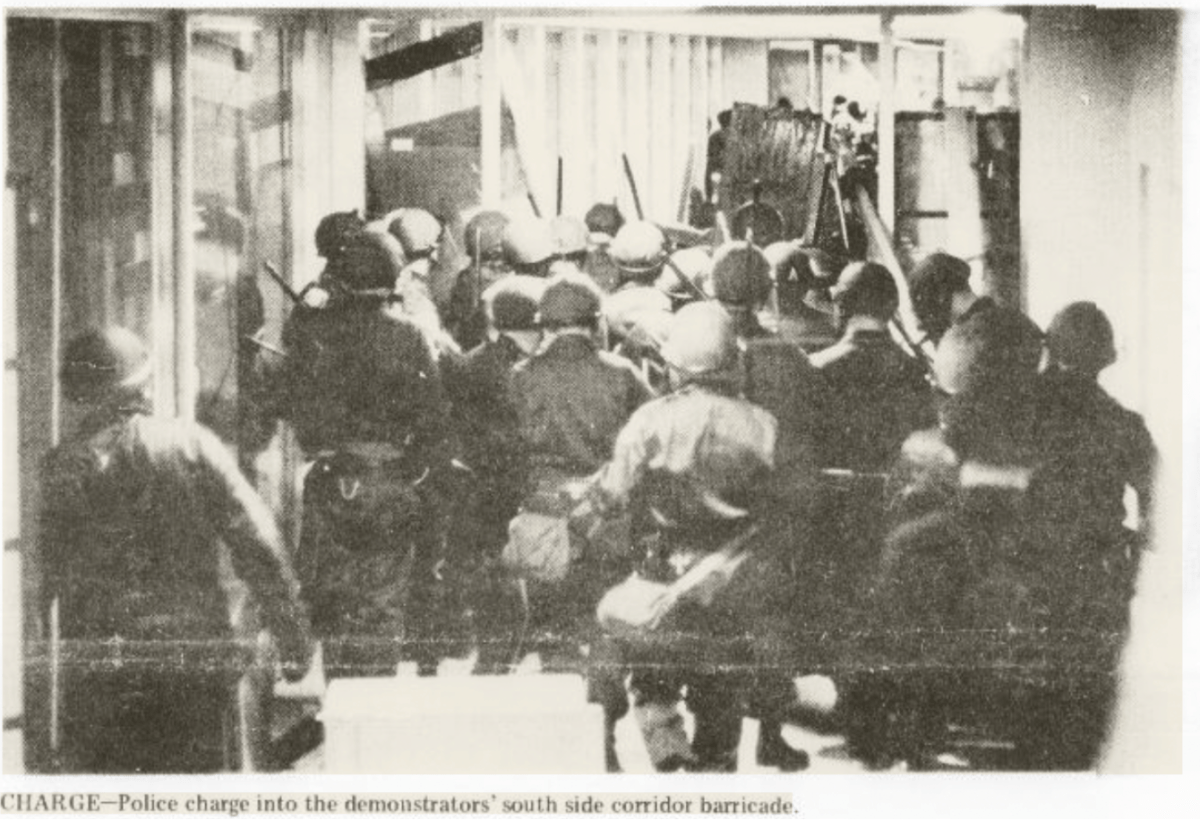
Honestly, the whole thing started with a hospital protest. On April 9, 1971, things got ugly at Stanford University Hospital. Protesters from the Black United Front had barricaded a corridor. When the police moved in to clear them out, a group of demonstrators attacked nine officers with sticks and clubs. Everyone was injured. Don't forget to check out our recent article on this related article.
The Stanford Daily covered the chaos. They published photos. Naturally, the Santa Clara District Attorney wanted to know who hit the cops. Instead of asking nicely or sending a subpoena—which gives you a chance to argue in court before handing stuff over—they got a search warrant. Four officers showed up at the newsroom and started digging.
What the Police Were Actually Looking For
The cops weren't just curious; they were hunting for the "smoking gun" photo. Specifically, they wanted unpublished negatives that might show the faces of the people who assaulted the officers. They didn't think the journalists were criminals. They just thought the journalists had the evidence. If you want more about the context of this, The Washington Post provides an informative breakdown.
During the search, officers looked through:
- Photographic laboratories
- Filing cabinets
- Individual desks
- Wastepaper baskets
They didn't find any new photos. All they found were the ones already published. But in the process, they had free reign to see confidential notes and private correspondence. You can imagine how that went over. The newspaper sued, arguing their First and Fourth Amendment rights had been trampled.
Why the Supreme Court Sided With the Police
In a 5-3 decision in 1978, the Supreme Court basically shrugged. Justice Byron White, writing for the majority, said that the Fourth Amendment doesn't give anyone "special" protection just because they aren't a suspect. If there’s probable cause that evidence of a crime is at a certain location, the police can get a warrant. Period.
The court's logic was pretty straightforward, if a bit chilling for reporters. They argued that the "critical element" in a reasonable search isn't whether the owner is a criminal, but whether there’s a "reasonable cause to believe" the evidence is there.
The Subpoena vs. Warrant Debate
This is where the legal nerds really get into the weeds. The Stanford Daily argued that for a "third party" (someone not suspected of a crime), the police should have to use a subpoena duces tecum.
Why does that matter?
- Warrants are unannounced. The police show up and start searching.
- Subpoenas give you notice. You can go to a judge and say, "Hey, this violates my source's confidentiality," or "This is too broad."
The District Court actually agreed with the newspaper. They thought warrants should be a last resort. But Justice White wasn't having it. He claimed that requiring subpoenas would cause "disappearance of evidence" and undermine law enforcement. He basically said that as long as the warrant is specific, the press's ability to "gather, analyze, and disseminate news" wouldn't be hurt that much.
The Dissent: A "Chilling Effect" is Real
Justice Potter Stewart wasn't buying White’s optimism. He wrote a pretty scathing dissent, joined by Thurgood Marshall. Stewart’s point was that newsroom searches would cause a "chilling effect."
If a source knows the police can just raid a newsroom and read every file on a desk to find one photo, they’re going to stop talking. It’s that simple. Stewart argued that the "institutional autonomy" of the press was at stake. If the press can’t keep secrets, they can’t be the watchdog the public needs.
Justice John Paul Stevens had another take. He thought the search was unconstitutional because the newspaper wasn't under suspicion. He felt that the Fourth Amendment should require the police to prove that evidence would be destroyed if they didn't use a surprise warrant.
The Aftermath: Congress Steps In
The public—and especially the media—freaked out. The idea that any "innocent third party" could have their house or office tossed by police just because they might have a piece of evidence was terrifying.
Congress actually did something about it. In 1980, President Jimmy Carter signed the Privacy Protection Act (PPA).
This law effectively overruled the Zurcher decision for the press. It says that law enforcement generally cannot use a search warrant to get "work product" (like notes or drafts) or "documentary materials" from people who intend to disseminate information to the public. They have to use a subpoena unless:
- The person is a suspect in the crime.
- There's an immediate threat to life.
- There's a reason to believe the stuff will be destroyed.
Why Does This Case Still Matter Today?
You might think a 1978 case about film negatives is irrelevant in the age of iPhone clouds and encrypted messaging. You'd be wrong.
In 2023, we saw a modern-day echo of Zurcher when police raided the Marion County Record, a small newspaper in Kansas. They took computers, cell phones, and servers. The fallout was massive, eventually leading to the death of the paper’s 98-year-old co-owner, Joan Meyer, who was understandably traumatized.
The Kansas raid showed that even with the Privacy Protection Act, local law enforcement sometimes ignores the rules—or doesn't know them. Without the precedent set by the backlash to Zurcher v. Stanford Daily, there would be even fewer roadblocks for the government.
Key Takeaways for Today
- The Constitution doesn't give "innocent" people extra protection. Under the Fourth Amendment alone, you don't have to be a suspect to be searched.
- Statutes often provide more protection than the Constitution. The PPA is what actually keeps newsrooms safe, not the Supreme Court's interpretation of the Bill of Rights.
- Third-party searches are still a battleground. In the digital age, "third parties" are often companies like Google or Apple who hold your data.
How to Protect Your Privacy
If you're a journalist or even just someone worried about government overreach, you've got to be proactive.
- Know the PPA. If you're a content creator, you're likely covered under the "disseminate to the public" clause.
- Encryption is your friend. Police can't "read" what they can't unlock.
- Legal representation. If a warrant is served, call a lawyer immediately. While you can't stop the search, they can ensure the scope isn't exceeded.
The legacy of Zurcher is a reminder that rights aren't just handed down by the courts. Sometimes, it takes a massive public outcry and an act of Congress to fix a "constitutional" mistake.
To dig deeper into how these rules apply to you, check out the Reporters Committee for Freedom of the Press or read the full Privacy Protection Act of 1980 text to see where the loopholes are. Knowledge is your best defense against an unannounced knock at the door.