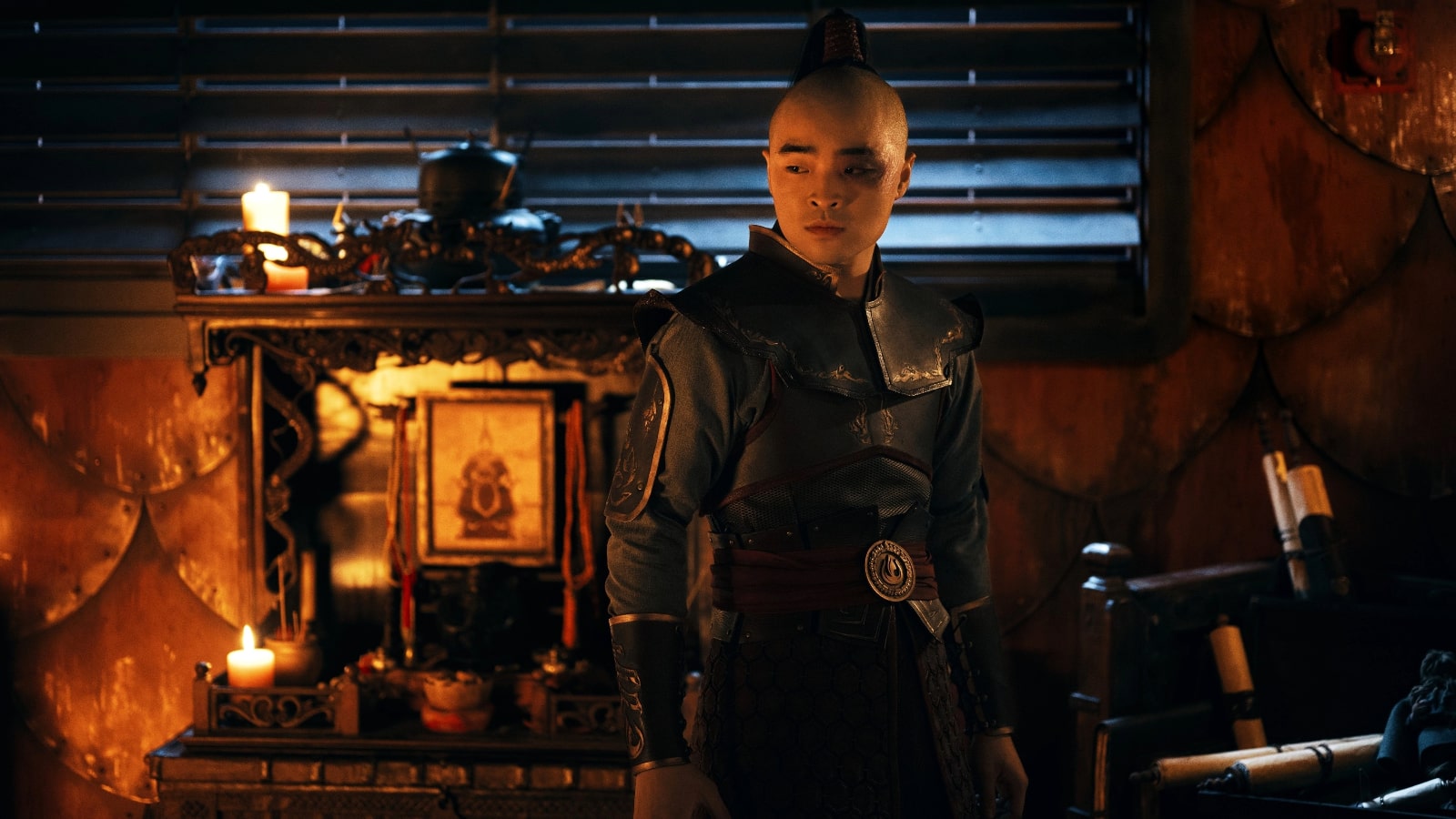
When the first trailers for the Netflix adaptation of Avatar: The Last Airbender dropped, the internet basically had a collective meltdown over the scar. It was too small. It didn't take off the eyebrow. It looked like a "light bruise." Honestly, the skepticism was high. But then the show actually premiered in February 2024, and something weird happened. Even the most die-hard haters of the remake had to admit: the zuko avatar live action portrayal might actually be the best part of the entire series.
Dallas Liu didn't just play the character; he inhabited the internal wreckage of a seventeen-year-old kid who’s been through hell.
The original 2005 animated series set a bar so high it was basically in the stratosphere. Zuko isn't just a villain; he’s the blueprint for the modern redemption arc. So, when Netflix announced they were taking another crack at it after the 2010 movie disaster, the pressure on the fire-bending prince was immense. What we got was a version that feels more "human" and slightly less "cartoonishly angry," even if he still throws those classic royal tantrums.
The 41st Division: The Change No One Saw Coming
In the original show, Zuko’s banishment is straightforward. He speaks out in a war meeting, refuses to fight his father, and gets burned. The crew on his ship are just faceless fire nation soldiers.
The live-action version pulls a total 180 here.
It turns out the soldiers on Zuko’s ship are the exact men he saved. Remember that "division of fresh recruits" the general wanted to use as a distraction/cannon fodder? In the Netflix show, those men are Zuko's crew. They are the 41st Division. When Fire Lord Ozai (played with chilling stillness by Daniel Dae Kim) banishes Zuko, he assigns these specific men to him as a cruel joke.
This changes the vibe completely. Suddenly, Zuko isn't just a lone exile; he's a leader who literally carries the weight of his "failure" in the form of the people he protected. It makes his relationship with the crew—especially when they realize why they were spared—way more emotional. It's one of the few times where the remake actually adds a layer of depth that the original didn't have time to explore in Book One.
Dallas Liu and the Physicality of Fire
You’ve probably seen the memes. "HE RAN!" Zuko’s frustrated screams are a staple of the character. But Dallas Liu brings a background in martial arts that makes the bending feel real. He’s not just waving his hands around at some CGI orange lights.
Liu trained in Japanese Shotokan and competed in the North American Sport Karate Association (NASKA) circuit before he ever put on the Fire Nation armor. You can see it in the way he moves. His fire-bending is sharp, aggressive, and clearly different from the more fluid styles of Aang or the raw power of Ozai.
During the Agni Kai with his father, the choreography is brutal. In the animation, the camera often cuts away or shows the reaction of the crowd. Netflix chose to show the moment more directly. Seeing a teenage boy actually try to defend himself against a dictator father before begging for mercy hits different in live-action. It's darker. It's sorta uncomfortable to watch, which is exactly how it should feel.
Why the Live-Action Zuko Feels Different
Some fans complain that this Zuko is "too nice" too early. In the original, he’s a straight-up jerk for most of the first season. He burns down villages and threatens old ladies.
The zuko avatar live action version leans harder into his desperation.
He’s tired. He’s been on that boat for three years. He’s a kid who just wants to go home.
The Iroh Connection
Paul Sun-Hyung Lee as Uncle Iroh is the perfect anchor for this. Their chemistry is basically the heart of the show. While the "Gaang" (Aang, Katara, and Sokka) sometimes feels a bit rushed due to the eight-episode pacing, the Fire Nation scenes are allowed to breathe.
We see the funeral of Lu Ten, Iroh’s son. We see Zuko being the only one to stand by his uncle when the rest of the royal family turned their backs. It explains why Iroh is so fiercely loyal to this "angry nephew." He doesn't just see a prince; he sees a boy who still has a soul in a family of sociopaths.
The Rivalry with Zhao
Ken Leung’s Admiral Zhao is a much more manipulative, slithering version than the animated one. He isn't just a hothead; he’s a career climber. This forces Zuko to be smarter. He has to play a political game he isn't ready for, which makes his eventual "Blue Spirit" rescue of Aang feel like a tactical necessity, not just a cool ninja moment.
Addressing the "Missing" Honor
There is a running joke among fans about how many times Zuko says "honor" in the original. In the Netflix version, he actually says it way less. The writers seemed to want to show his internal struggle rather than have him shout it every five minutes.
Is it better?
That’s debatable. Some miss the campy, high-intensity rage of Dante Basco’s original voice performance. But Dallas Liu’s version offers glimpses of the "Good Zuko" much earlier. When he’s talking to Aang about his old friend or when he shows a tiny bit of mercy, you can see the roadmap to his eventual redemption.
What to Expect in Season 2 and 3
Netflix has already greenlit the rest of the story. Season 2 is currently in production and slated for a 2026 release. This is where things get real. We’re going to see:
- Zuko Alone: If the writers follow the original arc, we'll see Zuko wandering the Earth Kingdom, starving and forced to see the impact of his nation's war first-hand.
- The Toph Factor: Miya Cech has been cast as Toph, and how Zuko interacts with the new team member is going to be a huge test for the writers.
- The Hair Change: Let's be real—everyone is waiting for the moment he cuts off the ponytail. It’s the ultimate symbol of him breaking away from Ozai's shadow.
Practical Tips for Fans Watching the Remake
If you're jumping into the zuko avatar live action world for the first time, or re-watching before Season 2 drops, keep these things in mind:
- Don't look for a 1:1 copy. The show combines plot points from multiple episodes. The "Blue Spirit" stuff is mixed with new backstory.
- Watch the backgrounds. The production design for the Fire Nation ship is incredible. It feels cramped, industrial, and lived-in.
- Pay attention to the music. While it uses themes from the original, the new score by Takeshi Furukawa swells in Zuko’s most vulnerable moments, often using more traditional Asian instrumentation to highlight his heritage.
Zuko remains the most complex character in the Avatar mythos. Whether he’s animated or live-action, his story is about the fact that your past doesn't have to define your future. Dallas Liu has big shoes to fill, but so far, he’s wearing the crown—or the exile’s topknot—with more grace than anyone expected.
To get the most out of the upcoming seasons, you should revisit the "Storm" episode in the original series and then watch the Netflix version's take on the 41st Division. Seeing those two perspectives side-by-side really highlights what this new adaptation is trying to do with Zuko's morality.
Actionable Insight: If you're interested in the stunt work, check out Dallas Liu's social media or behind-the-scenes features on Netflix. He performed many of his own stunts, and understanding the "Wushu" style of fire-bending adds a lot of appreciation to those high-speed fight scenes in the North Pole.