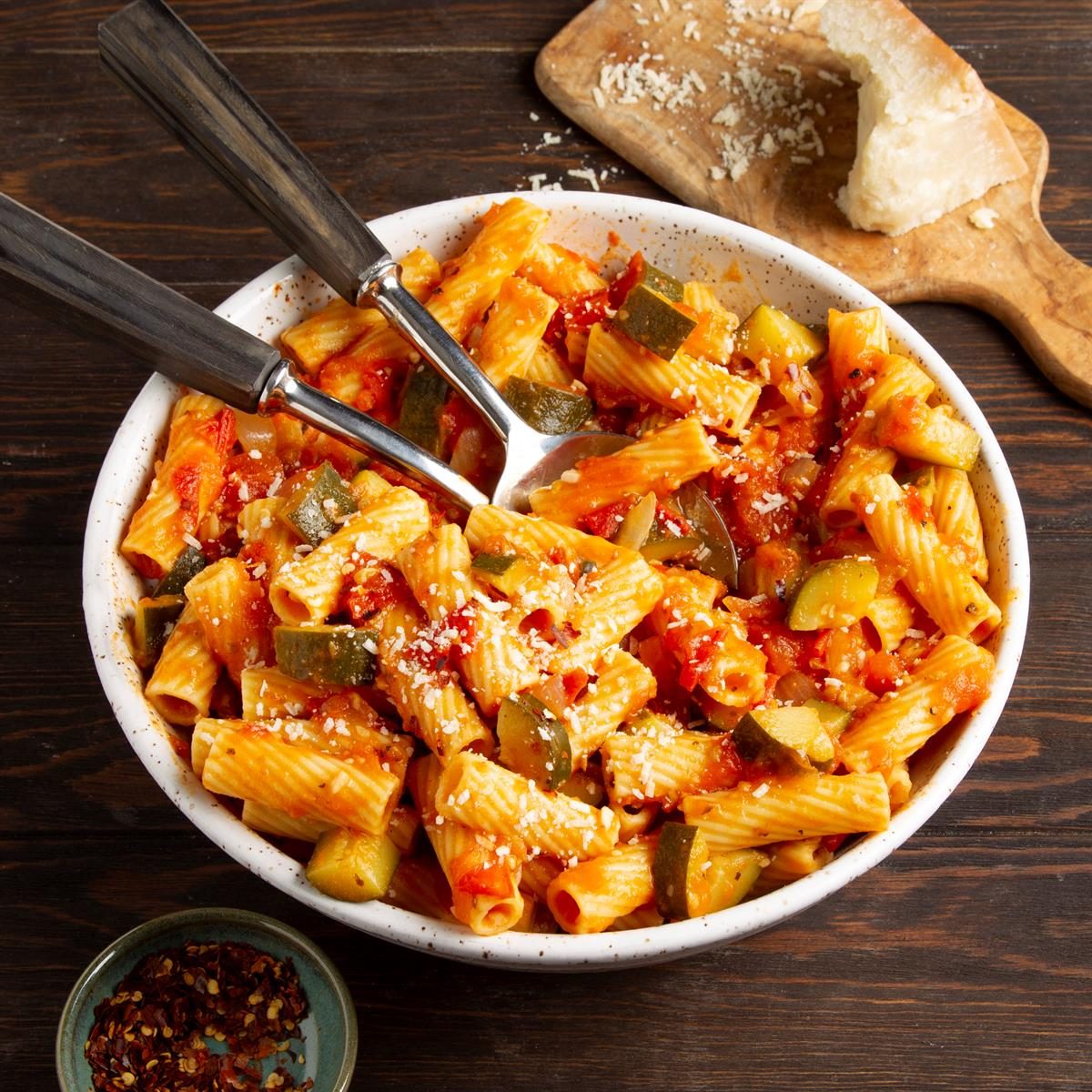
Summer pasta is a lie. Well, mostly. You see these photos of glossy, vibrant bowls of noodles that look like they were plucked from a coastal Italian terrace, but when you try to recreate those zucchini and tomato pasta recipes at home, you usually end up with a watery, bland mess. It’s frustrating. Your zucchini turns into mush, the tomatoes never quite release their soul, and the pasta water just dilutes everything until you’re left eating a soggy vegetable soup with noodles.
Honestly, it’s about physics. Discover more on a similar topic: this related article.
Zucchini is roughly 95% water. If you just toss it into a pan with some oil and hope for the best, you’re basically boiling it from the inside out. To get that deep, caramelized flavor that makes people actually want to eat their greens, you have to treat the vegetables with a bit of respect—and a lot of heat.
Why most zucchini and tomato pasta recipes fail (and how to fix it)
The biggest mistake is the "dump and stir" method. You know the one. You sauté some garlic, dump in sliced zucchini and cherry tomatoes at the same time, and wait. Within four minutes, the zucchini has released its moisture, preventing the tomatoes from blistering. Instead of a sauce, you get a puddle. Additional journalism by Vogue delves into related perspectives on the subject.
Expert chefs like J. Kenji López-Alt have long advocated for high-heat searing when it comes to high-moisture vegetables. If you want your zucchini to have that "meaty" texture, it needs to hit a hot pan and stay there without being moved for at least two minutes. You want the Maillard reaction—that browning that creates complex flavors. If the pan is crowded, the temperature drops, the steam gets trapped, and you're back to Mush City.
- Rule 1: Use a wide skillet. Surface area is your best friend.
- Rule 2: Salt the zucchini beforehand if you have time. Drawing out the moisture for 10 minutes and patting it dry makes a massive difference in the final sear.
- Rule 3: Don't be afraid of olive oil. This isn't the time to be stingy. The oil carries the flavor of the garlic and chili flakes into every crevice of the pasta.
The tomato factor: Cherry vs. Roma
Not all tomatoes are created equal for a quick pan sauce. If you’re making a slow-simmered marinara, Romas are great. But for a fast zucchini and tomato pasta, you want cherry or grape tomatoes. Why? Because they have a higher ratio of skin and seed-gel (where the glutamates live) to flesh. When they burst, they create their own emulsified sauce almost instantly.
If you use big beefsteak tomatoes, you’re just adding more water to an already watery situation. Stick to the small guys. Let them blister until the skins pop. That "pop" is the sound of flavor happening.
A better way to build your bowl
Let’s talk about the assembly. Most people boil the pasta, drain it completely, and then dump it into the veggies. Stop doing that.
Pasta water is liquid gold. It’s full of starch. When you marry that starchy water with the olive oil and the juices from the burst tomatoes, you get an emulsion. It’s the difference between noodles with some veggies on top and a cohesive, restaurant-quality dish where the sauce actually clings to the pasta.
The "Zoodle" misconception
We have to address the zucchini noodle. "Zoodles" are fine if you’re strictly low-carb, but they aren’t pasta. If you’re looking for the comfort of a real zucchini and tomato pasta recipe, use actual wheat pasta (or a high-quality gluten-free substitute like Rummo). The contrast between the al dente bite of a noodle and the soft, buttery texture of sautéed zucchini is what makes the dish work. If everything in the bowl is the same texture, your brain gets bored.
You can, however, do a 50/50 split. Mixing long strands of julienned zucchini with spaghetti is a great way to bulk up the volume of the meal without feeling weighed down. Just remember that the zucchini cooks in about 60 seconds, so toss it in at the very, very end.
Flavor boosters you’re probably skipping
If your pasta tastes "fine" but not "amazing," you're likely missing acidity or umami. Tomatoes have acidity, sure, but a squeeze of fresh lemon juice right before serving cuts through the fat of the olive oil and wakes up the zucchini.
And for the love of all things holy, use real Parmigiano-Reggiano. The stuff in the green shaker bottle is mostly cellulose (wood pulp) to keep it from clumping. It won't melt; it’ll just sit there like sand. Grate the real stuff over the top. The saltiness of the cheese balances the sweetness of the caramelized tomatoes perfectly.
- Fresh Herbs: Basil is the classic, but mint is the "secret" Italian way to serve zucchini. It sounds weird until you try it. It's incredibly refreshing.
- Anchovies: If you want a deep, savory backbone without the "fishy" taste, melt two anchovy fillets into your oil at the beginning. They dissolve completely.
- Toasted Breadcrumbs: Want texture? In a separate pan, toast some panko with garlic and oil. Sprinkle it on top. It’s the "poor man’s parmesan" and it adds a necessary crunch.
Step-by-step: The high-heat method
I'm not going to give you a rigid, numbered list that looks like a manual. Cooking is about feel.
Start by getting your pasta water going. Salt it until it tastes like the sea. While that's heating up, slice your zucchini into coins or half-moons. Get a large skillet—bigger than you think you need—and get it hot over medium-high heat. Add enough olive oil to coat the bottom generously.
Drop the zucchini in a single layer. Don't touch it. Let it brown. Flip them, then add your halved cherry tomatoes and a few smashed cloves of garlic. Maybe some red pepper flakes if you like a kick.
By now, your pasta should be just shy of al dente. Use tongs to move the pasta directly from the water into the skillet. Don't worry about the water dripping in; we want that. Toss everything together vigorously. Add a splash more pasta water. Watch as the oil and water turn into a creamy sauce that coats every strand.
Turn off the heat. This is important. If you keep cooking, the zucchini will disintegrate. Stir in your lemon juice, a massive handful of torn basil, and your cheese. Taste it. Does it need more salt? Probably. Adjust and serve immediately.
Common questions about zucchini and tomato pasta recipes
Can I use frozen zucchini? Kinda, but honestly, no. Frozen zucchini is structurally compromised. Once it thaws, it’s incredibly soft and will never get that nice sear. If you must use it, treat it more like a sauce component than a vegetable piece.
What pasta shape is best? Short shapes like penne or fusilli are great because the tomatoes and zucchini bits get trapped in the ridges. However, spaghetti or linguine feels more traditional and elegant. It really just depends on what's in your pantry.
Is it healthy? Relatively, yeah. You're getting a ton of Vitamin C and potassium from the veggies. The olive oil provides healthy monounsaturated fats. If you're worried about the carb load, just increase the ratio of zucchini to pasta.
Actionable insights for your next meal
To truly master this, focus on the temperature. The biggest hurdle is the fear of burning the garlic or the veggies. Keep the heat high for the zucchini, then drop it slightly when you add the garlic so it doesn't turn bitter.
- Prep everything first. This dish moves fast once the pasta is in the water. Chop the garlic, halve the tomatoes, and grate the cheese before you even turn on the stove.
- Save more pasta water than you think. I usually scoop out a full mug before draining. You can always add more to thin the sauce, but you can't get it back once it's down the drain.
- Finish with fat. A final drizzle of high-quality, cold-pressed olive oil over the plated dish adds a layer of raw flavor that cooked oil just doesn't have.
Forget the watery, sad vegetable pastas of the past. Focus on searing the zucchini, blistering the tomatoes, and using that starchy water to bind it all together. It’s a simple shift in technique that turns a basic weeknight dinner into something that feels like a legitimate celebration of the season. Use the freshest produce you can find—ideally from a farmer's market where the tomatoes actually smell like vines—and you'll see why this combination is a classic. Overcooking is the enemy, and salt is your best friend. Get the pan hot and get started.