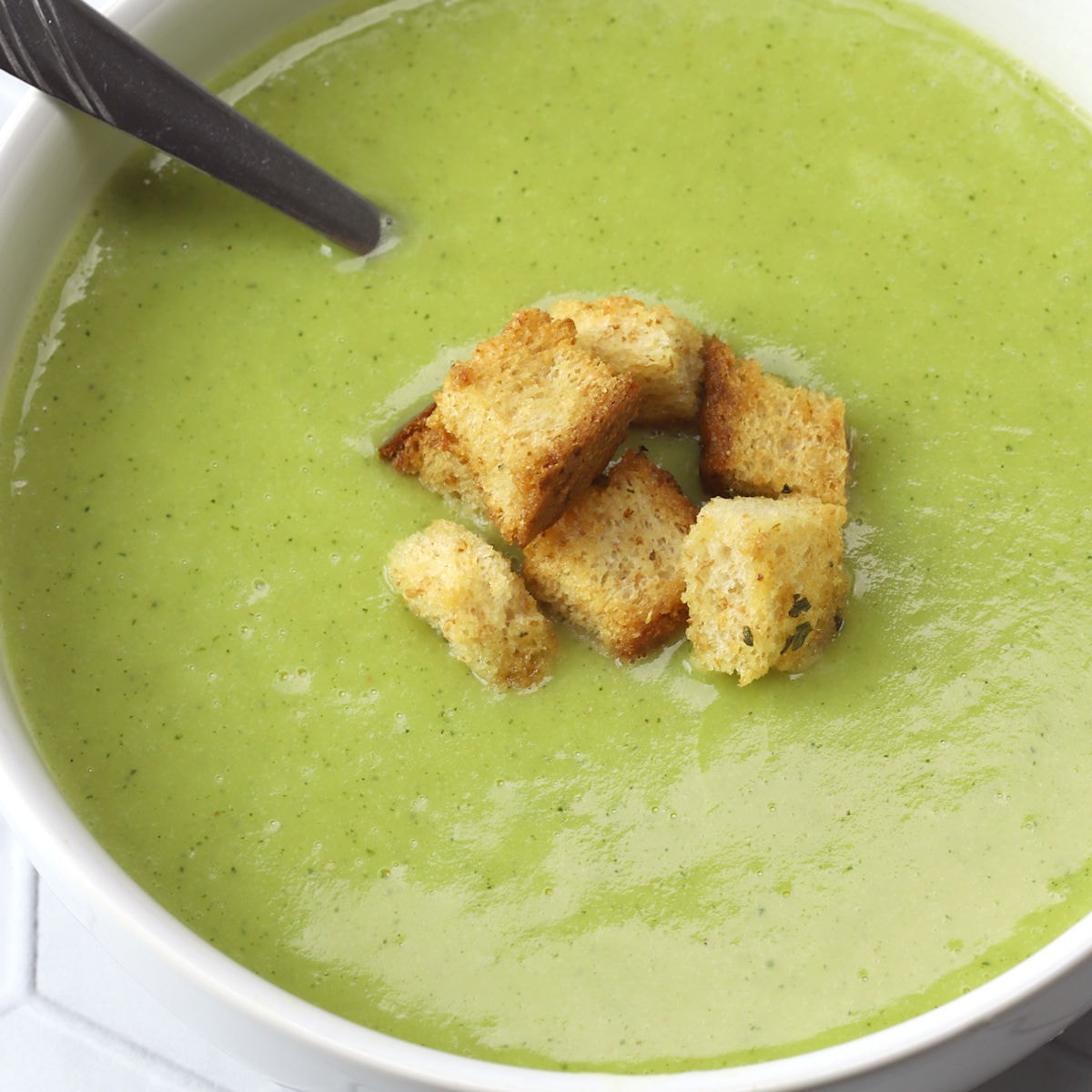
You’ve probably been there. You have a couple of sad, slightly soft zucchinis sitting in the crisper drawer and a bag of potatoes that’s starting to eye you suspiciously from the pantry. You think, "Hey, I'll make a soup." You chop them up, boil them in some store-bought broth, blitz it with a blender, and… it tastes like wet grass. Or worse, like absolutely nothing at all. It’s frustrating. Honestly, zucchini and potato soup is one of those dishes that people think is foolproof, but because both main ingredients have such high water content and mild flavor profiles, it’s actually incredibly easy to mess up.
Most recipes you find online are just too thin. They lack soul. You might also find this related story interesting: The Heaviest Inheritance.
To make this work, you have to understand the chemistry of the ingredients. Potatoes aren't just a filler here; they are the structural engineers of the bowl. They provide the amylopectin and amylose starches needed to create a creamy mouthfeel without necessarily dumping a quart of heavy cream into the pot. Zucchini, on the other hand, is basically a sponge. If you don't treat it right, it just dilutes your flavor.
The Science of Texture and Why Waxy Potatoes Fail
If you’re grabbing Red Bliss or New Potatoes for your zucchini and potato soup, you’re already making things harder for yourself. You want starchy. Specifically, you want Russets or even Yukon Golds if you want a middle-of-the-road buttery texture. As discussed in recent articles by Cosmopolitan, the effects are significant.
Why? Because starch granules in Russet potatoes swell and separate easily when cooked. When you blend the soup, those granules release and create a thick, velvet-like suspension. Waxy potatoes hold their shape too well. They result in a "gluey" or "gummy" texture if over-processed because their cell walls are stronger and they contain more molecular glue (pectin).
Think about the viscosity. A good soup should coat the back of a spoon. It shouldn't run off like water.
But there’s a catch. Zucchini is roughly 95% water. If you just boil it, you’re adding water to water. Professional chefs, like those following the techniques popularized by the likes of Gordon Ramsay or Thomas Keller, often suggest "sweating" the vegetables first. This isn't just a fancy word for frying. It’s about using low heat and salt to draw the moisture out of the zucchini cells before the liquid ever hits the pan. It concentrates the sugars. It makes the "green" flavor taste more like toasted nuts and less like a lawnmower bag.
Stop Boiling Your Flavor Away
Stop. Just stop using a massive pot of water.
The biggest mistake in making zucchini and potato soup is the liquid-to-veg ratio. Most home cooks submerge their vegetables under three inches of broth. Don't do that. You want the liquid to barely reach the top of the vegetables. You can always add more liquid later to thin it out, but you can’t easily take it away once it’s blended without simmering it for hours and destroying the fresh color of the zucchini.
And let's talk about that color.
Chlorophyll is sensitive. If you boil zucchini for forty minutes, your soup will turn the color of a military uniform. It looks unappetizing. To keep that vibrant, "Discover-feed-worthy" bright green, you should actually cook the potatoes first until they are nearly tender, and only then add the zucchini for the last 5 to 7 minutes. This keeps the zucchini’s color bright and its flavor punchy.
Aromatics are not optional
If your soup is just zucchini, potato, and water, it's going to be boring. Period. You need a base.
- Leeks are the secret weapon here. They are sweeter and more refined than yellow onions.
- Garlic should be smashed, not minced, if you’re going to sauté it for a while, so it doesn't burn and turn bitter.
- A single bay leaf adds a floral note that bridges the gap between the earthy potato and the fresh squash.
Some people swear by adding a parmesan rind to the simmering broth. It’s a classic Italian move. The rind is packed with umami (glutamates), which acts like a natural flavor enhancer. It won’t make the soup taste like cheese, but it will make it taste "fuller." Just remember to fish the rind out before you hit it with the immersion blender, or you’ll have a sticky, plastic-like mess wrapped around your blades.
The Problem With "Healthy" Versions
We see it all the time in "wellness" circles: recipes that strip out every fat source to make the soup low-calorie. Look, I get it. But vitamins A, D, E, and K are fat-soluble. If you don't have some form of fat in that zucchini and potato soup, your body isn't even absorbing half the nutrients you’re trying to eat.
Plus, fat carries flavor.
A tablespoon of high-quality butter or a swirl of extra virgin olive oil at the very end—off the heat—does something called emulsification. It changes the way the soup hits your taste buds. It rounds off the sharp edges of the salt and the acid. If you’re vegan, use a full-fat coconut milk or a handful of soaked cashews blended right in. It’s not about making it a "heavy" meal; it’s about making it a "complete" one.
Variations That Actually Work
Sometimes you want a different Vibe.
You can go the French route: heavy on the leeks, finish with chives and a dollop of crème fraîche. This is basically a green version of Vichyssoise. It’s elegant. It’s cold-weather comfort in a bowl.
Or go towards the Mediterranean. Add some cumin, coriander, and a squeeze of fresh lemon juice at the end. The acid in the lemon is crucial. Often, when a soup tastes "flat," it doesn't need more salt; it needs acid. The lemon juice brightens the zucchini and cuts through the heaviness of the potato starch.
Then there’s the "Pantry Hail Mary." If the soup still feels thin after blending, don't panic. You can whisk in a little bit of instant potato flakes (honestly, it’s a pro trick) or blend in a can of white beans. The beans add protein and a creamy texture without changing the flavor profile too much.
The Tool Matters: Immersion vs. Stand Blender
You might think it doesn't matter how you blend it. It does.
Immersion blenders (the stick kind) are convenient. They are great for a rustic, slightly chunky texture. But if you want that "liquid silk" consistency you see in high-end restaurants, you need a high-speed stand blender like a Vitamix or a Blendtec. The sheer power of those blades breaks down the vegetable fibers much more finely than a handheld unit ever could.
Safety warning: If you use a stand blender, never fill it more than halfway with hot soup. The steam expands rapidly, and if the lid is on tight, it will literally explode soup all over your kitchen. I've seen it happen. It’s not pretty. Leave the little center cap of the lid slightly ajar and cover it with a folded kitchen towel to let the steam escape.
Real Talk on Nutritional Value
Zucchini is often touted as a superfood, and while that's a bit of a marketing stretch, it is genuinely good for you. It’s high in manganese and Vitamin C. Potatoes get a bad rap because of fries and chips, but they are actually loaded with potassium—more than bananas, usually.
When you combine them in a zucchini and potato soup, you’re getting a high-fiber, high-potassium meal that is remarkably low in glycemic load compared to eating a plain potato, because the fiber from the zucchini slows down the sugar absorption.
Practical Steps to Master This Dish
Forget the long, complicated instructions. If you want to make a version of this that actually tastes like something, follow these steps:
- Sauté the base properly. Use leeks or shallots instead of just white onions. Cook them in butter or oil until they are soft and translucent, not brown.
- Cube your potatoes small. The smaller they are, the faster they cook, which means the less time the zucchini has to sit in boiling water losing its color.
- Use a "blonde" stock. Use a light chicken or vegetable stock. If the stock is too dark or roasted, it will muddy the flavor of the vegetables.
- The 5-Minute Rule. Add your zucchini at the very end. If you can poke a fork through it easily, it’s done. It doesn't need twenty minutes.
- Finish with "The Holy Trinity" of garnishes. Something crunchy (croutons or toasted pumpkin seeds), something fatty (olive oil or cream), and something fresh (mint, parsley, or chives).
If you find the soup is too thick the next day—and it will be, because the potato starches continue to hydrate in the fridge—don't just add water. Add a little more broth or even a splash of milk while reheating it on the stove. Avoid the microwave if you can; it tends to heat unevenly and can "break" the emulsion of the soup, making it look oily.
To take this a step further, try roasting the potatoes and zucchini in the oven first at 400°F until they have charred edges before putting them in the pot. This creates a "Roasted Zucchini and Potato Soup" that has a smoky, deep complexity that boiling simply cannot replicate. The Maillard reaction is your friend here. Just be aware that this will definitely change the color from a bright green to a brownish-gold. It’s a trade-off: aesthetics versus a different kind of flavor depth.
Start by checking your pantry for those Russets and get your leeks cleaned properly—they hide sand in their layers like it’s their job. Peel the zucchini if you want a perfectly smooth, pale soup, but keep the skins on if you want the fiber and the deep emerald flecks. Your choice. Regardless of the path, stop over-boiling and start seasoning in layers. That's the difference between "vegetable water" and a meal.