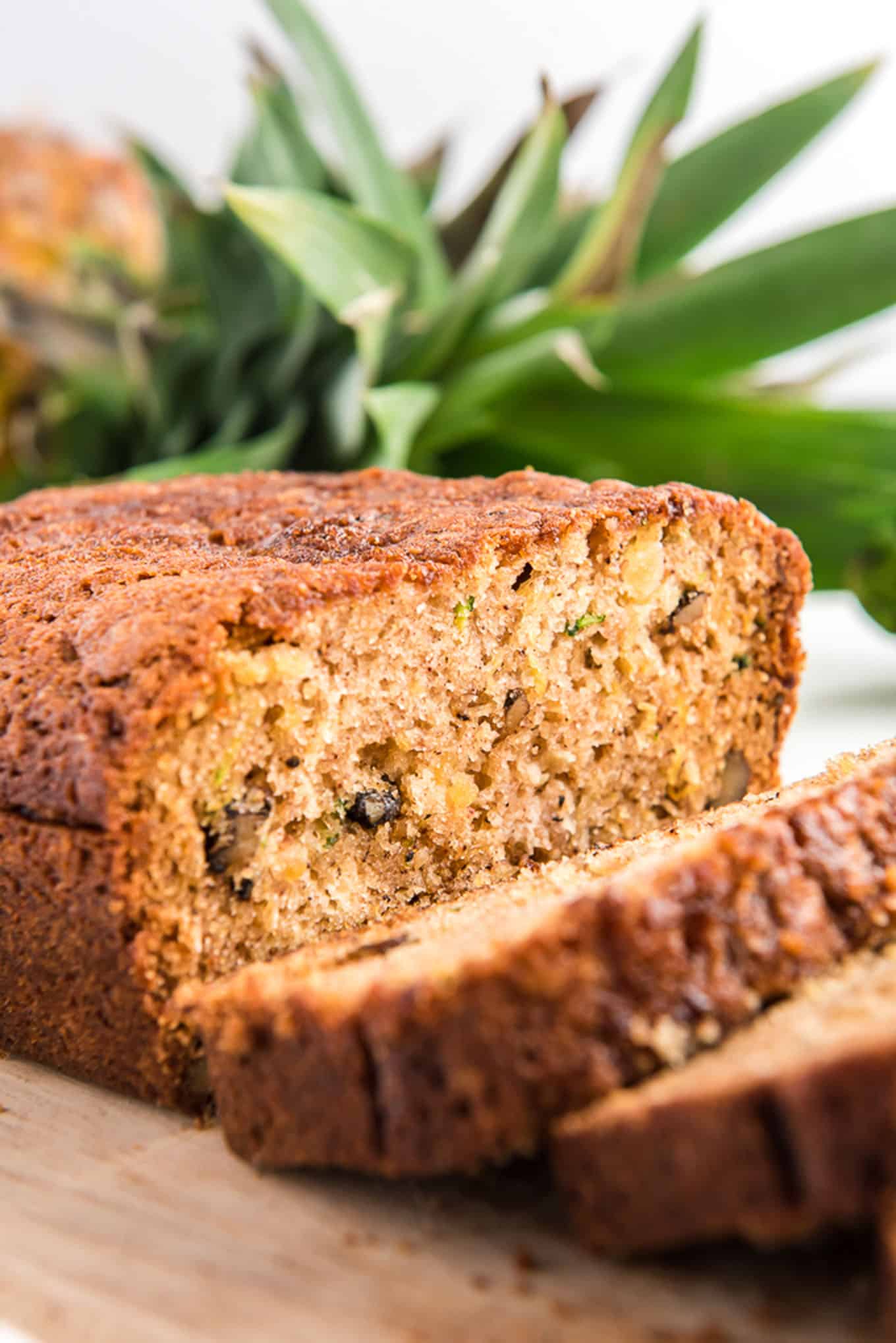
You’ve seen it a thousand times. A neighbor drops off a giant, club-shaped zucchini from their garden, and suddenly you’re staring at a vegetable that looks more like a weapon than dinner. Most people default to a standard quick bread. It’s fine. It’s reliable. But, honestly? It’s often a little dry or, worse, tastes like a faint whisper of nutmeg and nothing else. That is exactly why this specific recipe for zucchini and pineapple bread changed how I look at summer baking.
Adding fruit to a vegetable loaf sounds like a mistake. It sounds like something from a 1970s gelatin-mold cookbook that should have stayed in the archives. But it isn't. The acidity of the pineapple does something chemically to the structure of the bread that makes it almost impossible to overbake.
The Science of Moisture in Your Recipe for Zucchini and Pineapple Bread
Baking is chemistry. We know this. But what most hobby bakers miss is how pH levels affect crumb texture. Zucchini is mostly water—about 95%, according to the USDA. When you shred it and toss it into a batter, that water releases during the bake. If you don't balance that moisture, you get a "gummy" bottom or a loaf that collapses.
Pineapple introduces citric acid. This acid interacts with your leavening agents—usually baking soda—to create a more vigorous rise. It’s why this bread feels lighter than a standard, dense zucchini loaf.
It’s about the enzymes too. Raw pineapple contains bromelain, an enzyme that breaks down proteins. If you use fresh pineapple, you might actually find your bread turns into mush because the bromelain attacks the gluten structure. That is why canned crushed pineapple is the secret weapon here. The canning process involves heat, which denatures the bromelain, leaving you with the flavor and the moisture without the structural sabotage.
Why Texture Is Everything
Think about a standard muffin. It’s soft. Now think about a pound cake. It’s dense. This bread sits right in the middle. You want the zucchini to be shredded fine enough that it "melts" into the batter, but you want the pineapple bits to offer a tiny, sweet burst of resistance.
I’ve seen recipes that suggest dicing the pineapple. Don't do that. Crushed is the only way to go. You want that juice to permeate the flour.
Gathering the Goods
You probably have half of this in your pantry already. If you don’t, go get the good stuff.
- Zucchini: Medium ones are better. The massive, "oops I missed it under the leaf" zucchinis have huge seeds and tough skins. If you use a giant one, scoop out the seeds first.
- Pineapple: One 8-ounce can of crushed pineapple. Do not drain it. We need that liquid.
- The Fat: Use a neutral oil. Avocado oil is great, but plain vegetable oil works. Butter tastes better, but oil makes it moister. That's just the trade-off.
- Sugar: A mix of white and brown. The molasses in the brown sugar brings a caramel note that plays well with the tropical pineapple.
- Flour: All-purpose. Don't try to be fancy with cake flour here; it won't hold the weight of the veg.
- Spices: Cinnamon is non-negotiable. A pinch of cloves or ginger makes it interesting.
The Actual Process
First, preheat your oven to 350°F. If your oven runs hot, go 325°F. It’s better to bake it longer at a lower temp than to burn the outside while the middle is still raw batter.
In one big bowl, whisk 3 eggs. Beat them until they’re frothy. Add a cup of oil and two cups of sugar (I usually do 1.5 cups white, 0.5 cups brown). Stir in a tablespoon of vanilla. Yeah, a whole tablespoon.
Now, the star of the show: the zucchini. You need two cups of shredded zucchini. Don't squeeze the water out. I know, every other recipe tells you to squeeze it. For this recipe for zucchini and pineapple bread, we want that hydration. Dump the zucchini and the entire can of crushed pineapple (with juice!) into the wet mix.
Mixing the Dry Ingredients
In a separate bowl—yes, use two bowls, don't be lazy—sift together 3 cups of flour, a teaspoon of salt, a teaspoon of baking soda, and a quarter teaspoon of baking powder. Add a generous tablespoon of cinnamon.
Slowly incorporate the dry into the wet.
Stop. Do not overmix. If you stir it until it's perfectly smooth, you’re developing gluten. Gluten makes bread chewy like a baguette. We want it tender. Stir until you see no more white streaks of flour, then put the spoon down.
The Baking Phase
Grease two 9x5 inch loaf pans. You can use one, but it will take forever to bake and the middle might stay gooey. Two pans give you a better crust-to-crumb ratio.
Pour the batter in. It’ll be thick.
Bake for 55 to 65 minutes.
Here is the pro tip: start checking at 50 minutes with a toothpick. If it comes out with wet batter, keep going. If it comes out with a few moist crumbs, take it out.
Common Mistakes People Make
I’ve ruined a lot of bread in my time. Most people fail because they treat this like a cake. It’s not a cake. It’s a quick bread.
Mistake 1: Draining the pineapple. If you drain the juice, your ratios are off. The flour-to-liquid balance depends on that 8-ounce can't worth of syrup and fruit. If you drain it, the bread will be tough and dry.
Mistake 2: Using fresh zucchini without adjusting. If your zucchini is particularly "dry" (like it's been in the fridge for two weeks), the batter might seem too thick. Add a tablespoon of water or orange juice.
Mistake 3: Cutting it too soon. I know it smells like heaven. I know you want a slice with butter right now. Wait. Quick breads continue to "set" as they cool. If you cut it hot, the steam escapes and the rest of the loaf dries out instantly. Wait at least 30 minutes. An hour is better.
Modifications That Actually Work
If you want some crunch, add walnuts. Toast them first in a dry pan for three minutes. It changes everything.
Some people like raisins. I’m not one of those people, but if you are, golden raisins are the way to go here because they mimic the pineapple's color and sweetness.
You could even do a lime glaze. Mix powdered sugar with a bit of lime juice and zest. Drizzle it over the cooled loaf. The citrus-on-citrus action with the pineapple makes it taste like a vacation.
Storage Realities
This bread keeps shockingly well. Because of the pineapple and zucchini, it stays moist for 4-5 days on the counter if wrapped tightly in foil. It also freezes like a dream. Slice it first, put parchment paper between the slices, and throw it in a freezer bag. You can pop a single slice in the toaster whenever you want.
Why This Matters Now
In a world where we’re all trying to reduce food waste, this recipe is a king. It uses the produce you forgot about and the canned goods sitting in the back of the pantry. It’s a bridge between the seasons—summer squash meets tropical fruit.
There’s a certain nostalgia to it, too. It tastes like something a grandmother would have in a tin in the kitchen. It's humble. It doesn't need a fancy frosting or a social media-ready garnish. It just tastes good.
Actionable Next Steps for the Perfect Loaf
To get the best results with your recipe for zucchini and pineapple bread, follow these specific steps during your next bake:
- Check your leavening: Baking soda loses its punch after six months. If your box has been open since last Christmas, buy a new one. Your bread depends on that chemical reaction to stay airy.
- The Grate Size: Use the "large" holes on your box grater for the zucchini. If you use a microplane, the zucchini turns to mush and disappears. You want to see those little green flecks; they are a sign of a homemade loaf.
- The Room Temp Rule: Make sure your eggs are at room temperature. Cold eggs can seize up the oil and make the batter lumpy, which leads to uneven baking.
- The Foil Tent: If you notice the top of the bread getting too dark around the 40-minute mark, loosely drape a piece of aluminum foil over the pans. This allows the center to keep cooking without burning the sugar on the crust.
- The "Second Day" Secret: This bread actually tastes better the next day. The flavors of the cinnamon and pineapple meld together overnight. If you can resist, bake it the night before you plan to serve it.
Once the bread is completely cool, wrap it in plastic wrap and then a layer of foil. This double-insulation prevents the bread from absorbing other smells in your kitchen or fridge. If you're gifting it, a simple piece of twine and some brown parchment paper looks far more professional than a plastic bag. Stick to these basics and you'll have a loaf that people actually ask for by name.