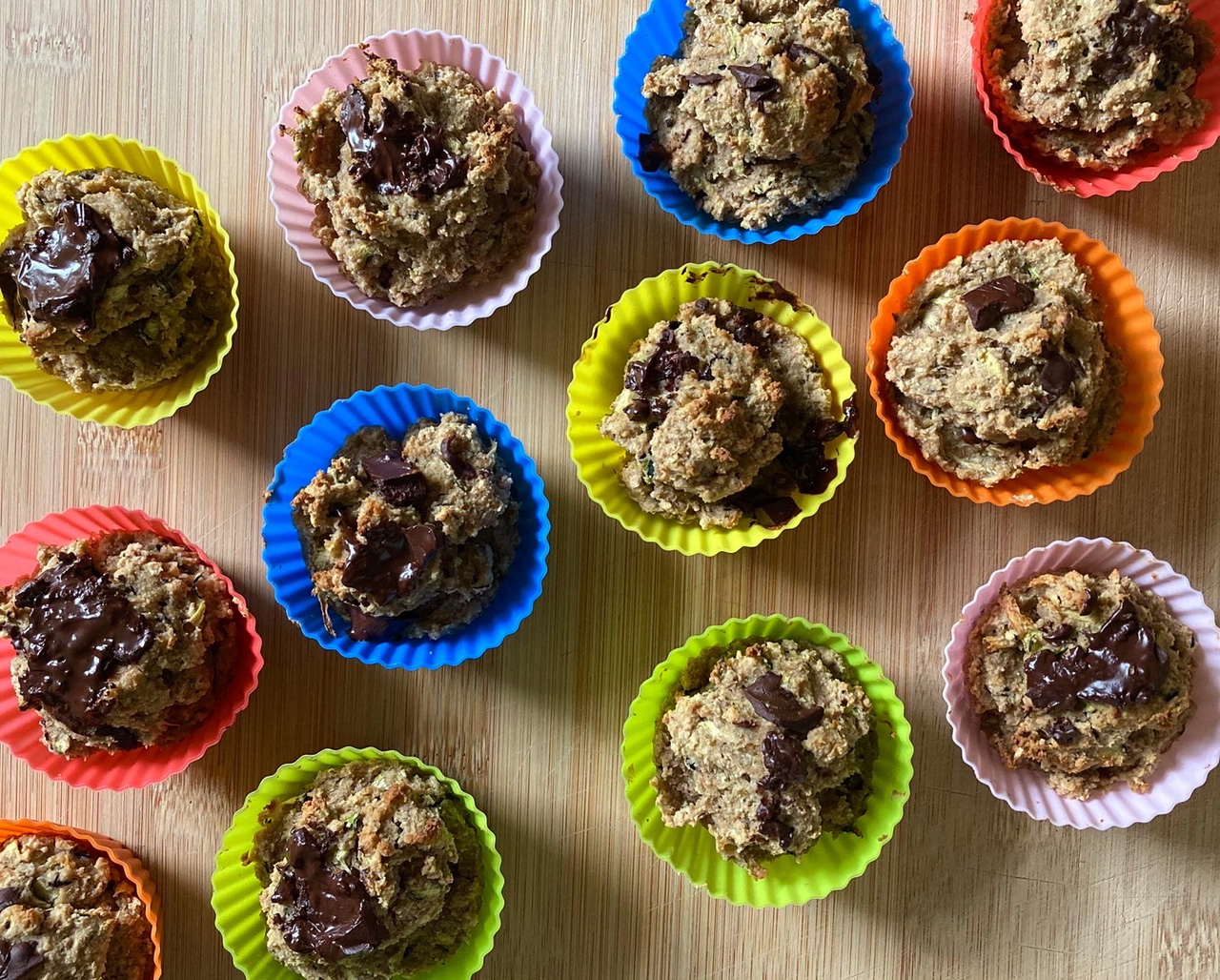
I’ve spent an embarrassing amount of time scraping green sludge off the bottom of muffin tins. It’s the zucchini curse. You think you’re being healthy, tossing in some garden greens and hearty oats, but twenty minutes later, you’re staring at a tray of soggy, sunken disappointments. Honestly, zucchini and oat muffins are one of those "healthy" staples that people pretend to love even when they taste like damp cardboard.
It doesn’t have to be that way. For an alternative view, check out: this related article.
The chemistry of a muffin is actually pretty volatile. When you grate a zucchini, you aren't just adding fiber; you're adding a biological water balloon to your batter. If you don't account for that moisture—and the way rolled oats absorb liquid at a different rate than wheat flour—you're basically asking for a culinary disaster. Most recipes you find online are just standard cake recipes with some green flecks thrown in. That’s why they fail.
The Moisture Crisis in Zucchini and Oat Muffins
Let’s talk about the zucchini itself. A zucchini is about 95% water. That is a staggering amount of liquid. If you just grate it and toss it in, that water releases during the baking process as the cell walls break down from the heat. Related insight on the subject has been shared by Refinery29.
The result? The center of your muffin stays gummy while the outside burns.
You've gotta squeeze it. And I don’t mean a polite little pat with a paper towel. I mean putting that shredded squash into a clean kitchen towel and twisting it until your forearms hurt. You should see a surprising amount of green juice hit the sink. Professional bakers, like those at King Arthur Baking, often suggest this "squeeze-dry" method to ensure the structural integrity of the crumb. If you skip this, you’re essentially adding an extra quarter-cup of water to your recipe without knowing it.
Then there’s the oat factor.
Oats are hygroscopic. They love water. But they take their sweet time drinking it up. If you use old-fashioned rolled oats, they provide a great, nutty texture, but they can make the muffin feel "bitsy" if they don't hydrate. If you use quick oats, they turn into mush. The sweet spot is often a blend or using oat flour for the base and rolled oats for the topping. It changes the game.
Why Your Leavening Agent Is Probably Lying to You
Most people reach for baking powder and call it a day. But zucchini is slightly acidic. To get that high, domed muffin top—the kind that makes people actually want to eat a vegetable for breakfast—you need a reactive lift.
A combination of baking powder and a tiny pinch of baking soda usually works best. The soda reacts with the slight acidity of the zucchini (and perhaps some yogurt or applesauce if you’re using those as fat replacements) to create immediate carbon dioxide bubbles.
The Fat vs. Fiber Debate
Is it a muffin or a cupcake?
There’s a thin line. A lot of zucchini and oat muffins rely heavily on vegetable oils. While oil makes things moist, it doesn't offer much in terms of flavor profile. If you want a muffin that actually tastes like something, you should consider browned butter or even a high-quality extra virgin olive oil. The polyphenols in olive oil actually play really well with the earthy tones of the oats.
- Butter: Provides a tight, tender crumb.
- Oil: Keeps the muffin moist for days, even if left on the counter.
- Applesauce: A classic substitute, but it adds even more moisture, which can be risky with zucchini.
I've seen people try to go fat-free with these. Don't. You need some fat to lubricate the oat fibers, otherwise, you're basically eating a baked brick of porridge. It’s about balance.
Sweeteners and the Glycemic Reality
People make these because they want a better breakfast.
If you dump two cups of white sugar into your zucchini and oat muffins, you’ve basically made a dessert. Maple syrup or honey are popular alternatives, but remember: they are liquids. If you swap dry sugar for syrup, you have to reduce the other liquids in the recipe—like the milk or eggs—to compensate.
According to various nutritional studies, including data often cited by the Harvard T.H. Chan School of Public Health, oats provide beta-glucan, a type of soluble fiber that helps slow sugar absorption. This makes these muffins a genuinely better choice for sustained energy than a doughnut, provided you don't overdo the sweeteners.
Dealing with the "Green" Factor
Let’s be real: some kids (and adults) see green flecks and immediately shut down.
If you’re trying to hide the veggies, peel the zucchini first. Without the dark green skin, the shredded flesh blends almost invisibly into the golden-brown oat batter. It’s a bit of a cheat, but it works.
However, the skin contains a lot of the nutrients. Lutein and zeaxanthin, which are great for eye health, are concentrated right there in the peel. If you can handle the color, leave it on. It looks rustic. It looks like you actually know your way around a garden.
Beyond the Basics: Mix-ins That Don’t Ruin the Bake
Texture is everything. A soft muffin with soft zucchini and soft oats is... boring.
- Walnuts or Pecans: The tannins in the nuts cut through the sweetness.
- Dark Chocolate Chips: Obviously. But use the mini ones so they don't sink to the bottom.
- Fresh Ginger: Grating a little fresh ginger into the batter elevates the flavor from "standard muffin" to "cafe quality."
- Blueberries: Be careful here. Blueberries plus zucchini equals a lot of water. If you go this route, add a tablespoon of extra flour to help soak up the juice.
The Temperature Secret
Bake them hot. Then turn it down.
Start your oven at 425°F (218°C). Put the muffins in for exactly five minutes. This initial blast of heat causes the steam to expand rapidly, pushing the muffin batter upward to create that beautiful "bakery style" top. After five minutes, without opening the oven door, drop the temperature to 350°F (177°C) to finish cooking the inside. This prevents the outside from burning while the interior is still raw.
Real Talk: The Shelf Life Problem
Zucchini and oat muffins do not last forever.
Because they are so moist, they are prone to molding faster than a dry bran muffin. If you aren't going to eat them within 48 hours, put them in the freezer. They freeze beautifully. In fact, popping a frozen one in the microwave for 30 seconds often revives the texture better than letting it sit in a plastic bag on the counter, where the crust will just get tacky and weird.
I once left a batch in a sealed container on a humid July day. By day three, it was a science project. Learn from my mistakes. Use a container with a little bit of airflow, or just commit to the freezer.
Troubleshooting Your Batch
If they didn't rise, your baking powder might be expired. Test it by dropping a spoonful into hot water; if it doesn't fizz aggressively, throw it out.
If they are too dense, you probably overmixed the batter. When you mix flour with liquid, you develop gluten. Great for sourdough, terrible for muffins. Mix until the flour just barely disappears. Lumps are your friend. Truly.
If the oats feel "raw," let the batter sit for 10 minutes before putting it into the oven. This gives the oats a head start on hydration. This "resting" technique is a favorite of professional pastry chefs because it leads to a more uniform crumb and a better rise.
Actionable Steps for Your Next Batch
To get the perfect result, follow these specific moves next time you're in the kitchen:
- The Double Squeeze: Shred your zucchini, salt it lightly, let it sit for five minutes, and then squeeze it in a towel. The salt helps draw out the deep-seated moisture.
- The Oat Rest: Mix your wet ingredients and oats first. Let them mingle for 10 minutes while you prep the rest. This softens the grain.
- The High-Low Heat: Use the 425°F to 350°F trick mentioned above. It’s the single best way to avoid flat muffins.
- The Toothpick Rule: Don't wait for the toothpick to come out bone dry. If there are a few moist crumbs clinging to it, take the muffins out. They will continue to cook for a few minutes from the residual heat of the pan. Overbaking is the enemy of the oat.
- Cooling: Take them out of the metal tin after 5 minutes. If you leave them in the hot pan, the bottoms will steam and get soggy. Move them to a wire rack immediately.
By focusing on the structural challenges of the zucchini and the hydration needs of the oats, you'll end up with a muffin that's actually worth eating. It shouldn't be a chore to eat healthy. It should just be a really good muffin that happens to have some greens in it.