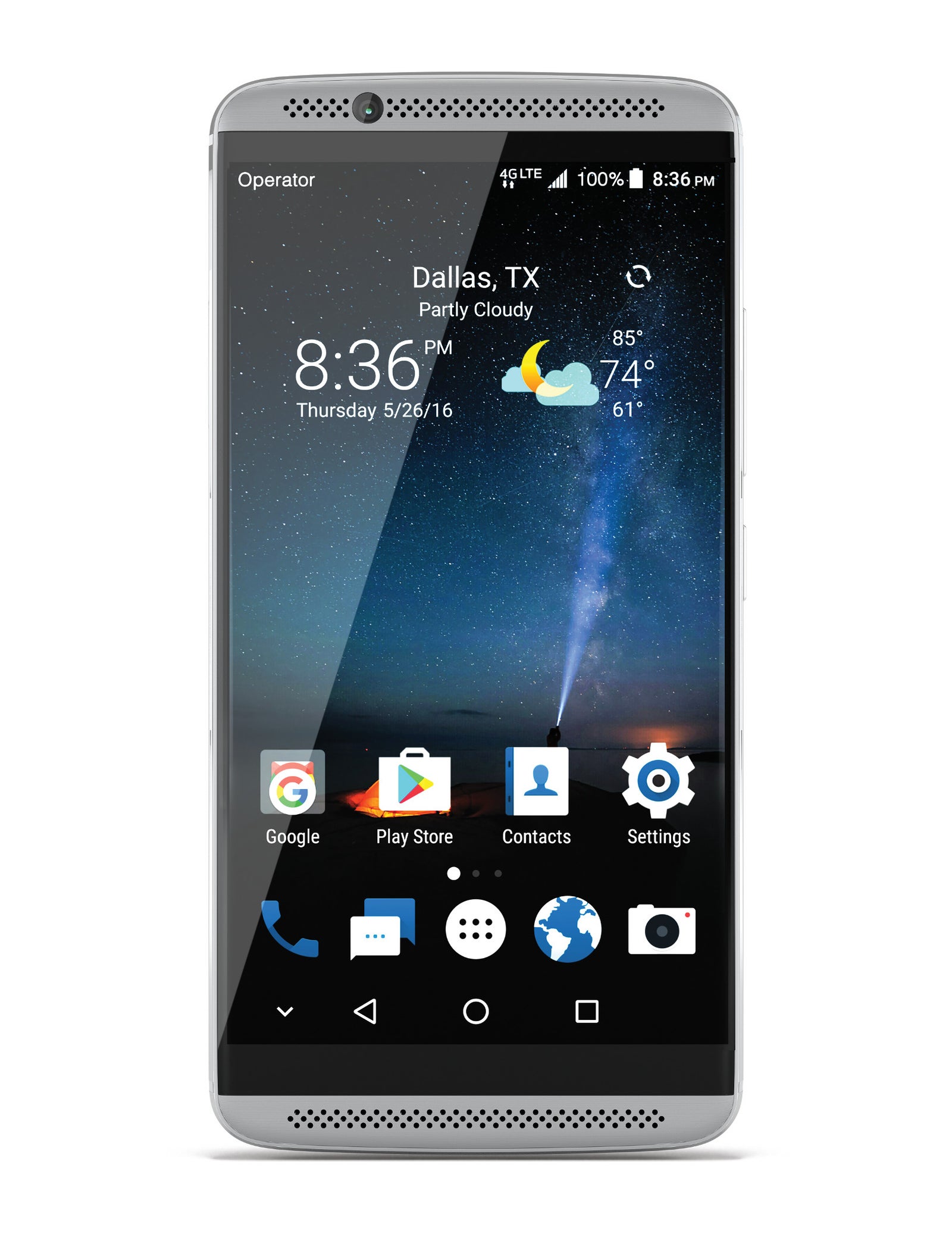
Back in 2016, the smartphone world was a bit more predictable. You either spent $700 on a Samsung or an iPhone, or you settled for something that felt like a plastic toy. Then the ZTE Axon 7 showed up. It didn't just knock on the door; it basically kicked it down. Honestly, it's one of those rare devices that shifted what we expected from a "budget" flagship.
I remember the first time I held one. The aluminum unibody felt cold, dense, and expensive. It had these front-facing stereo speakers that looked like tiny cheese graters, but man, did they sound incredible. Most phones today—even the $1,200 ones—still can't touch the sheer volume and depth those speakers produced. It was a weird, golden era for ZTE. For another perspective, read: this related article.
The Audiophile’s Secret Weapon
The real magic of the ZTE Axon 7 wasn't just the speakers, though. It was what lived inside the motherboard. ZTE went overkill and packed in two dedicated Hi-Fi chips: the AKM AK4961 and the AK4490EN.
If you aren't a gearhead, basically, that means the phone could drive high-impedance headphones that would make an iPhone 7 sound like a tin can. It offered 32-bit audio playback. In a world where everyone was starting to kill the headphone jack, the Axon 7 leaned into it with a "hold my beer" energy. Similar coverage on the subject has been published by The Next Web.
You've got to realize how rare this was. Most manufacturers used whatever DAC (Digital-to-Analog Converter) came standard on the Snapdragon chip. ZTE actually opened a dedicated sound lab and consulted with music conservatory professors to tune the output. It wasn't just marketing fluff; the Dolby Atmos integration actually created a legitimate spatial soundstage.
Specs That Punched Way Above Their Weight
When it launched at $399, people thought there was a catch. There usually is. But on paper, it was a monster:
- A 5.5-inch AMOLED display with QHD (2560x1440) resolution.
- Snapdragon 820 processor (the top-tier chip at the time).
- 4GB of RAM and 64GB of storage (expandable via microSD, which Samsung was still being finicky about).
- A 20MP rear camera with f/1.8 aperture and Optical Image Stabilization (OIS).
The screen was the sleeper hit. It was a Samsung-manufactured panel, vibrant and crisp, with a pixel density of 538 PPI. Compare that to the OnePlus 3 from the same year, which only had a 1080p screen. The Axon 7 was literally sharper than the "flagship killer" of its own generation.
The Design Collaboration
You might not know this, but the Axon 7's look wasn't just some random factory design. ZTE partnered with Designworks, a subsidiary of the BMW Group. That explains the "screwless" look and the subtle curves that made a relatively large phone actually sit comfortably in your palm. It felt like a piece of industrial art, especially in the "Quartz Gray" or "Ion Gold" finishes.
The Software Struggle: Where the Wheels Came Off
Kinda has to be a downside, right? For the Axon 7, it was MiFavor UI. While the hardware was 10/10, the software was... divisive. It was a heavy skin over Android 6.0.1 Marshmallow that felt a bit "uncanny valley." It tried to be iOS and Android at the same time and ended up being a cluttered mess in the early days.
Notifications didn't always show up. The "bell" icon on the lock screen was a notorious point of frustration for the community. You had to manually click it just to see your alerts. Why? Nobody knows.
Then there was the update situation. ZTE promised the moon. They eventually delivered Android 7.1.1 Nougat and even a late, somewhat buggy Android 8.0 Oreo. But the US export ban on ZTE in 2018 basically killed the official support cycle. If you weren't into the XDA-Developers scene, your phone felt abandoned.
The Custom ROM Savior
Thankfully, the community loved this hardware. Because ZTE eventually released the kernel source code, the Axon 7 became a darling for custom ROM enthusiasts. To this day, you can find people running unofficial builds of LineageOS on these things. It’s one of the few phones from 2016 that can technically handle modern Android versions because the hardware was so over-specced for its time.
What Most People Get Wrong About the Camera
There's this common myth that the Axon 7 camera was "bad." It wasn't bad; it was just inconsistent. The 20MP sensor, protected by a sapphire lens cover, could take stunning shots in daylight. The OIS and Phase Detection Autofocus (PDAF) were high-end features.
The issue was the post-processing. ZTE’s software tended to over-sharpen images or struggle with dynamic range in tricky lighting. However, if you knew how to use the Manual Mode or eventually sideloaded a Google Camera (GCam) port, the results were night and day. It proved that the lens was capable, even if the "brain" of the phone was a bit confused.
Real-World Issues You Should Know About
If you're looking at a used one for a collection or a dedicated music player, be realistic. It wasn't perfect.
- The Battery: The 3250mAh cell was decent for 2016, but driving a QHD AMOLED screen and Hi-Fi DACs drains it fast. Age hasn't been kind to these batteries.
- Signal Strength: Some users reported weaker Wi-Fi and LTE reception compared to Samsung or Motorola devices, likely due to the thick aluminum unibody acting as a bit of a Faraday cage.
- Capacitive Keys: The navigation buttons at the bottom aren't backlit. It’s a small thing, but using the phone in the dark meant a lot of "stabbing in the dark" until you developed the muscle memory.
Why the Axon 7 Still Matters in 2026
It represents a time when a company actually tried to do something different. Today, phones are glass sandwiches with no headphone jacks and tiny, bottom-firing speakers. The Axon 7 was a specialized tool for people who cared about media. It was the "anti-iPhone."
It also proved that $400 could buy a premium experience. It forced companies like OnePlus and even Samsung to stop cutting so many corners on their mid-to-high-range offerings.
Actionable Next Steps for Enthusiasts
If you still own one or are thinking of picking up a "parts" unit for a project:
- Check the Battery Health: If you're buying used, expect to do a battery swap. The Snapdragon 820 runs hot, which tends to degrade the lithium-ion cells faster over a decade.
- Flash a Custom ROM: Don't stay on the official ZTE Oreo build. Head over to the Axon 7 XDA forums. LineageOS 18 or 19 builds (Android 11/12) are surprisingly stable and make the phone feel ten times faster by stripping out the MiFavor bloat.
- The Ultimate DAP: If the phone is too slow for your daily apps, wipe it and use it as a dedicated Digital Audio Player. With a 256GB microSD card and a pair of Sennheiser HD600s, it beats out dedicated music players that cost three times as much.
- Calibrate the Sensors: If your auto-rotate is acting funky (a common glitch), use an app like "GPS & Status Toolbox" to recalibrate the accelerometer. It usually fixes the "stuck" screen issue without needing a factory reset.
The Axon 7 was a flash in the pan. A weird, loud, beautiful anomaly in smartphone history. It reminds us that sometimes, the underdogs actually get it right.