It was the kick-off to Season 5. 1966. A crowded Manhattan apartment filled with ad executives, their bored wives, and a palpable sense of secondhand embarrassment. Then, Megan Draper steps out. She’s wearing a black mini-dress with those massive, sheer bell sleeves. She grabs a microphone. The track starts.
Zou Bisou Bisou.
If you watched Mad Men when it originally aired on AMC, you remember the collective "what did I just watch?" that rippled through the fandom. Some people loved it. Others found it excruciatingly cringey. But here we are, years later, and that specific Mad Men French song remains the most iconic musical moment in the show’s seven-season run. It wasn't just a catchy tune; it was the exact moment the 1950s finally died, and the chaotic, colorful, and deeply uncomfortable "youth culture" of the late 60s took over Sterling Cooper Draper Pryce.
The Real History Behind the Song
Megan Draper (played by Jessica Paré) didn't invent this track. In the world of the show, she’s performing a cover. The original "Zou Bisou Bisou" was actually recorded in 1960 by Gillian Hills. If you haven't heard of her, Hills was a "Yé-yé" girl—a term used to describe a specific brand of chic, youthful French pop singers in the 60s (think Françoise Hardy or France Gall).
Interestingly, there’s a version by Sophia Loren too. Loren’s version was titled "Zoo Be Zoo Be Zoo" and appeared in the 1960 film The Millionairess.
But the Mad Men version? It’s pure Yé-yé. It’s bubbly. It’s flirtatious. It’s also incredibly repetitive, which is why it gets stuck in your brain like a splinter. The lyrics basically translate to "Oh! Kiss Kiss," or more accurately, the sound of a kiss. "Zou" is just a rhythmic filler, sort of like "Yeah" or "Ooh" in English pop. It’s innocent on the surface, but in the hands of Megan Draper—performing it for her much older, deeply traditional husband in front of his coworkers—it became a weapon of social destruction.
Why Don Draper Hated It (And Why We Couldn't Look Away)
Don Draper is a man of the 1950s. He likes his scotch neat, his secrets buried, and his women... well, not performing suggestive French pop songs in front of his boss.
The brilliance of this scene lies in the contrast. You have the "Old Guard"—Roger Sterling, Bert Cooper, and Don—who look like they want to dissolve into the floorboards. Then you have the younger characters who are either mesmerized or, in the case of the wives, deeply threatened.
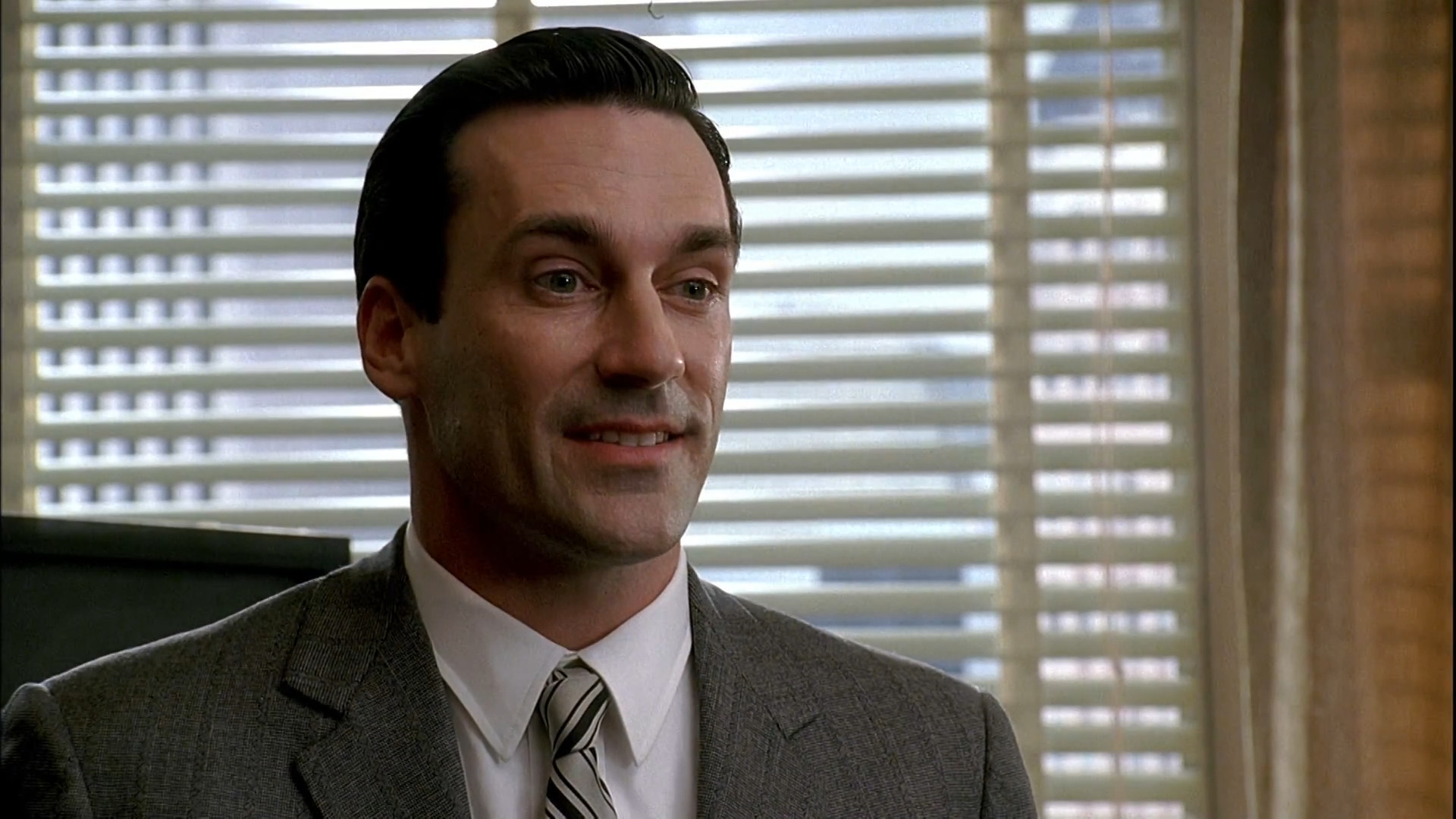
The Mad Men French song served a narrative purpose. It proved that Don didn't know his new wife at all. He thought he married a sweet, compliant secretary. Instead, he married a woman who wanted to be seen, who had her own ambitions, and who was perfectly comfortable being the center of attention in a way that terrified him. Honestly, the look on Jon Hamm’s face during that performance is some of the best non-verbal acting in television history. He’s mortified. He’s also, quite clearly, losing control of his carefully curated world.
The Production Behind the Magic
Matthew Weiner, the show’s creator, is notorious for his obsessive attention to detail. He didn't just pick a random French song. He wanted something that felt authentic to 1966 but also felt "new" to an American audience.
Jessica Paré actually recorded the vocals herself. It wasn't a lip-sync of the Gillian Hills version. The producers brought in a choreographer to make sure her movements felt period-accurate—lots of hip-sways, hand gestures, and that specific "mod" energy.
The song was released as a single on iTunes almost immediately after the episode aired. It actually hit number one on the World Music duet chart. People were obsessed. It was the "viral moment" of 2012 before we really used the term viral for everything.
The "Cringe" Factor: A Masterclass in Writing
A lot of fans find the "Zou Bisou Bisou" scene hard to watch. It’s long. It’s intimate. It goes on just a little bit too long for comfort.
That’s intentional.
In the 1960s, the "generation gap" wasn't just a buzzword; it was a chasm. Don’s generation believed in "The Front." You kept your private life private. Megan’s generation—the vanguard of the Boomers—believed in self-expression. By having Megan sing that Mad Men French song, the writers showed us that the world was changing faster than Don could keep up with.
It’s also worth noting the lyrics. They’re playful:
"Mon dieu que c'est doux" (My god, it's so sweet) "Mais zou bisou bisou" (But oh! kiss kiss)
It’s a song about the thrill of a crush. Performing it for your husband at his 40th birthday party? That’s a bold move. It’s the ultimate "Look at me" moment. For Megan, it was a gift. For Don, it was an exposure of his private life that he never asked for.
Impact on the Show’s Legacy
Before this episode, Mad Men was often seen as a show about "the guys in suits talking in rooms." After "Zou Bisou Bisou," the show shifted its focus heavily toward the changing social tides. We started seeing more of the counter-culture, the drug use of the late 60s, and the rise of the independent woman.
Megan Draper became a polarizing figure because of this song. Some saw her as the breath of fresh air the show needed. Others saw her as the beginning of the end for Don’s cool, collected persona.
Regardless of where you stand, you can’t deny the song’s staying power. It’s been parodied, covered, and referenced in countless other shows. It’s the gold standard for how to use a musical number to advance a plot without it feeling like a "musical episode."
How to Find the Best Version
If you’re looking to add this to your playlist, you have options.
- The Jessica Paré Version: This is the one from the show. It’s polished, modern-sounding (despite the 60s vibe), and features the full orchestration used in the episode.
- The Gillian Hills Original: If you want the authentic 1960 Yé-yé experience, this is the one. It’s a bit thinner in production but has that raw, vinyl-era charm.
- The Sophia Loren Version: It’s more of a novelty track, but it’s fascinating to hear how the song was interpreted as a more traditional lounge act before it became a pop hit.
The Technical Brilliance of the Scene
Cinematically, the scene is a marvel. The camera moves through the party, capturing the reactions of every major character. We see Peggy’s fascination. We see Lane Pryce’s awkward attempt at a joke later. We see the jealousy in the eyes of the other wives.
The lighting is warm, almost suffocating, which mirrors Don’s feeling of being trapped. Every time Megan moves, the fringe on her dress follows a beat behind. It’s a visual representation of the "swinging sixties" crashing into the "stoic fifties."
Exploring the Yé-yé Genre Further
If "Zou Bisou Bisou" sparked an interest in French 60s pop, you’re in luck. There is a massive rabbit hole to fall down.
- Françoise Hardy: The queen of the genre. Her music is a bit more melancholic than "Zou Bisou Bisou" but equally stylish.
- France Gall: Check out "Poupée de cire, poupée de son." It’s the peak of 60s French pop.
- Brigitte Bardot: She recorded several tracks with Serge Gainsbourg that carry that same playful, provocative energy.
The Mad Men French song wasn't an outlier. It was a doorway into a specific moment in European culture that Americans, at the time, were starting to consume hungrily. It was the era of the "British Invasion," but the French "Yé-yé" movement was the sophisticated, cooler cousin that everyone wanted to invite to the party.
Practical Steps for Fans and Collectors
If you're looking to dive deeper into the world of Megan Draper's iconic performance, there are a few things you can actually do to bring that 1966 vibe into 2026.
- Source the Vinyl: The Mad Men soundtrack was released on vinyl. Finding a copy that includes the Paré version of "Zou Bisou Bisou" is a must for any serious collector of TV memorabilia.
- Study the Style: The "Megan Draper Look" from this scene—the mini-dress with bell sleeves—is a frequent target for costume designers and fashion historians. You can find "Zou Bisou Bisou" inspired dresses on vintage sites like Etsy or Depop by searching for "1960s sheer sleeve mini dress."
- Learn the Lyrics: If you’re a Francophile, the song is actually a great beginner’s tool. The French is simple, repetitive, and uses common idioms. It's much more fun than a Duolingo lesson.
- Check the Credits: Take a look at the work of George Kieran and David Carbonara, the musical minds who helped shape the sound of the show. They managed to make a 50-year-old song sound like a contemporary hit while staying true to its roots.
Ultimately, "Zou Bisou Bisou" remains a cultural touchstone because it represents the moment we realized that Don Draper—the man who could sell anything to anyone—finally met something he couldn't control: the future. It’s catchy, it’s weird, it’s uncomfortable, and it’s perfectly Mad Men.