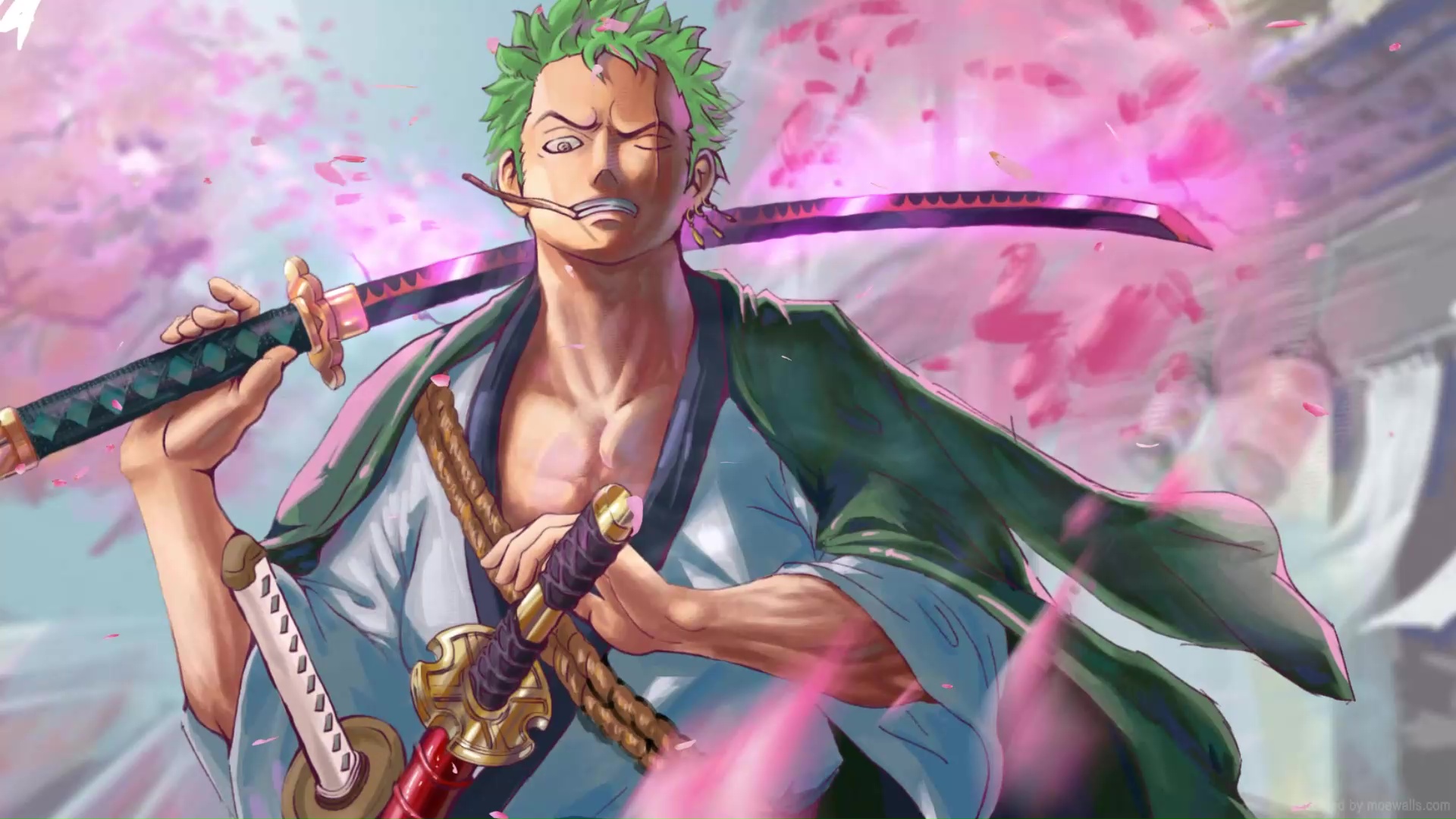
Most fans see a guy with a sword in his mouth and think "cool." They aren’t wrong. Roronoa Zoro is the muscle of the Straw Hat Pirates, and his Zoro three sword style—formally known as Santoryu—is the visual hook that helped One Piece conquer the world. But if you actually look at the mechanics, it’s a mess of physics and dental insurance claims. Honestly, it shouldn't work. Yet, Eiichiro Oda spent three decades turning this absurd premise into a deeply layered martial art that mirrors Zoro’s personal growth from a bounty hunter in East Blue to a King of Hell on Onigashima.
Zoro didn't start with three blades because he wanted to be flashy. It was a trauma response. After his rival Kuina died, he took her blade, the Wado Ichimonji, and swore to become the greatest swordsman for both of them. One sword for him, one for her, and a third because... well, why not? It’s essentially a kinetic expression of a childhood promise.
The Physical Reality of Santoryu
How do you even swing a sword with your neck? You don't. Not really. In the early chapters, Zoro’s Zoro three sword style relied on centrifugal force. He spins. A lot. If you watch the fight against Captain Morgan or the Black Cat Pirates, he’s basically a human lawnmower. The sword in his mouth acts as a central axis or a surprise parry tool while his hands do the heavy lifting.
But there’s a limit to spinning. As the enemies got tougher—think Mr. 1 or Ryuma—the style shifted from "spinning fast" to "compressing power."
The Mouth Blade Problem
The Wado Ichimonji is almost always the sword in his teeth. It’s his most precious possession. From a tactical standpoint, having a blade there limits your peripheral vision and makes breathing a nightmare. Have you ever tried to sprint while biting down on a piece of steel? Your jaw would lock up in seconds. Zoro bypasses this through "anime logic," but also through sheer muscular development. By the time we get to the post-timeskip era, his neck muscles are thick enough to support the torque of clashing with giants.
Evolution of Techniques: Beyond Just Slicing
It isn't just about hacking away. Santoryu is broken down into specific "levels" of intensity. You have the basic stuff like Oni Giri (Ogre Cutter). It’s a simple three-way cross slash. Simple. Effective. It’s his "bread and butter" move. But then things get weird.
When Zoro faces someone like Daz Bonez (Mr. 1), the Zoro three sword style has to evolve. He learns the "Breath of All Things." This is where the style stops being about physical strength and starts being about spiritual alignment. He isn't just cutting steel; he's choosing not to cut the leaves falling around him. This nuance is what separates him from a brawler.
The Secret of the Asura
Then there’s the Kiki Kyutoryu: Asura. This is the peak of his "Three Sword Style" where he creates an illusion of having nine swords. Is it Haki? Is it a manifestation of his soul? Oda has been intentionally vague, but the Road to Laugh Tale booklets suggest it’s an early, subconscious application of Conqueror’s Haki. He’s projecting his killing intent so strongly that it warps the reality around his opponents.
Why the Swords Matter
You can't talk about Zoro three sword style without talking about the hardware. The blades aren't interchangeable. They have personalities.
- Wado Ichimonji: The soul. It’s a Meito, one of the 21 Excellent Grade swords. It represents his vow.
- Sandai Kitetsu: The "cursed" blade. It’s bloodthirsty. In the Loguetown arc, Zoro had to test his luck against its curse. This sword added an element of unpredictability to his style. It wants to cut, often leading his hand rather than being led.
- Enma: This changed everything. Formerly Oden’s blade, Enma forcibly drains the user's Ryuo (Haki). Before getting Enma, Zoro's style was about control. With Enma, it became about survival. He has to output massive amounts of power just to keep the sword from sucking him dry.
This tension creates a dynamic fighting style. He's fighting his own equipment as much as his enemy. It makes the Zoro three sword style feel dangerous, not just to the villain, but to Zoro himself.
The Myth of the "Greatest Swordsman"
There is a huge debate in the One Piece community about whether Santoryu is actually "better" than a single-sword style (Ittoryu). Dracule Mihawk, the current title holder, usually uses a single massive blade, Yoru. He even mocked Zoro early on, saying that the number of swords doesn't equate to strength.
He was right.
Zoro’s journey hasn't been about adding more swords—it's been about making those three swords function as a single unit. When he uses "1030 Three Thousand Great Thousand Worlds," he’s syncing the rhythm of three different blades into one point of impact. It’s a logistical nightmare that he’s mastered through sheer repetition.
Misconceptions and Errors
A common mistake fans make is thinking Zoro is weaker when he loses a sword. While his "power level" (if we're using Shonen tropes) might drop because he can't use his signature Santoryu finishers, his Ittoryu (One Sword Style) is arguably more precise. Some of his coolest kills, like the one against Shizui on Thriller Bark or the dragon on Punk Hazard, were done with a single blade. The Zoro three sword style is his peak, but it’s his foundation in basic swordsmanship that keeps him alive when things go south.
Tactical Insights for the Modern Fan
If you're trying to analyze Zoro's fights, look at his feet. Oda spends a lot of time drawing Zoro's stance. In the Zoro three sword style, his center of gravity is incredibly low. He doesn't jump unless he has to. He plants himself. This is because the weight of the swords and the torque required to swing the mouth-blade would throw a normal person off balance.
Also, pay attention to the names. Most of them are puns. "Oni Giri" sounds like "rice ball." "Santoryu" sounds like "three-way." It’s a bit of levity in an otherwise grim, bloody fighting style.
Training Like a Demon
Zoro's training is legendary. We're talking about a man who lifts massive weights with his teeth while doing handstand pushups. To maintain the Zoro three sword style, his training focus is almost entirely on:
- Neck Strength: To handle the impact of clashing blades without breaking his jaw.
- Lung Capacity: Because he’s literally biting a sword while trying to breathe.
- Haki Infusion: To ensure his swords don't snap against superior metal or Devil Fruit powers.
The King of Hell Transformation
In the final stages of the Wano arc, the Zoro three sword style reached its current apex. By accepting the "King of Hell" moniker, Zoro stopped trying to tame his swords and instead let his Haki run wild. The green flames (or smoke, depending on the animation) represent a level of power that very few in the One Piece world ever reach. He isn't just a swordsman anymore; he's a force of nature.
The style has moved away from the "spinning top" mechanics of the early days. It’s now about singular, devastating strikes that combine the cutting power of three Meito-grade blades with the aura of a Conqueror.
To truly understand how Zoro operates, you have to look at his weapon history. The transition from the Yubashiri to the Shusui, and eventually to Enma, isn't just a gear upgrade—it’s a shift in how he balances his internal energy. If you're looking to dive deeper into the lore of the blades themselves, researching the Wano Smithing traditions or the rankings of the Meito provides the necessary context for why certain attacks like the "Flying Dragon Blaze" are only possible with specific steel. Check out the official One Piece Vivre Cards for the exact weight and length measurements of the swords if you're into the nitty-gritty technical specs.