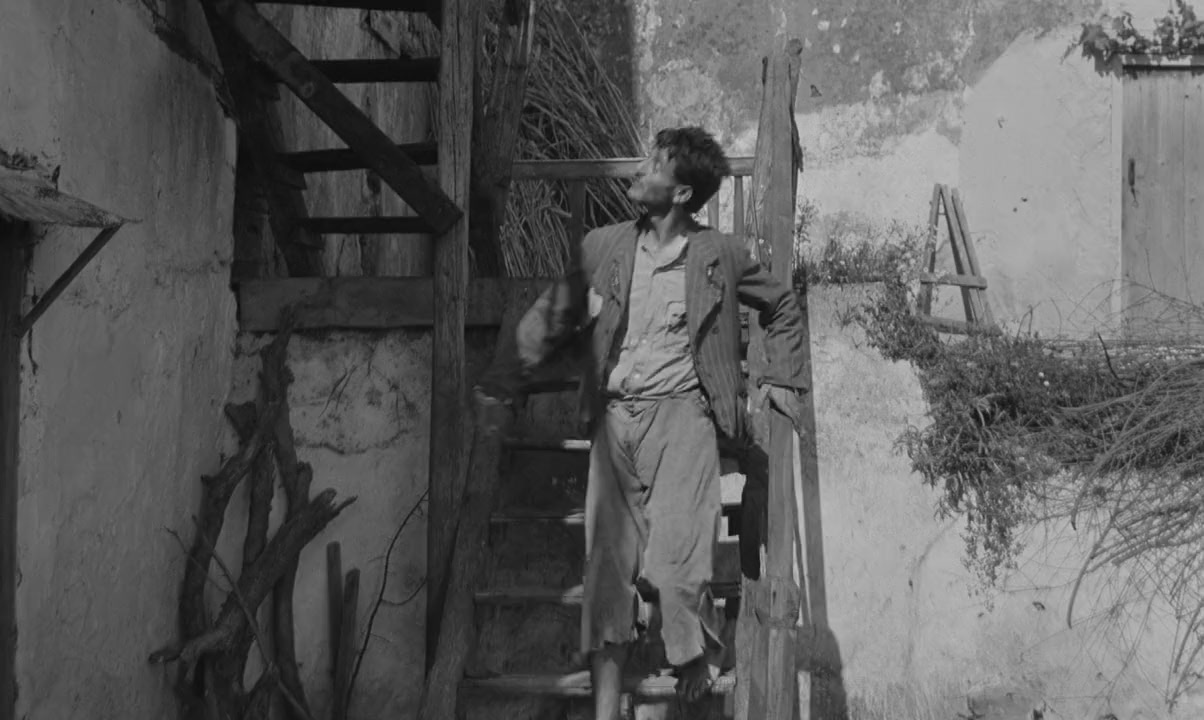
You know that feeling when a movie just sticks to your ribs? Not like a fast-food thriller you forget by the time you're in the parking lot, but something that actually changes how you look at a Monday morning. That’s the Zorba the Greek movie. It came out in 1964, filmed in grainy black and white, and somehow it’s still more "alive" than most of the 4K blockbusters hitting theaters in 2026.
Honestly, it shouldn't have worked. The plot is kind of a mess if you look at it on paper. An uptight British-Greek writer named Basil—played by a very young, very stiff Alan Bates—heads to Crete to reopen a lignite mine he inherited. He meets this whirlwind of a man, Alexis Zorba, played by Anthony Quinn in the role he was basically born to play. From there, it’s just two hours of life hitting them in the face.
The movie is messy. It’s loud. It’s devastating. And then, there’s that dance.
What Most People Get Wrong About the Sirtaki
If you’ve seen the film, or even just a clip on YouTube, you know the ending. The mine project has literally collapsed in a heap of timber and dust. Everything is ruined. So, what do they do? They dance.
Most people think the "Sirtaki" is some ancient Greek tradition passed down through the centuries. It’s not. It was basically invented for the film. The composer, Mikis Theodorakis, took elements of traditional dances like the hasapiko and the syrtos and mashed them together.
Here's the kicker: Anthony Quinn actually broke his foot right before they filmed that iconic scene. He couldn't do the hops and jumps that were originally planned. So, he improvised. He dragged his foot through the sand of Stavros Beach because it was the only way he could move without screaming in pain. That "sliding-dragging" step became the signature move of the most famous Greek dance in the world.
Talk about turning a disaster into a masterpiece.
The Brutality Nobody Mentions
We like to remember the Zorba the Greek movie as this "live, laugh, love" anthem for the 60s. But if you actually sit down and watch it, it’s incredibly dark. Michael Cacoyannis, the director, didn't sugarcoat the reality of rural Crete in the mid-20th century.
There is a scene involving "The Widow," played by the legendary Irene Papas, that is genuinely hard to watch. It’s a stoning. It’s tribal, it’s cruel, and it’s a sharp reminder that the "simple life" Zorba celebrates has a jagged, terrifying edge. The villagers aren't just colorful background characters; they can be a lynch mob in the blink of an eye.
Then you have Madame Hortense, played by Lila Kedrova. She won an Oscar for this, and you can see why. She’s this aging, deluded French courtesan who thinks she’s still a queen. When she dies, the local women descend on her house like vultures, stripping the place bare before her body is even cold.
It’s not a feel-good movie. It’s a feel-everything movie.
Anthony Quinn vs. the Book
Nikos Kazantzakis wrote the original novel in 1946. In the book, the narrator (Basil) is obsessed with Buddha. He’s trying to find spiritual enlightenment through books and silence. Zorba is the antidote to that.
The movie shifts the focus. It becomes less about the writer’s internal monologue and more about Quinn’s sheer magnetic force. Quinn didn't just play Zorba; he became the international face of Greek identity for decades. It’s funny because Quinn was actually Mexican-American. But he captured that Mediterranean "kefi"—that spirit of joyful defiance—so well that even Greeks claimed him as one of their own.
Key Differences Between the Novel and the Film
- The Narrator: In the book, he's a nameless Greek intellectual. In the film, he's "Basil," an Englishman, which makes the culture clash even sharper.
- The Philosophy: The book is heavy on Nietzsche and Buddhism. The movie simplifies this into: "Life is trouble. Only death is not. To be alive is to undo your belt and look for trouble."
- The Ending: The book ends with a series of letters and a long-distance farewell. The movie ends with the dance, which is a much more powerful cinematic punctuation mark.
Why It Still Matters in 2026
We live in a world that is obsessed with "optimization." We track our steps, we maximize our productivity, and we plan our retirements. Zorba is the guy who tells you to set it all on fire.
There’s a line in the movie where Zorba tells Basil, "A man needs a little madness, or else he never dares cut the rope and be free."
That’s why people still travel to Crete to find Stavros Beach. They want a piece of that madness. They want to stand on the same sand where Quinn taught Bates that failure isn't the end—it's just an excuse to start dancing.
How to Experience Zorba Today
If you want to dive into this properly, don't just watch a clip. Do it right.
- Watch the 1964 Film: Find the original black-and-white version. The cinematography by Walter Lassally (who also won an Oscar) is stunning. The way he uses the harsh Greek sun to create shadows is pure art.
- Listen to the Soundtrack: Mikis Theodorakis’s score is the heartbeat of the film. It starts slow, almost hesitant, and builds into a frenzy. It’s the sound of a heart speeding up.
- Read the Book: If you want the "why" behind the "what," Kazantzakis’s prose is unbeatable. It’s much more philosophical and will make you question your own life choices.
- Visit Stavros Beach: It’s on the Akrotiri Peninsula in Crete. It’s quieter now than you’d expect, but the mountain backdrop is unmistakable. You can still eat at tavernas nearby that feel like they haven't changed since the 60s.
Life is going to throw a lot of "collapsed mines" your way. The Zorba the Greek movie isn't about avoiding the collapse. It's about what you do when the dust clears and you're standing there with nothing left but your own two feet and a bit of music.
Next Step: Watch the final five minutes of the film tonight. Pay attention to Basil’s face. He starts the movie as a man who is dead inside, and he ends it laughing at his own ruin. That’s the lesson.