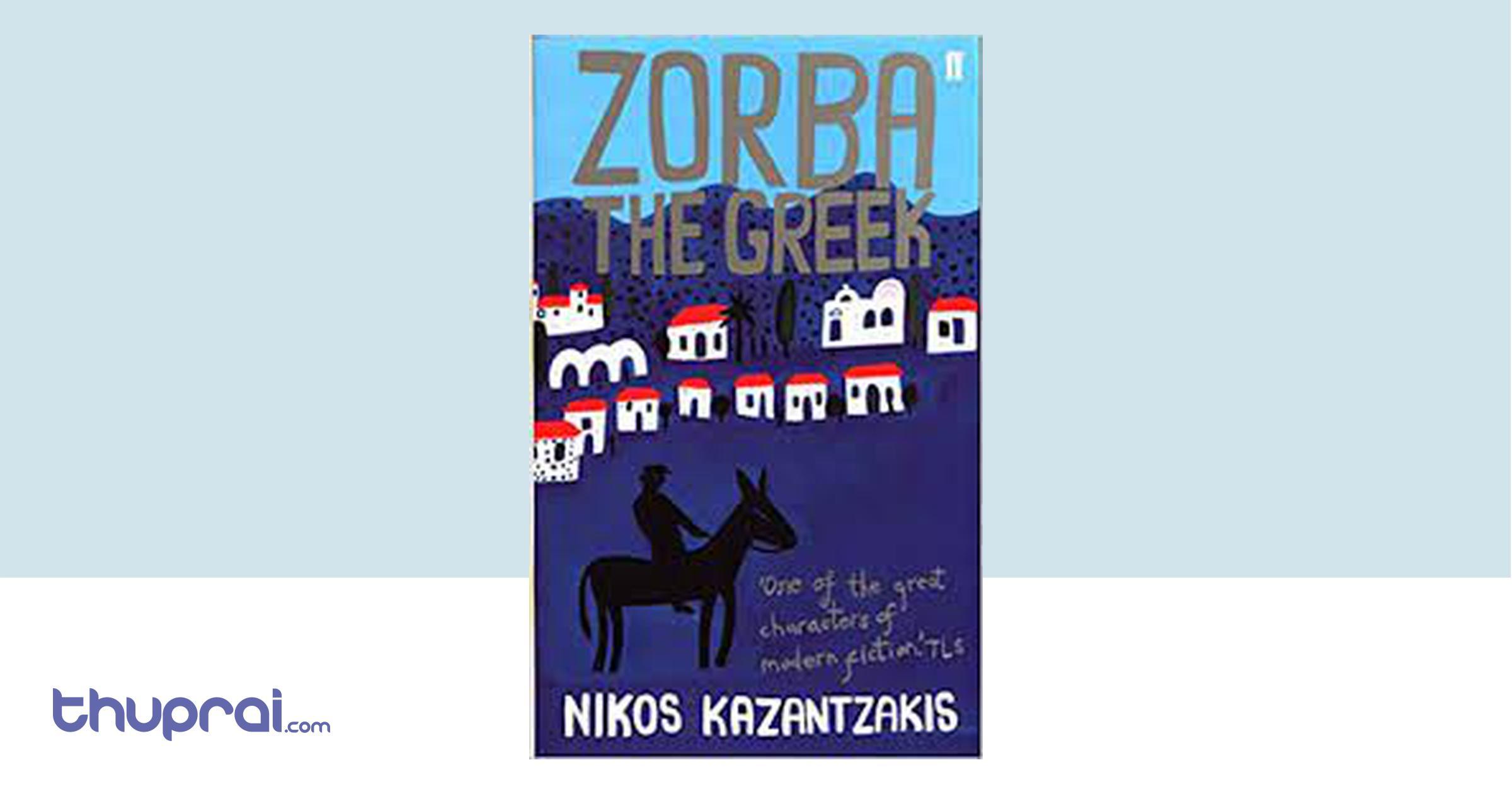
You've probably seen the movie. Or at least you've seen Anthony Quinn dancing on a beach in grainy black and white, arms outstretched, looking like the embodiment of freedom. But honestly, the Zorba the Greek book—originally titled Life and Times of Alexis Zorbas—is a completely different beast. It is messier, darker, and much more "kinda" complicated than the Hollywood version suggests.
Nikos Kazantzakis didn't just write a story about a guy who likes to dance. He wrote a 1946 philosophical cage match.
In one corner, you have the narrator: a "bookworm" intellectual who’s so stuck in his own head he basically forgets he has a body. In the other, you have Alexis Zorba, a sixty-year-old man who treats life like a giant, delicious meal he’s trying to finish before the restaurant closes.
Why Zorba the Greek Book is More Than Just a "Vibe"
Most people think this is just a "live in the moment" story. It isn't. Not really.
It’s actually about a massive failure. The narrator goes to Crete to reopen a lignite mine, hoping to escape his books and do something "real." He fails at the business. He fails at the mine. He even fails, in many ways, at protecting the people around him. Yet, by the end, he’s happy. That’s the twist.
Zorba is the catalyst. He’s based on a real person, Georgios Zorbas, whom Kazantzakis met on Mount Athos in 1915. The real Zorbas wasn't just a dancer; he was a miner, a wanderer, and a man who had seen enough war and death to decide that logic was a trap.
He carries a santuri—a Greek dulcimer—and he only plays it when words aren't enough. It’s a literal representation of his philosophy. If you can’t say it, dance it. If you can't dance it, play it.
The Misconception of "Happy" Zorba
There’s a scene in the Zorba the Greek book that often catches modern readers off guard. It's the death of the Widow. In the film, it’s tragic but stylized. In the book, it is a brutal, stomach-turning look at village mob mentality and the dark side of "tradition."
Zorba isn't a saint. He’s crude. He’s frequently misogynistic in his dialogue, reflecting the harsh, patriarchal reality of early 20th-century Crete. He spends the narrator’s money on "women and wine" in a way that would get most employees fired on day one.
But the narrator—whom Zorba calls "Boss"—can’t help but admire him. Why? Because Zorba is "whole."
"I looked at Zorba in the light of the moon and admired the jauntiness and simplicity with which he adapted himself to the world around him..."
That quote is basically the thesis of the novel. While the Boss is busy reading about Buddha and trying to reach "spiritual enlightenment" by detaching from the world, Zorba is getting his hands dirty in the actual world.
The Mine, the Cable, and the Collapse
The plot revolves around a harebrained scheme to build an overhead cable to transport timber from a mountain down to the mine. It’s a disaster. When the whole thing finally collapses during its "grand opening," Zorba doesn't cry. He doesn't sue.
He asks the Boss if he can dance.
This is the peak of the Zorba the Greek book. It's the moment the intellectual finally understands that life isn't a problem to be solved, but an experience to be had. The collapse of the mine is the collapse of the narrator's ego.
He realizes that all his books didn't teach him how to handle a catastrophe with grace. Only Zorba could do that.
What Actually Happened to the Real Zorba?
A lot of people don't realize that the friendship in the book ended in real life. Kazantzakis and the real Georgios Zorbas parted ways around 1920. Zorbas went to Serbia and eventually North Macedonia, where he died in 1941.
Kazantzakis never saw him again. He wrote the book as a way to process the loss of his friend and the guilt of being an "intellectual" while the world was on fire with war.
It’s a survivor’s guilt book.
Actionable Takeaways for the Modern Reader
If you’re going to pick up the Zorba the Greek book today, don't look for a self-help guide. Look for a mirror.
- Stop over-intellectualizing. If you spend more time reading about things than doing them, you’re the "Boss." Try to find your own santuri.
- Accept the "Great Flop." The mine failed. The cable broke. Everything went wrong. In the book, this is where the real life begins. Don't fear the failure; fear the lack of a reaction to it.
- Recognize the complexity of "Free Spirits." Zorba is lovable, but he’s also a deeply flawed man. The book is better when you stop trying to make him a hero and start seeing him as a force of nature.
The real power of Kazantzakis’s writing isn't in the "opa!" moments. It’s in the quiet realization that we are all, eventually, going to lose everything—our money, our mines, and our lives.
The only question left is: can you dance while it's happening?
To truly understand the legacy of this work, you have to look past the Anthony Quinn posters. You have to read the prose. You have to feel the dust of the Cretan village and the sting of the Raki.
Read it for the philosophy. Stay for the madness.
Start by comparing the first chapter with the last. Notice how the Boss's language changes. He stops using big, abstract words and starts using "Zorbatic" ones. That’s the real journey.
Go find a copy of the 1952 Carl Wildman translation or the more recent Peter Bien version. Both capture that raw, unpolished energy that makes the Zorba the Greek book a permanent fixture in the literary canon.
Just don't expect it to be a comfortable read. It’s meant to shake you.