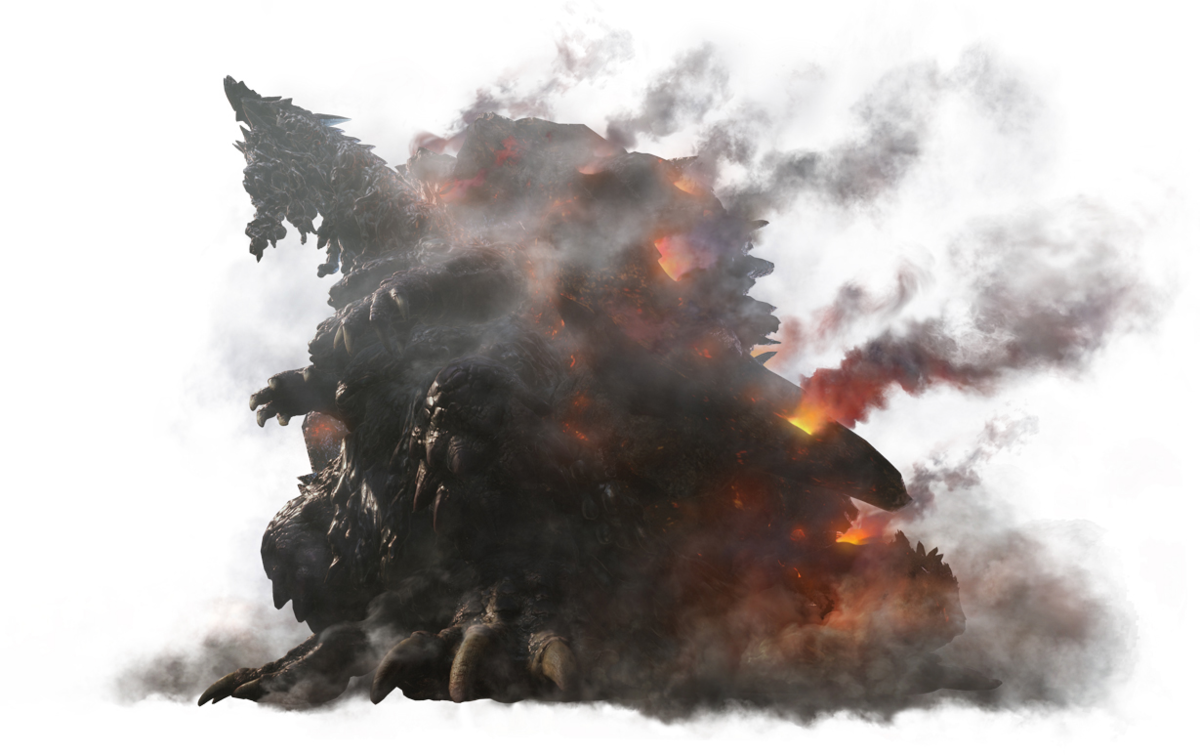
You just reached the "final boss" of the first half of Monster Hunter World. You're pumped. The music is swelling, the Commander is yelling about a Dragonator, and a literal mountain is walking toward a giant wooden wall. Then, twenty minutes later, you’re standing there, bored, loading your tenth cannonball while a stray Barnos pecks at your head.
Zorah Magdaros is a weird one.
Honestly, it’s less of a hunt and more of a scripted parkour event followed by a stationary turret simulator. Most veterans of the series will tell you it’s their least favorite part of the game. But whether you love the spectacle or hate the tedium, you’ve got to get through it to reach High Rank. If you’re looking to optimize this slog or figure out why you keep failing the defense phase, let's break down what's actually happening under that rocky shell.
The Strategy Nobody Tells You
Most players think they need to be a DPS god to beat Zorah. You don't. In fact, your weapon's raw damage barely matters for about 70% of this encounter. The secret to finishing this quickly—and actually getting the rare drops like the Zorah Magdaros Gem—is understanding that the game is basically lying to you about what’s important.
First off, ignore Nergigante.
When that spikey jerk lands on Zorah's back, the music gets intense and the characters start panicking. You’ll feel like you need to drive him off immediately. Don't. If you just keep mining outcrops or attacking a Magma Core, Nergigante will eventually just get bored and fly away on his own. It’s a scripted event. You can spend that time much more productively by farming Dragonite Ore or breaking the third core.
Managing the Magma Cores
There are three main Magma Cores on Zorah’s back during the first phase, and a "secret" fourth one on its head during the second phase.
- The Center Core: This is usually the first one you see. It’s easy, but it has a nasty habit of exploding. Watch for the red glow. When it starts pulsing, back off. If you have the Vitality Mantle or a Health Booster, you can basically ignore the fire damage and just keep swinging.
- The Rear Core: Located inside a little cave-like structure toward the back. This one is cramped. If it starts erupting, you have almost nowhere to run. Pro tip: Water weapons (like the Jyuratodus line) actually do significantly more damage to these cores.
- The Top Core: High up on the "chimney." It’s a bit of a climb, and honestly, the camera usually loses its mind while you're up there.
Why the Barrier Phase Fails
The second half of the fight takes place on the Great Ravine barrier. This is where people actually lose the quest. You aren't fighting with your sword anymore; you’re an artillery crew.
The biggest mistake? Not using the Heavy Artillery skill.
If you’re farming Zorah for his armor, go craft the Kulu-Ya-Ku headpiece or some jewels that give you Heavy Artillery. It doubles the damage of your cannons. A standard cannonball does about 180 damage. With the skill, it’s over 210. That adds up fast when you’re trying to hit the damage threshold before Zorah breaks the wall.
The Boat and the Dragonator
At some point, the Commander will scream about the Dragonator. This is your big "hero" moment. You have to jump off the left side of the barrier down onto a ship docked below. There’s a massive lever at the front.
Wait for Zorah to be right up against the ship. If you pull it too early, you miss. If you miss, you lose out on several thousand points of damage and likely fail the quest. While you're down there, use the cannons on the boat. The NPCs will load them for you, so you can just run back and forth firing them. It’s much faster than loading them yourself on the top of the wall.
Is Zorah Magdaros Gear Even Worth It?
Short answer: Kinda.
Long answer: It depends on if you like things blowing up. The Zorah Magdaros armor is the "entryway" to High Rank. Its main selling point is the Critical Status set bonus and the Blast Attack skills. If you’re using a Blast weapon (like the Magda Potestas Hammer), this set will carry you through the early 6-star and 7-star quests easily.
However, the defense stats aren't great compared to what you’ll find later. By the time you start fighting Nergigante for real or the Teostra, you’ll probably want to swap it out. The weapons are high raw damage but have terrible sharpness. You’ll be sharpening your blade every thirty seconds, which gets old real fast.
Hidden Mechanics and Mining
If you’re bored during the walk, look for Mining Outcrops. Zorah is the best source for Dragonite Ore and Firecell Stones early on. These outcrops actually respawn. If you break the Magma Cores fast enough, you can spend about five minutes just running a lap around his back, mining everything in sight. This is how you fund your expensive High Rank weapon upgrades.
What to do next
If you're stuck on the "A Colossal Task" assignment, stop trying to hit Zorah's feet with your puny Dual Blades. It does nothing.
- Change your Loadout: Equip the Heavy Artillery skill and bring a Farcaster. If you get stuck or run out of potions, the Farcaster lets you warp back to camp to restock instantly.
- Focus the Head: During the barrier phase, when Zorah leans in to headbutt the wall, you can actually jump onto his nose. There’s a hidden Magma Core there. Breaking it deals massive damage and can stagger him, saving your barrier from a big hit.
- Check the Optional Quests: Zorah doesn't stay on your map. He appears as a "Timed Event" randomly after you finish hunts. When you see the music change in Astera and a notification pops up, that’s your chance to farm him. Don't waste it; he might not come back for another five missions.
Basically, treat the fight like a chore you have to do before you're allowed to go play outside. It’s a spectacle the first time, a grind the second time, and a "please let this be over" the third time. Just keep those cannons firing.