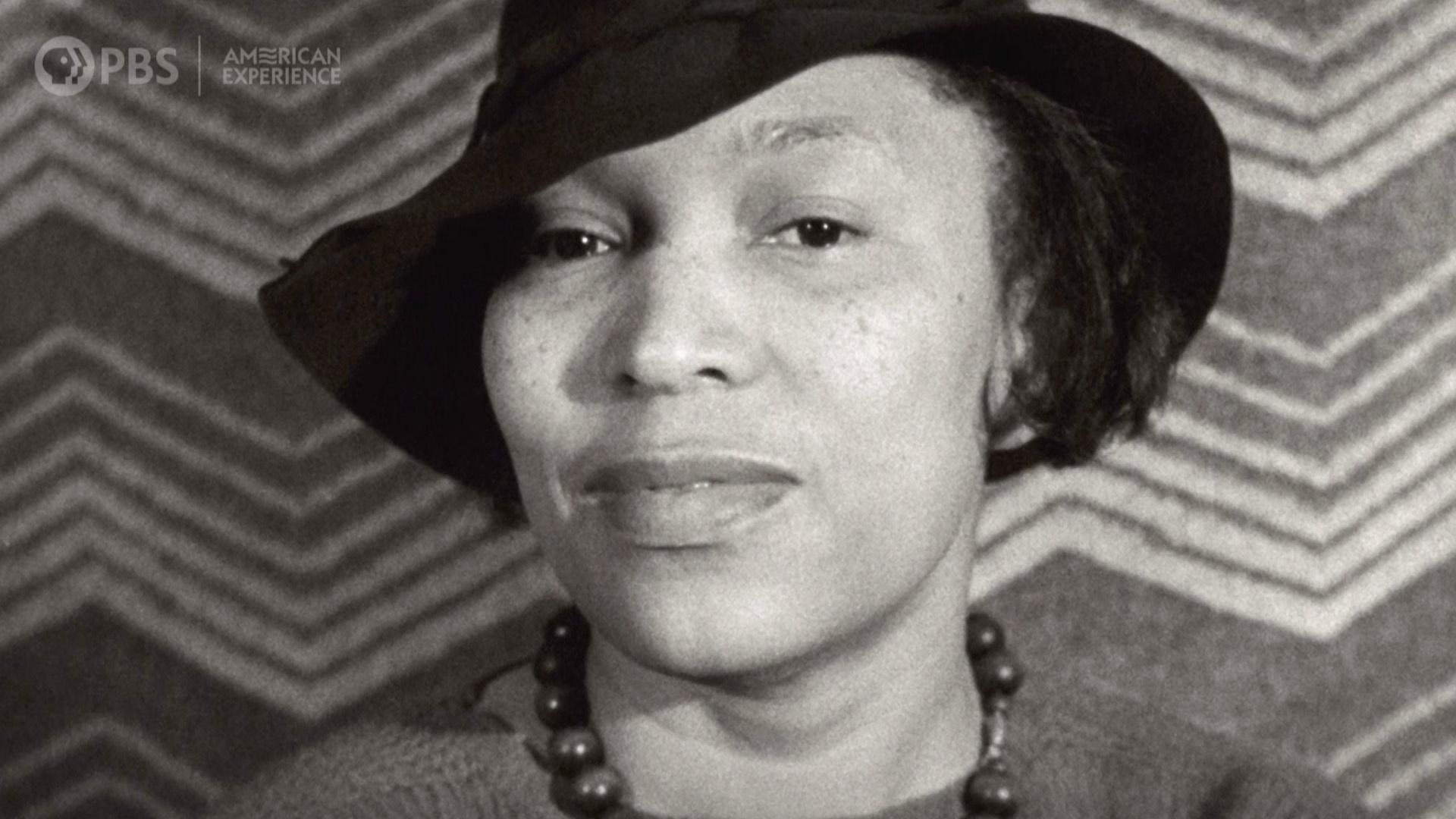
Honestly, if you think you know Zora Neale Hurston, you might want to double-check your sources. Most people see the famous photo of her in that stylish hat and think "Harlem Renaissance icon" or "author of that book I had to read in college." But Zora was a master of self-mythology. She didn't just write stories; she lived one that she edited, redacted, and occasionally flat-out invented as she went along.
Take her age.
For decades, the world thought she was born in 1901 in Eatonville, Florida. That’s what she told her friends. That’s what she told her editors. It’s even what she wrote in her own autobiography, Dust Tracks on a Road.
But here’s the thing: she was actually born in 1891. In Alabama.
The Mystery of Zora Neale Hurston Biographical Information
Why did she lie? It wasn't just vanity. When Zora was twenty-six, she hadn’t even finished high school. She’d spent ten years drifting after her mother died—working as a maid, a nanny, basically surviving. She wanted an education, but you couldn't exactly walk into a public high school as a twenty-six-year-old woman in 1917. So, she chopped ten years off her life. She told the Morgan Academy in Baltimore she was sixteen. It worked.
That one lie gave her the "youth" she needed to get through Howard University and eventually Barnard College, where she became the first Black woman to graduate from the school.
Notasulga vs. Eatonville
Most people associate her with Eatonville, Florida. It makes sense. She called it her home. She called it her birthplace. In reality, she was born in Notasulga, Alabama, and moved to Florida when she was three.
Eatonville was special, though. It was one of the first all-Black incorporated towns in the U.S. Her father wasn't just a preacher there; he was the mayor. Growing up in a place where Black people held all the power—the mayor, the sheriff, the shopkeepers—gave Zora a kind of "unconquered" spirit. She didn't grow up feeling "less than" because of her race. She grew up feeling like the center of the world.
The Scientist in the Sun-Hatted Author
We usually talk about her as a novelist, but Zora was a hardcore anthropologist. She studied under Franz Boas (the "Father of American Anthropology") at Columbia. He didn't just want her to write pretty poems; he wanted data.
She went back to the South with a car, a chrome-plated pistol, and a pack of cigarettes. She wasn't just "visiting home." She was collecting "lies"—the tall tales and folklore of the Black South. She stood on street corners with calipers measuring people's heads for anthropometric studies. She nearly got killed in a lumber camp in Polk County because she was "prying with a purpose."
She wasn't some delicate flower of the arts. She was tough.
The Falling Out with Langston Hughes
If you've ever had a creative project go south because of an ego clash, you'll relate to the Mule Bone disaster. Zora and Langston Hughes were the "it" couple of the Harlem Renaissance (platonically, mostly). They tried to write a play together called Mule Bone.
It ended in a legal nightmare.
Zora copyrighted it in her name only. Langston felt betrayed. They stopped speaking. They never made up. It's a reminder that even the geniuses we put on pedestals were capable of being petty, territorial, and remarkably human.
The Quiet, Hard End in Florida
The part of Zora Neale Hurston biographical information that usually gets glossed over is how it ended. It wasn't pretty.
By the late 1940s, Zora was out of fashion. The literary world wanted "protest novels" about the horrors of racism. Zora wanted to write about the joy, the gossip, and the internal lives of Black people. She refused to write characters who were just victims.
She ended up back in Florida, working as a maid for a white family who didn't even realize their housekeeper was a world-famous author until they saw her name in a magazine.
She died in 1960 in a welfare home.
She was buried in an unmarked grave in Fort Pierce. Her papers—years of unpublished manuscripts—were nearly burned by a cleaning crew. A deputy sheriff who happened to be a fan literally pulled them out of the fire.
Alice Walker and the Resurrection
Zora stayed "dead" to the world for fifteen years. Then, in 1973, a young writer named Alice Walker (who later wrote The Color Purple) went looking for her.
Walker wandered through a weed-choked field in Florida, pretending to be Zora’s niece to get information. She eventually found the spot. She bought a headstone that labeled Zora "A Genius of the South."
That one act of literary archaeology changed everything. Today, Their Eyes Were Watching God sells more copies in a year than it probably did in Zora’s entire lifetime.
What We Can Actually Learn from Zora
Zora Neale Hurston didn't follow the rules. She lied about her age to get an education. she fought with her friends. She died broke. But she never once apologized for being exactly who she was.
If you want to really understand her, don't just read her biography. Read her work. Look at the way she handles language.
Actionable Next Steps:
- Read the "uncut" version: Find the 1995 Library of America edition of her work. It includes the parts of her autobiography that her original publishers censored because they were "too political."
- Visit Eatonville (Virtually or in Person): The Zora Neale Hurston Museum is still there. They hold a festival every year that celebrates her legacy in the town she made famous.
- Listen to her voice: There are actual recordings of Zora singing folk songs she collected during her field research. Hearing her "booming" voice changes how you read her dialogue.
- Look past the novel: Check out Mules and Men. It’s her anthropology book, but it reads like a collection of the best porch stories you've ever heard.
Zora wasn't a saint. She was a complicated, brilliant, occasionally difficult woman who refused to let the world define her. And honestly? That's way more interesting than the "perfect icon" version of her story.