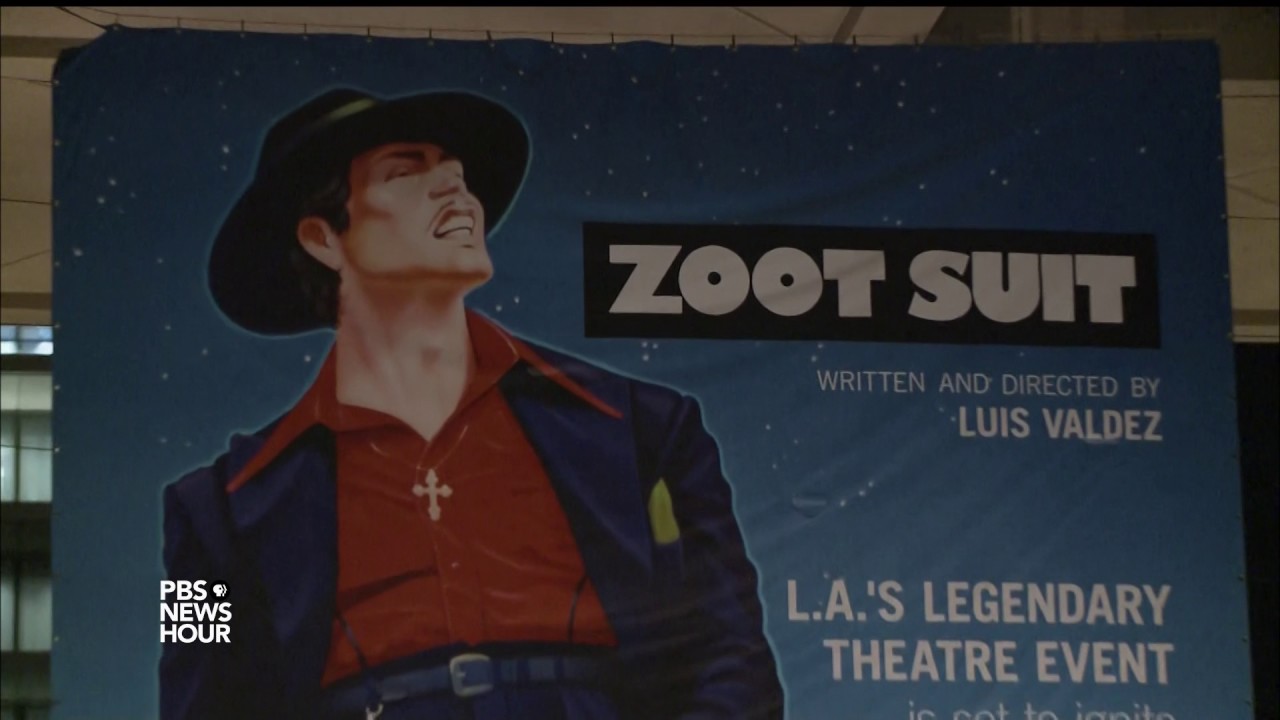
Honestly, if you haven't seen or read Zoot Suit by Luis Valdez, you're missing out on the literal DNA of Chicano theater. It’s not just a play. It’s a riot—literally and figuratively.
Imagine it's 1942. Los Angeles is a tinderbox. World War II is screaming in the background, and if you’re a young Mexican-American man wearing a suit with too much fabric, you’re basically a walking target. That’s the world Luis Valdez dropped us into when he premiered this masterpiece at the Mark Taper Forum in 1978. It wasn't just a local hit; it became the first Chicano play to ever make it to Broadway. That’s a massive deal.
What Really Happened: The Sleepy Lagoon Murder
The heart of the story is the Sleepy Lagoon murder. Most people forget this was a real event, not just a plot device. On August 1, 1942, a man named José Díaz was found dying near a swimming hole (the "Sleepy Lagoon") in Los Angeles.
What followed was a legal circus.
The police rounded up 22 young men from the 38th Street Gang. No evidence. No murder weapon. Just a lot of "yellow journalism" and racial profiling. Luis Valdez takes this historical nightmare and centers it on Henry Reyna, a character based on the real-life Henry Leyvas.
The Trial of the Century (That Nobody Talks About)
In the play, the courtroom scenes are infuriating. You've got a judge who won't let the defendants cut their hair or change out of their "zoot suits" because he wants them to look like thugs for the jury.
- Henry Reyna: The leader, tough but conflicted.
- George Shearer: The lawyer trying to keep his head above water in a rigged system.
- Alice Bloomfield: The activist reporter who realizes this isn't about a murder—it's about a "Mexican Crime Wave" invented by the press to sell papers.
The trial ended with 17 of the boys being sent to San Quentin for a crime they didn't commit. They stayed there for nearly two years until a grassroots committee finally got the convictions overturned in 1944. But the damage was done. The media had already lit the fuse for the Zoot Suit Riots of 1943.
Who is El Pachuco?
You can't talk about Zoot Suit by Luis Valdez without mentioning the coolest, most enigmatic character in American drama: El Pachuco.
Played famously by Edward James Olmos (who absolutely killed it in the 1981 movie version too), El Pachuco is Henry’s alter ego. He’s the narrator. He’s the personification of "pachuquismo." He’s basically the voice in Henry’s head telling him to stay sharp and never trust the "gabacho" (white) system.
He’s a bit of a meta-theatrical trick. He snaps his fingers, and the scene stops. He talks to the audience. He mocks the "press" characters. Valdez used him to show that being a Pachuco wasn't just about clothes; it was a performance of identity. It was a way to say, "I'm here, I'm different, and I’m not going anywhere."
It’s kinda brilliant how Valdez links this to ancient Aztec roots. El Pachuco is often seen as a modern incarnation of Tezcatlipoca, the god of the smoking mirror. Deep stuff for a musical, right?
The Riots: When Fashion Became a War Zone
The climax of the play focuses on the 1943 Zoot Suit Riots. This part of the story is brutal. Thousands of white sailors and Marines started roaming the streets of LA, hunting anyone in a zoot suit.
Why? Because of fabric.
Seriously. During the war, wool was rationed. The "Victory Suit" was slim and boring. The Zoot Suit, with its broad shoulders and pleated trousers, used "excess" material. To the military and the press, wearing one was unpatriotic. It was an excuse to vent racial frustration under the guise of "war effort" support.
In the play, we see the absolute horror of these mobs stripping young men in the streets. They didn't just beat them; they humiliated them by tearing off their clothes and burning them.
Why We Are Still Talking About It in 2026
You’d think a story about 1942 wouldn't feel so current, but Zoot Suit by Luis Valdez is evergreen. It deals with:
- Media Bias: How the news can "create" a criminal before a trial even starts.
- Racial Profiling: The way certain clothes or looks are criminalized.
- Identity: The struggle of being "too American" for your parents and "not American enough" for your country.
Honestly, the play doesn't give you a neat, happy ending. Valdez actually gives you three different endings at the very end of the script. One is tragic, one is hopeful, and one is just... life. It forces you to choose which reality you believe in.
How to Dive Deeper into Zoot Suit
If you're looking to actually experience this story properly, don't just read a summary. Do these three things:
- Watch the 1981 Film: It’s directed by Valdez himself and stars Edward James Olmos. It captures that weird, stage-to-screen energy perfectly.
- Read the Play Script: Pay attention to the stage directions. The way Valdez uses "The Press" as a literal character is a masterclass in symbolism.
- Research the Sleepy Lagoon Defense Committee: Look into Alice McGrath (the real-life inspiration for Alice Bloomfield). Her work was a massive turning point for Chicano civil rights.
Basically, go find a copy. It'll change how you look at American history and the power of a really good suit.