He was terrifying. Honestly, there is no other way to describe the first time we saw Zoom on The Flash. While Eobard Thawne was a calculating mastermind who played the long game, Zoom was a literal monster. He didn't just want to win; he wanted to break Barry Allen physically and spiritually. If you watched Season 2 back in 2015, you probably remember that chilling blue streak and the demonic voice provided by the legendary Tony Todd. It wasn't just another speedster fight. It felt like a horror movie snuck into a superhero show.
Most fans agree that the transition from the mystery of "Who is Zoom?" to the reveal of Hunter Zolomon was one of the highest points of the entire Arrowverse. But why does he still hold up today?
The Mystery of Earth-2 and the Blue Lightning
When we talk about the mechanics of Zoom on The Flash, we have to talk about Earth-2. This wasn't just a gimmick. It expanded the multiverse. Jay Garrick—or the man we thought was Jay—showed up at S.T.A.R. Labs looking like a hero from a bygone era. He warned them. He told them about a speed demon who had conquered his world.
Zoom’s speed was different. It wasn't the warm yellow of Barry’s lightning or the red of the Reverse-Flash. It was a cold, flickering cyan. This wasn't just an aesthetic choice by the VFX team. It was a narrative clue. The blue lightning was a side effect of the Velocity-9 serum, a drug that was literally killing him. Hunter Zolomon was a dying man obsessed with finding a cure, and that cure was stealing Barry’s Speed Force.
It’s a desperate motivation.
Most villains want money or power. Hunter just wanted to survive, and he was willing to murder entire timelines to do it. He was a serial killer who got superpowers. That is a terrifying combination. On Earth-1, Hunter Zolomon was a non-entity, but on Earth-2, his history was dark. He watched his father murder his mother, a trauma that mirrored Barry’s own origin but twisted it into something unrecognizable.
Breaking the Bat... err, the Flash
Remember "Enter Zoom"? Episode 6 of Season 2. It’s widely considered one of the best episodes in the series.
Barry was cocky. He thought he could trap Zoom with a few gadgets and some clever planning. He was wrong. Zoom didn't just beat Barry; he dismantled him. He caught Barry’s lightning with his bare hands and threw it back. He dragged a paralyzed, broken Barry across Central City, showing him off to the newspaper staff and the police like a trophy.
"Look at your hero," he hissed.
It changed the stakes. Suddenly, the Flash wasn't invincible. The show shifted from a lighthearted romp into a desperate struggle for survival. You felt the weight of that defeat.
The Hunter Zolomon Reveal
The twist was polarizing for some, but it was narratively brilliant. Making the audience fall in love with "Jay Garrick" only to reveal he was the monster under the mask was a gut punch. Teddy Sears played the duality perfectly. He went from the stoic, mentor-like figure to a wide-eyed, twitching psychopath in a heartbeat.
It turns out "Jay" was just a "Speed Force remnant."
If you're confused by the time-travel logic, don't worry. Even the writers struggled with it sometimes. Basically, Hunter went back in time, met a past version of himself, and convinced that version to play the hero so he could infiltrate Team Flash. It’s convoluted. It’s weird. But it’s peak comic book storytelling. It showed just how far Zoom on The Flash was willing to go to manipulate his enemies. He didn't just want Barry’s speed; he wanted Barry’s trust.
Comparing Zoom to the Reverse-Flash
People always argue about who was better. Thawne or Zolomon?
Thawne is the archnemesis. He is the shadow that defines Barry. But Zoom was the physical ceiling. Thawne's evil was personal and petty. Zoom's evil was chaotic and expansive. While Thawne wanted to go home to his own time, Zoom wanted to collapse the entire multiverse until only Earth-1 remained, with him as its god.
He was also much faster.
During the mid-season point, Barry couldn't even touch him. He had to use the tachyon enhancer just to keep up. There’s a raw, visceral nature to Zoom’s fighting style. He doesn't use gadgets. He uses his fists. He vibrates his hand through people's chests without a second thought. He turned the Speed Force into a weapon of pure terror rather than a tool for heroism.
The Tragic End of Hunter Zolomon
The finale of Season 2, "The Race of His Life," gave us a glimpse into Zoom's endgame. He wanted to use a "magnatar" to destroy every world in the multiverse. It was high stakes, maybe a bit too high for a street-level show, but it forced Barry to make a choice. Barry had to use Zoom’s own trick against him—the speed remnant.
But the real kicker was Zoom’s fate.
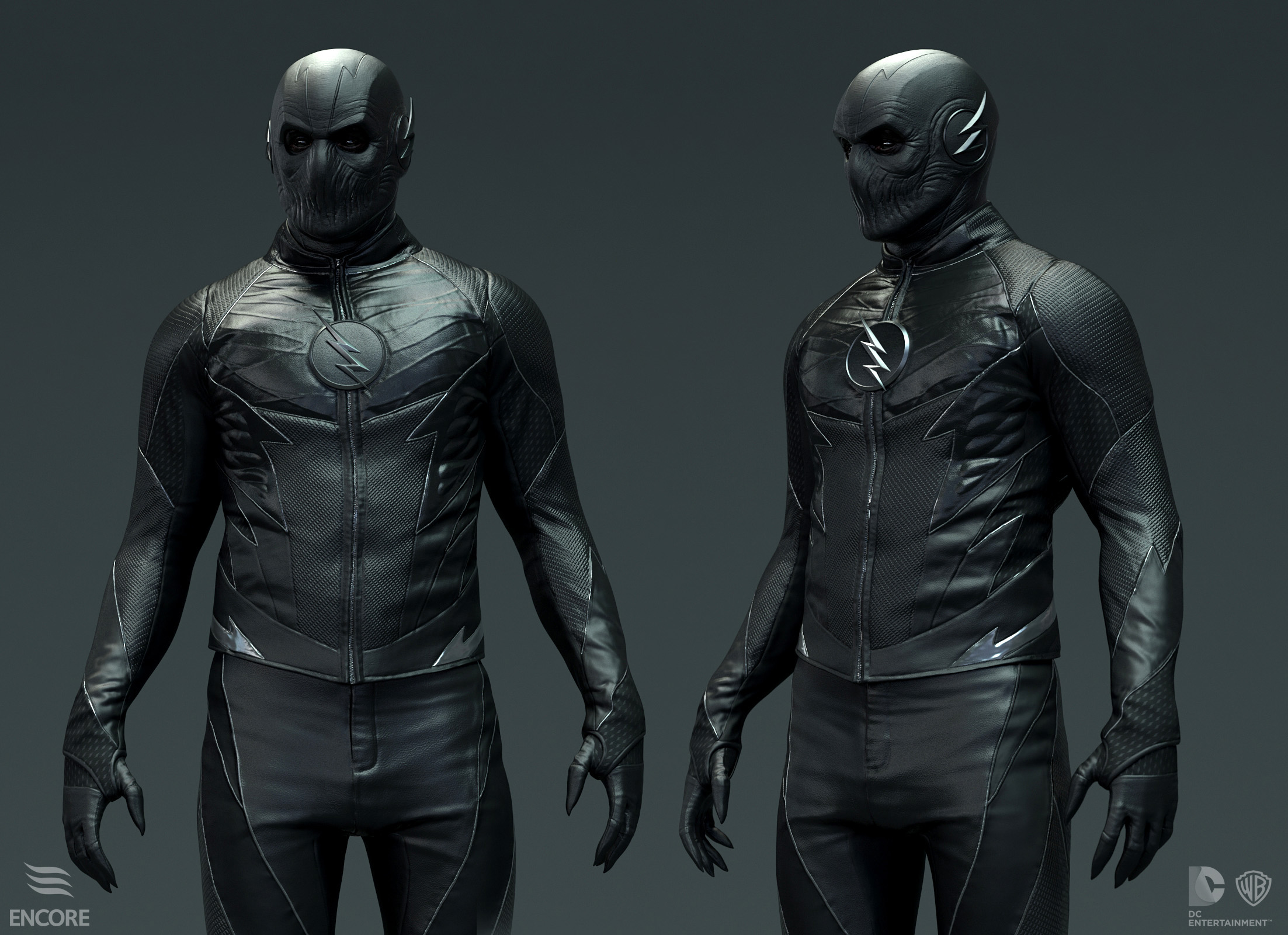
He wasn't just killed. He was transformed. The Time Wraiths, the enforcers of the Speed Force, finally caught up to him. They didn't just vaporize him; they decayed him. His suit turned black, his face shriveled, and the red logo on his chest turned white. He became Black Flash.
In many ways, this was a fate worse than death. He became a slave to the very power he tried to steal, a mindless reaper hunting other speedsters who messed with time. It was a poetic, albeit gruesome, ending for a man who refused to accept his own mortality.
Why We Still Talk About Him
The villains that followed Zoom often felt like retreads. Savitar was a bit too "god-like" and confusing. The Thinker was a mental threat that lacked the physical punch. Cicada... well, let’s not talk about Cicada.
Zoom worked because he was a physical threat you could feel through the screen. When those blue sparks appeared, you knew someone was going to die. He brought a sense of dread that the show eventually lost as it leaned more into "Team Flash" ensemble drama and less into the isolation of being the Fastest Man Alive.
Actionable Takeaways for Fans and Creators
If you're revisiting the series or writing your own stories, there are lessons to be learned from how the show handled Zoom on The Flash:
- The Power of Voice: Tony Todd’s voice acting did 50% of the work. It made the character feel inhuman. Never underestimate the impact of sound design on a villain.
- Physical Dominance: A hero is only as good as the obstacles they face. Zoom forced Barry to train harder and think faster than ever before.
- The Mystery Box: The first half of Season 2 is a masterclass in building tension through a masked identity. The clues were there (the "Man in the Iron Mask" tapping code, Jay's weird behavior), making the rewatch satisfying.
- The Costume Design: Moving away from the bright colors of the Flash and the Reverse-Flash to a matte black, leather-textured suit with clawed gloves made Zoom look like a demon.
The legacy of Zoom isn't just in his speed. It’s in the trauma he left behind. He killed Henry Allen right in front of Barry, in the same spot where Nora Allen died. He didn't just want to be fast; he wanted Barry to be just like him—broken, alone, and fueled by rage. He failed in the end, but he came closer to winning than almost anyone else.
To understand the Flash, you have to understand his villains. And you can't talk about his villains without acknowledging the nightmare that was Hunter Zolomon. He was the dark reflection in the mirror, the reminder that speed is a gift that can easily become a curse if held by the wrong hands. Central City was never the same after he arrived, and honestly, neither was the show.
To appreciate the full scope of Zoom’s impact, go back and watch the Season 2 episode "Versus Zoom." It lays out his entire backstory, from the orphanage to the psychiatric ward, and explains exactly why he became the monster we saw on screen. It’s a chilling reminder that villains aren't born; they're made through tragedy and bad choices.
Next time you see a flash of blue lightning in a comic or a show, you'll know exactly who to thank for that lingering sense of unease. Zoom didn't just run; he hunted. And for one brilliant season, he was the scariest thing on television.