He was terrifying. Honestly, when we first saw those dead, blue-streaked eyes and heard that distorted, demonic growl voiced by Tony Todd, Zoom in The Flash felt like a genuine horror movie character dropped into a CW superhero show. Most speedsters in the Arrowverse just wanted to be the fastest or maybe change the past to save a parent. Not Hunter Zolomon. He was a serial killer with a god complex who happened to stumble into the Speed Force.
It’s been years since Season 2 of The Flash aired, but fans still argue about whether Zoom was actually better than Reverse-Flash. Eobard Thawne was calculating and personal, sure. But Zoom? Zoom was a force of nature. He didn't just want to kill Barry Allen; he wanted to break his spirit, steal his speed, and literally collapse the multiverse into a single point of nothingness. Recently making news recently: The Billie Eilish Vegan Backlash Proves the Death of Political Substance.
The Man Behind the Mask: Who Was Hunter Zolomon?
Hunter’s backstory is dark. Darker than most people remember. Unlike Barry, who used the trauma of his mother’s death to become a hero, Hunter watched his father murder his mother and was then shuffled through a broken foster care system. He became a prolific serial killer on Earth-2.
He was actually caught and sent to the electric chair. But, in a twist of cosmic irony, the S.T.A.R. Labs particle accelerator exploded right as he was being executed. The dark matter fused with the electricity, giving him speed but also a terminal illness. That’s the "speed cancer" or cellular degeneration that drove his entire arc. He was dying, and he needed Barry's speed to live. Additional insights into this topic are covered by The Hollywood Reporter.
Everything about his "Jay Garrick" persona was a lie. He played the hero just to give the people of Earth-2—and eventually Earth-1—a false sense of hope so he could rip it away. It’s a level of psychological warfare we haven't really seen replicated in the show since.
Why Zoom in The Flash Felt So Much Faster
A lot of viewers get confused about the actual physics of Zoom in The Flash. In the comics, Hunter Zolomon isn't technically a speedster. He manipulates his own personal timeline, making it look like he’s moving fast when he’s actually just slowing down time relative to himself.
The show changed this. In the TV series, Zoom is a traditional speedster, but he’s "overclocked." He used Velocity-9, a dangerous speed-enhancing drug, which turned his lightning blue. Blue lightning in the Flash lore usually signifies a higher level of speed, but it also indicates that the speedster is literally burning up.
Think of it like a car engine being pushed way past the redline. It’s faster than anything else on the road, but it’s melting the pistons from the inside out. That desperation made him unpredictable. You can't reason with a dying man who has the power to run through dimensions.
The "Enter Zoom" Beatdown
Remember Episode 6 of Season 2? "Enter Zoom." It’s probably one of the most one-sided fights in superhero television history. Barry tries everything—lightning throws, mid-air combat, gadgets—and Zoom just catches the lightning and throws it back.
He then drags a broken, paralyzed Barry around Central City like a trophy. He shows him to the newspaper office, the police station, and S.T.A.R. Labs. It wasn't just a physical win. It was a total demolition of the "Flash" symbol. He proved that no matter how much Barry trained, there was always something faster and meaner in the dark.
The Multiverse Stakes and the Identity Reveal
The "Jay Garrick is Zoom" reveal was a massive talking point back in 2016. Some fans saw it coming because of the name "Hunter Zolomon" being dropped earlier in the season, but the execution was gut-wrenching. Caitlin Snow falling in love with the man who was secretly the monster terrorizing them was a classic trope, yet it worked because of Teddy Sears’ performance. He went from a charming, dorky scientist to a cold-blooded psychopath in a single scene.
But Zoom’s plan went way beyond just hurting Barry’s friends.
He wanted to use a device called the Magnitar. By running around it, he could create a pulse of energy that would destroy every universe in the multiverse except for Earth-1. He wanted to be the only speedster left in the only world left. It’s high-concept sci-fi villainy at its peak.
The Black Flash Transformation
One of the coolest—and most accurate—nods to the comics was Zoom's ultimate fate. When the Time Wraiths finally caught up to him because of his constant meddling with the timeline, they didn't just kill him. They decayed him.
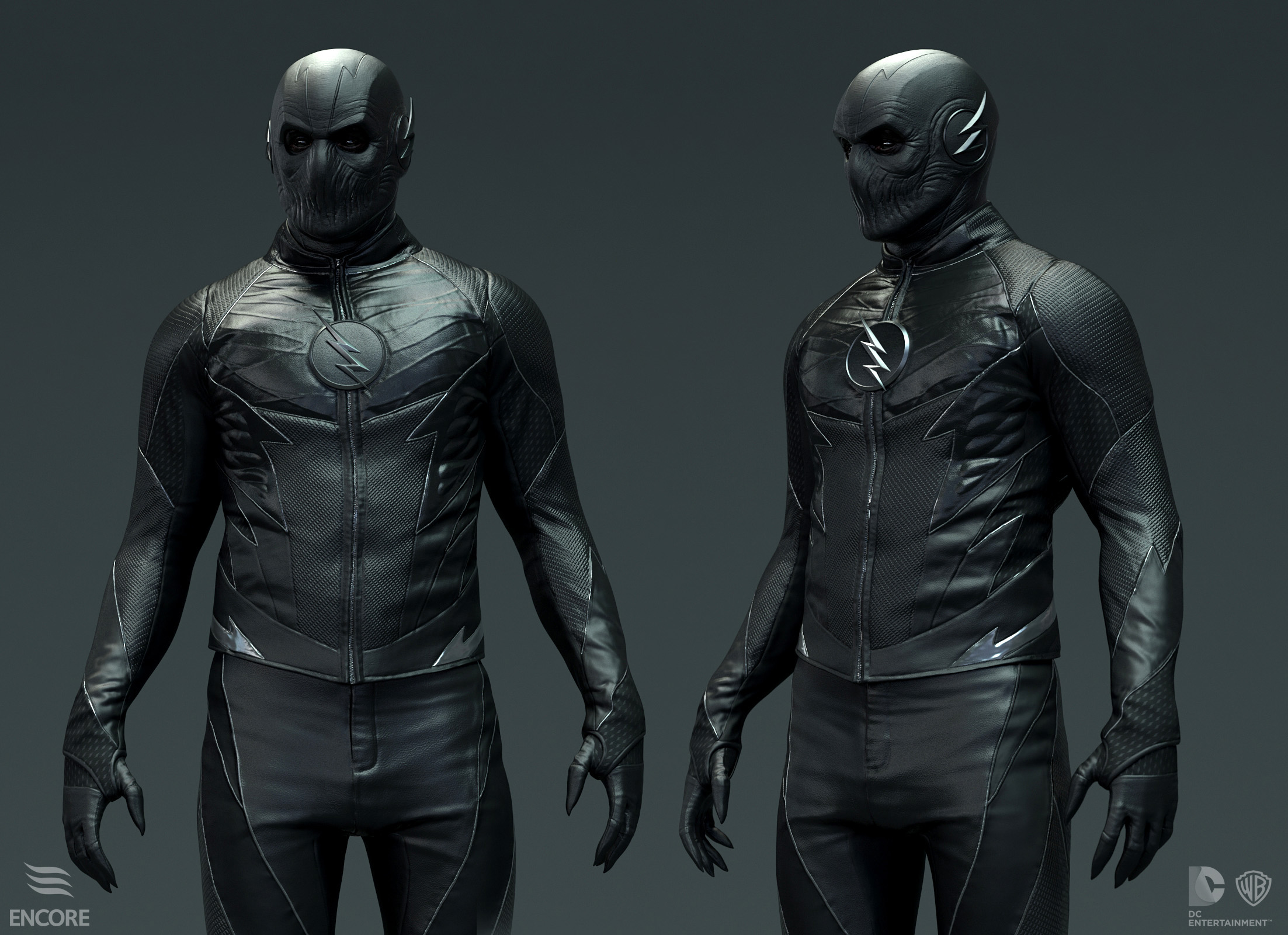
His suit turned black, his logo turned white and red, and his face became a shriveled, undead mask. He became the Black Flash, the Grim Reaper for speedsters.
This served two purposes:
- It gave a definitive end to Hunter Zolomon.
- It introduced a terrifying new element to the Speed Force lore that would come back to haunt Barry and even Savitar later on.
What We Can Learn from Zoom's Arc
If you're a writer or a fan of storytelling, Zoom is a masterclass in building stakes. He worked because the threat felt constant. There were no "monster of the week" distractions that felt more dangerous than he did. Every time he showed up, someone died or something broke.
Common Misconception: People often think Zoom was slower than Eobard Thawne. Technically, at their peaks, Zoom was significantly faster than Season 1 or 2 Thawne. It took Barry vibrating at a specific frequency and using time remnants—a trick he learned from Zoom—to actually stand a chance.
The Actionable Reality: If you’re rewatching the series, pay attention to the sound design. The "whoosh" of Zoom’s blue lightning is pitched lower than Barry’s. It sounds heavy, like a predatory animal. It’s a subtle detail that adds to the dread.
To truly understand the impact of Zoom in The Flash, you have to look at the seasons that followed. Savitar was too CGI-heavy. The Thinker was too cerebral. Cicada was... well, Cicada. None of them captured that raw, visceral fear that Zoom brought to the table.
Final Takeaways for Fans
- Watch for the Clues: In early Season 2 episodes, "Jay" is often absent when Zoom appears. It’s obvious in hindsight, but the showrunners did a great job hiding the "Time Remnant" explanation until the very end.
- The Velocity-9 Connection: Zoom's reliance on V-9 is a cautionary tale about shortcuts. Every bit of power he gained came at the cost of his sanity and his physical body.
- Respect the Blue: Whenever you see blue lightning in the Arrowverse now, it’s a direct callback to the instability Zoom pioneered.
If you want to dive deeper into speedster lore, look into the "Blitz" storyline in the comics (specifically The Flash vol. 2 #197–200). While the show changed a lot, the core of Zolomon’s motivation—that a hero can only be "great" if they suffer through tragedy—comes straight from the source material. It's twisted logic, but for a villain like Zoom, it was the only truth that mattered.
Go back and watch the Season 2 finale, "The Race of His Life." Focus on the moment Zoom realizes he's lost. For a second, the mask slips, and you see the terrified serial killer from Earth-2 who is finally being held accountable by the universe itself. It’s a perfect ending for the show’s most relentless antagonist.