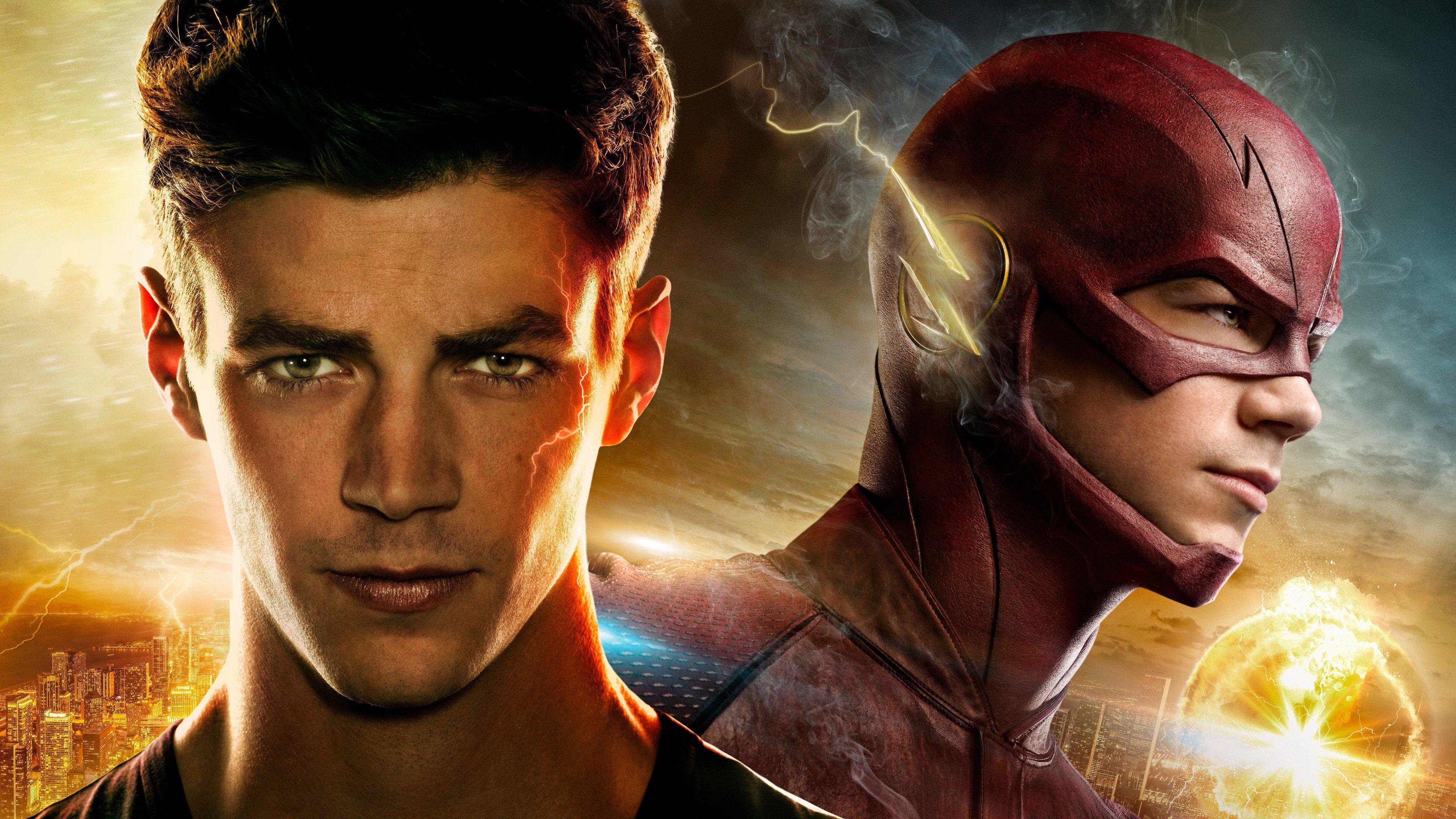
He was terrifying. When Zoom first stepped through a breach from Earth-2 in the second season of The Flash, the vibe of the show shifted instantly. Before him, we had Eobard Thawne, a calculating, petty genius who wanted to go home. But Zoom? Zoom was a monster. He didn't just want to win; he wanted to break Barry Allen in front of the entire city. Honestly, looking back at the Zoom Flash TV series arc now, it’s wild how much darker those episodes feel compared to the later seasons of the CW’s speedster saga.
He moved differently. While Reverse-Flash felt like a shadow, Zoom felt like a storm. Blue lightning trailing behind him, a voice that sounded like grinding gravel—voiced by the legendary Tony Todd—and that horrifying mask that covered his entire face except for those pitch-black eyes. It wasn't just a costume. It was a nightmare.
The Man Behind the Demon
We eventually learned that Zoom was actually Hunter Zolomon. In the comics, Hunter has a completely different backstory involving a tragic accident and a grudge against Wally West, but the TV show went full "serial killer." It turns out Hunter was a convicted murderer on Earth-2 who was getting electroshock therapy right as the S.T.A.R. Labs particle accelerator exploded. That’s a brutal origin story.
It gave him a level of psychopathy that the show hadn't really explored before. He wasn't just "evil." He was a broken, manipulative predator. Think about the "Jay Garrick" ruse. He spent months pretending to be a hero, mentoring Barry, and even dating Caitlin Snow. All of it was a game. He needed Barry to get faster just so he could eventually steal that speed to cure his own cellular degeneration.
The reveal was a gut punch for fans at the time. We wanted to believe in Jay Garrick. Seeing that silver helmet—an icon of hope—associated with a cold-blooded killer was a stroke of genius by the writers. It subverted our expectations of what a mentor figure should be in a superhero show.
Why Zoom Outshines Other Villains
Most speedsters in the Zoom Flash TV series lore have similar goals. Get faster, rule the world, or kill the Flash. Zoom’s motivation was more primal. He was dying. The Velocity-9 serum he used to boost his speed was literally eating him alive. This gave him a desperate, cornered-animal energy.
- He humiliated Barry. In the episode "Enter Zoom," he catches Barry’s lightning, stabs him with his own cowl, and drags his limp body across Central City. It was a complete beatdown.
- The visuals were peak CW. The blue lightning wasn't just a palette swap; it signified the instability of his powers.
- He actually won, for a while. He stole Barry’s speed, conquered Earth-2, and murdered Henry Allen right in front of Barry in the same spot Nora Allen died. That’s cold.
There is a nuance to Zoom that Savitar or Godspeed never quite captured. Those later villains felt like they were trying too hard to be "the biggest threat ever." Zoom felt like a personal tragedy that became a multiversal crisis. When he finally gets taken by the Time Wraiths and transformed into the Black Flash, it felt like a fitting, poetic end. He became the very thing he tried to outrun: death itself.
The Science of the Speed Force (Sorta)
Look, The Flash was never a hard sci-fi show. We all know "Speed Force" is basically a magic word that explains away plot holes. But the way Zoom interacted with physics was fascinating. He didn't just run fast; he manipulated the breaches between worlds.
In the real world, if someone moved at the speeds depicted in the Zoom Flash TV series, the sonic booms alone would level city blocks. The show hand-waves this with the Speed Force aura, but Zoom’s speed felt heavier. Every time he broke the sound barrier, it felt like the air was shattering. The sound design in Season 2 deserves an Emmy just for the way they handled the "vrum-vrum" of Zoom’s movements. It was predatory.
The Legacy of the Blue Streak
Teddy Sears played the dual roles of "Good Jay" and Hunter Zolomon with incredible range. One minute he’s this dork with a bowl cut and a heart of gold, and the next he’s a looming presence of pure ego and malice. It’s hard to pull that off without it feeling cheesy, but Sears made you believe he was two different people until the mask came off.
The impact of Zoom stayed with the show for years. Barry’s decision to travel back in time and create Flashpoint—which messed up the timeline for seasons to come—was a direct result of the trauma Zoom caused by killing Henry Allen. You can trace almost every bad decision Barry made in Seasons 3 and 4 back to that one night in the Allen house with Hunter.
Common Misconceptions About Zoom
A lot of people get confused about the "Man in the Iron Mask." For weeks, fans speculated it was everyone from Eddie Thawne to a future Barry. It turned out to be the real Jay Garrick (Henry Allen’s doppelgänger from Earth-3). Zoom had kidnapped the real hero, stolen his name, and kept him as a trophy. It was a layered deception that actually rewarded viewers for paying attention to the small details, like the tap-code Jay used to communicate through the glass.
Another weird thing people forget: Zoom wasn't trying to destroy the multiverse at first. He just wanted to be the only speedster left. The whole "destroying every earth except Earth-1" plan only came about in the final few episodes because he realized he couldn't just keep Barry's speed—he had to break the entire concept of the Flash.
How to Revisit the Arc
If you’re looking to rewatch the best of the Zoom Flash TV series era, you don’t need to sit through every filler episode. Focus on the key moments that define Hunter’s descent into madness.
- "The Man Who Saved Central City" (2x01): Sets the stakes and introduces the threat of the breaches.
- "Enter Zoom" (2x06): One of the best episodes of the entire series. The fight is brutal and the ending is genuinely shocking.
- "Versus Zoom" (2x18): This is where we get the full backstory of Hunter Zolomon. It’s dark, gritty, and explains exactly why he is the way he is.
- "The Race of His Life" (2x23): The finale. It’s high-stakes, emotional, and leads directly into the Flashpoint arc.
Honestly, the show never quite hit these heights again. While Season 1 is a classic "hero's journey," Season 2 is a psychological horror disguised as a superhero show. Zoom remains the gold standard for what a speedster villain should be: fast, frightening, and deeply personal.
Actionable Takeaways for Fans
If you're diving back into the Arrowverse or exploring the Flash lore for the first time, keep these things in mind to get the most out of the experience.
Watch for the subtle clues. In the early episodes of Season 2, "Jay" (Hunter) often avoids certain questions about his past or reacts strangely to Earth-1's tech. These aren't just writing quirks; they are breadcrumbs leading to the reveal.
Compare the versions. If you're a comic book reader, compare the TV version of Hunter Zolomon to the one created by Geoff Johns. The TV version is much more of a traditional slasher villain, whereas the comic version thinks he is helping Wally West become a better hero through tragedy. Both are fascinating, but the TV version fits the darker tone of Season 2 perfectly.
Explore the Multiverse lore. Zoom was our first real introduction to the concept of doppelgängers in the CW universe. Pay attention to how the show handles the "nature vs. nurture" argument through characters like Earth-2 Reverb (Cisco) and Killer Frost (Caitlin).
Zoom wasn't just a guy in a suit. He was a representation of what happens when power meets an unfixable soul. Whether you loved the blue lightning or were genuinely creeped out by Tony Todd’s voice, there’s no denying that the Zoom Flash TV series era was the peak of the show’s intensity.