If you watch Cameron Crowe’s semi-autobiographical masterpiece today, you might miss her at first. She isn't on the bus. She isn't backstage with Penny Lane. She isn't even in the final, tear-soaked frames of the film. But honestly, Zooey Deschanel in Almost Famous is the literal engine of the entire story. Without her, William Miller stays in San Diego, becomes a lawyer or something equally sensible, and we never get "Tiny Dancer" in a tour bus.
She plays Anita Miller. She’s the rebellious older sister.
It’s 1969. Anita is trapped in a house where rock music is "the devil's house music" and her mother, played by the terrifyingly brilliant Frances McDormand, treats fun like a felony. Deschanel doesn't get a lot of screen time. Maybe fifteen minutes total? But she uses every single second to establish the stakes of the counter-culture revolution. When she looks at her mother and says, "This is not a home, it’s a school," it’s one of those lines that defined a generation of teenage angst.
Why Anita Miller is the Most Important Character
Most people focus on Patrick Fugit or Kate Hudson. That makes sense. They’re the stars. But Zooey Deschanel provides the catalyst. Think about the scene where she leaves. It’s raining. She’s packing her bags. She tells William to "look under his bed" because his "influence" is there.
That influence? A stack of records.
The Who. Joni Mitchell. Bob Dylan. This is the moment Zooey Deschanel in Almost Famous shifts the movie from a family drama into a rock-and-roll odyssey. She isn't just a sister; she’s a smuggler of culture. She represents the freedom that William is too scared to grab yet. Her departure creates a vacuum in the Miller household that William eventually has to fill by becoming a journalist.
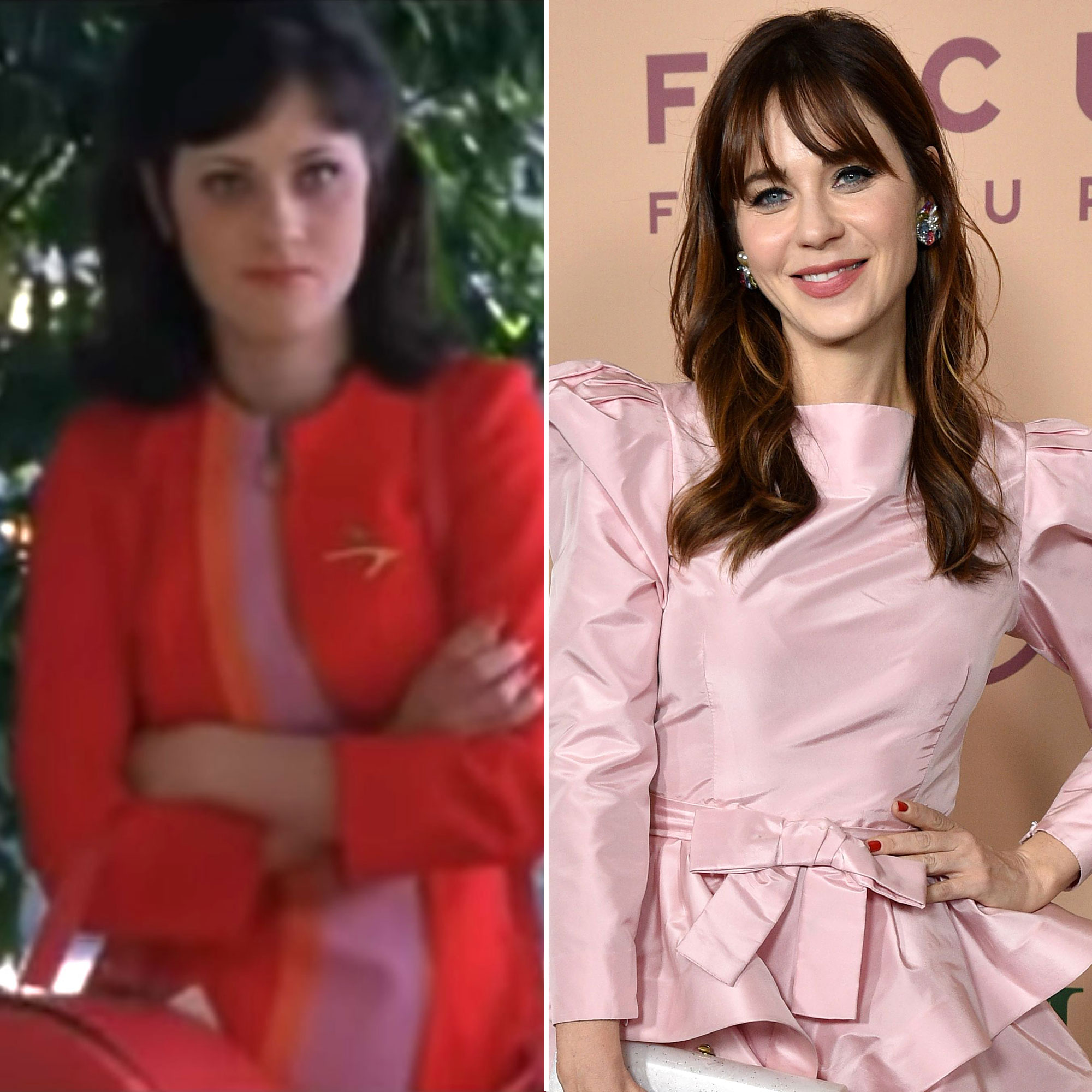
It’s weirdly prophetic. Before she was the "Adorkable" lead of New Girl or the heartbreaker in 500 Days of Summer, Deschanel was playing this grounded, gritty, flight-attendant-in-training. She lacked the bangs back then. She had this raw, dark-haired intensity that feels a lot more like a 70s folk singer than a sitcom lead.
The Secret History of the Casting
Cameron Crowe is notorious for his casting choices. He wants people who feel like the era. Deschanel was only about 18 or 19 when they filmed this. She had only done one other movie, Mumford.
Crowe saw something in her eyes. It’s that "I know something you don’t" look.
Interestingly, the role of Anita is based on Crowe’s real-life sister, Cindy. In real life, Cindy actually did leave her records behind for her brother. She actually did become a flight attendant. When you watch Deschanel, you aren't seeing a caricature of a rebel; you’re seeing a specific, lived-in person. She has this way of standing—slumped but defiant—that perfectly captures what it felt like to be a teenager in the late 60s who just wanted to hear something loud.
The "Stairway to Heaven" Scene
There is a deleted scene—well, it's in the Untitled bootleg cut—that features Zooey and Frances McDormand. It’s legendary among fans. They play the entirety of Led Zeppelin’s "Stairway to Heaven" while Anita tries to explain the "poetry" of the song to her mother.
Legal issues with the song rights kept it out of the theatrical cut.
Watching Deschanel try to defend Robert Plant’s lyrics to a woman who thinks Simon & Garfunkel are dangerous is a masterclass in comedic timing. She doesn't play it for laughs. She plays it with deadly earnestness. That’s the secret to why she works so well in this film. If she were just a "cool sister," we wouldn't care. We care because she’s hurting. She’s desperate to escape.
A Career Launchpad
Hollywood noticed. Even though she’s a supporting player, the industry saw that she could hold her own against an Oscar winner like McDormand.
After Zooey Deschanel in Almost Famous, her trajectory changed. She moved away from the "rebellious teen" trope and into more eccentric territory. But if you look closely at her performance as Anita, the seeds of her future characters are all there. The musicality. The deadpan delivery. The way she can communicate a massive amount of emotion just by staring at a record sleeve.
It’s kinda crazy how many stars are packed into this movie. You’ve got Jimmy Fallon as a manager. Rainn Wilson as a Rolling Stone editor. Jay Baruchel as a obsessive fan. But Deschanel is the one who grounds the "home" life. She represents the world that William is leaving behind—and the world he eventually wants to return to.
Breaking Down the "Sister" Archetype
In most coming-of-age movies, the older sibling is a jerk. Or they’re a ghost.
Anita Miller is neither. She’s a mentor.
When she whispers "one day, you will be cool" into William’s ear before disappearing into a taxi, it isn't just a line. It’s a prophecy. It gives him the permission he needs to exist outside of his mother’s shadow. Honestly, the movie’s emotional climax isn't really the plane crash sequence or the "Penny Lane in the hospital" scene. It’s the moment William sees Anita again at the airport.
The circle closes.
She’s wearing her flight attendant uniform. She looks older. Tired, maybe, but free. The way they hug—it’s the most "real" moment in the film. There are no groupies there. No rock stars. Just two kids who survived their childhood.
Facts You Might Have Missed
- Zooey actually sings "The Chipmunk Song (Christmas Don't Be Late)" during a family scene. It’s a tiny hint at the singing career she’d eventually have with She & Him.
- The real Anita (Cindy Crowe) was actually on set for some of the filming. Imagine the pressure of playing the director’s sister while she’s standing right there.
- Her character’s room was decorated with authentic 1960s posters, many of which came from Cameron Crowe’s personal collection.
The Lasting Legacy of the Performance
Why are we still talking about this?
Because the movie feels like a warm hug, and Anita is the person who taught us how to hug. We’ve all had that person in our lives—the one who gave us our first "real" book or played us our first "real" album. Deschanel captures that specific magic.
She isn't a "Manic Pixie Dream Girl" here. That’s a label that would haunt her later career. In Almost Famous, she’s just a girl who loves music and hates being told what to do. It’s perhaps her most honest performance because it’s stripped of the quirks that would later define her brand.
If you haven't seen the "Bootleg Cut" (also known as Untitled), you really should. It adds about 40 minutes of footage. Much of that footage expands the family dynamic. You get more of Zooey's frustration. You see the friction between her and her mother more clearly. It makes her eventual return at the end of the film feel even more earned.
How to Watch Almost Famous Today
If you want the full Anita Miller experience, don't just stream the theatrical version on a random Tuesday.
- Find the 4K Restoration: The colors of the 70s pop way better.
- Watch the "Untitled" Version: It’s the director’s cut. It’s superior in every way, especially for character depth.
- Listen to the Soundtrack First: Put on Tommy by The Who. It’s the album Anita leaves for William. It sets the mood.
Zooey Deschanel went on to do bigger things. She became a household name. But for a certain subset of film nerds, she will always be the girl in the raincoat, leaving a box of records under a bed, changing a young boy's life forever.
She didn't need to be the "Main Character" to be the soul of the movie.
To really appreciate what she did, go back and watch the opening ten minutes again. Ignore the kids playing in the street. Just watch Zooey's face as she listens to music in her room. She’s not just listening; she’s traveling. That’s what great acting looks like. It's quiet, it's subtle, and it's totally authentic.
Next time you’re feeling nostalgic, track down the vinyl for the soundtrack. Look at the liner notes. Think about that girl leaving home in 1969. We all have an Anita Miller in our lives. If you don't, you might need to be the Anita Miller for someone else. Leave some records under a bed. Start a riot. Tell someone they're going to be cool one day. It’s the best advice anyone can give.