You’re staring at a screen, or maybe a half-finished flyer for a local fundraiser, and it hits you. You need a zebra. But not just any zebra—you need something clean. That's the thing about zoo clip art black and white; people usually think of it as a fallback option when they can't find a high-res photo, but honestly? It's often the superior choice for professional-looking layouts.
Simple. Effective. High contrast.
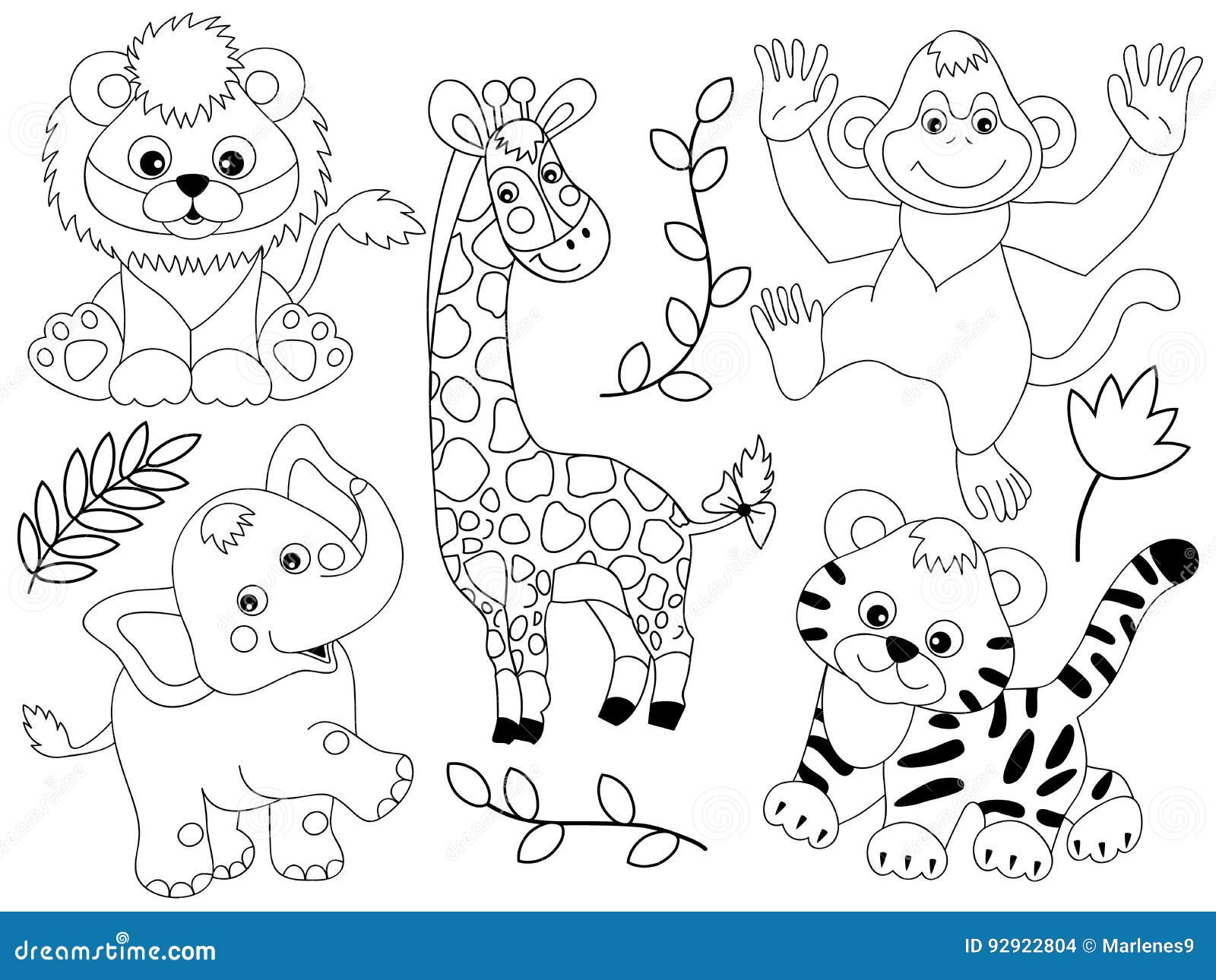
When you strip away the neon greens and the muddy browns of a low-quality stock photo, you're left with the soul of the animal. A lion’s mane becomes a series of bold, rhythmic strokes. An elephant’s trunk is just a graceful curve. It’s minimalist. It’s functional. And frankly, it’s a lot harder to mess up a design when you aren't fighting with a busy background or clashing color palettes.
I’ve spent years digging through digital archives, from the clunky CD-ROM collections of the nineties to the modern vector hubs of today. There is a massive difference between a "free" doodle someone made in five minutes and a high-quality woodblock-style engraving. If you're looking for zoo clip art black and white to actually use in a project that people will see, you have to know what to look for beyond the first page of image search results.
The Psychology of Black and White Animals
Why do we love these simple outlines? It's partially about cognitive load. When we see a black-and-white icon of a giraffe, our brains process the "giraffeness" instantly. We don't have to worry about lighting, shadows, or whether the grass in the photo looks like it was taken in a different climate than the rest of our project.
There's also a weirdly nostalgic element to it. Think about the classic woodcuts in old biology textbooks or the stamps you used in kindergarten. Black and white zoo imagery carries a certain authority. It feels official. It feels like a diagram.
But it's not just about "vibes." From a technical standpoint, black and white assets are the most versatile files in your toolkit. You can recolor them with one click. You can mask them. You can use them for vinyl cutting, screen printing, or laser engraving—tasks where a full-color photo would be useless.
Where to Find High-Quality Zoo Clip Art Black and White That Doesn't Look Cheap
Most people go straight to Google Images. Don't do that. You’ll end up with watermarked garbage or low-resolution JPEGs that look like they were dragged through a digital hedge.
If you want real quality, you have to look at specific repositories.
- The Biodiversity Heritage Library (BHL): If you want "zoo" animals that look like they belong in an 18th-century explorer's journal, this is the gold mine. They have digitized thousands of public domain books. We’re talking intricate line work of rhinoceroses and exotic birds that are technically "zoo clip art" but carry the weight of history.
- OpenClipart: This is the Wild West. It's all Public Domain (CC0). You'll find a lot of "meh" stuff, but if you search for "zoo" or "safari," you can find some exceptionally clean SVG files. Since they're vectors, you can scale that monkey up to the size of a billboard and it won't pixelate.
- The Noun Project: This is for the minimalists. If you want a zoo clip art black and white set that looks like modern signage, this is it. It’s less "art" and more "iconography." Perfect for apps or clean, modern brochures.
- Vecteezy or Creative Market: Sometimes you just have to pay the five bucks. Paid assets usually come with cleaner paths. If you’re a designer, you know the pain of a "free" vector that has 10,000 unnecessary anchor points.
Why Vectors Matter More Than You Think
Let’s get technical for a second. If you download a PNG of a tiger, you're stuck with those pixels. You try to make it bigger? It gets blurry. You try to change the color? You’re messing with hue/saturation sliders and hoping for the best.
Always look for SVG or EPS formats. A vector isn't an image; it's a mathematical instruction. It says "put a curve here and a line there." This means your zoo clip art black and white can be turned into a 50-foot mural or a tiny 10-pixel favicon without losing a single sharp edge.
Creative Ways to Use These Assets
Stop thinking about clip art as just "pictures on a page." It’s a component.
I once saw a craft brewery use high-detail black and white sketches of zoo animals for their labels. They took a standard silhouette of a bear, inverted the colors so it was white on a dark charcoal background, and it looked like a million-dollar branding job. They didn't hire an illustrator for five grand; they just used the right public domain assets and understood typography.
You can use them for:
- Custom Coloring Pages: If you’re a teacher or a parent, you can't just print any image. You need clear boundaries. High-contrast line art is the gold standard here.
- Modern Home Decor: Take a high-resolution scan of a vintage lion engraving, print it large on textured cardstock, and frame it. It looks like a high-end botanical print.
- Apparel: Black and white line art is the easiest thing in the world to screen print. One screen, one color of ink, low cost.
- Logo Foundations: Most great logos start as simple black shapes. A zoo clip art piece can serve as the "bones" of a logo design before you start adding custom flourishes.
Common Mistakes to Avoid
Don't just grab the first thing you see. People often forget about "line weight consistency." If you have a thin, wispy line art of a flamingo next to a thick, chunky, bold outline of a hippo, it’s going to look like a mess. Your eye will jump back and forth because the visual "weight" is off.
Consistency is king.
If you’re building a set, try to find an artist who has done a whole series. Many creators on sites like Pixabay or Flaticon release "packs." Using a pack ensures that the curve radius and the thickness of the black lines match across all your animals.
Also, watch out for "faux" black and white. Sometimes an image looks black and white, but it’s actually a "grayscale" JPEG. When you go to print that, especially on a cheap office printer, it might come out with a weird purple or greenish tint. You want "true" black—often called "Line Art" or "1-bit" in the world of professional printing.
The Ethics of Using Animal Imagery
It's worth mentioning that "zoo" as a concept is evolving. When we look for zoo clip art black and white, we're often looking for that sense of wonder we felt as kids. However, modern design trends are leaning more toward "wildlife" rather than "zoo."
What’s the difference? It's the context.
Instead of an animal behind bars or on a pedestal, look for art that shows the animal in a natural, fluid pose. It feels more contemporary. It feels more respectful to the subject matter.
How to Clean Up Low-Quality Clip Art
Suppose you found the perfect vintage drawing of a lemur, but it’s on a yellowed piece of digital "paper" from a scan. You can fix this easily.
Open it in an editor (even something free like GIMP or Canva). Crank the contrast. Drop the brightness. Use a "threshold" filter if your software has one. This will force every pixel to be either 100% black or 100% white. Suddenly, that muddy scan becomes a crisp, usable piece of zoo clip art.
If you're using Adobe Illustrator, the "Image Trace" tool is your best friend. Use the "Silhouettes" or "Black and White Logo" preset. It turns those pixels into paths, and suddenly you have a professional-grade vector.
Actionable Steps for Your Next Project
Don't just download and dump. To get the most out of your imagery, follow a workflow that ensures the final product doesn't look like a middle-school PowerPoint.
- Define your style first. Do you want "Cute/Cartoonish" or "Vintage/Scientific"? Mixing them is a recipe for a visual headache.
- Search for SVGs. Priority one should always be vector format. It gives you the most freedom.
- Check the license. Just because it’s on the internet doesn't mean it’s free. Look for "CC0," "Public Domain," or "Commercial Use Allowed."
- Standardize the scale. If you’re making a collage of zoo animals, make sure the lion isn't smaller than the penguin unless you're going for a surrealist vibe.
- Invert for impact. Don't forget that white-on-black can be much more striking than black-on-white, especially for posters or social media headers.
You can find incredible depth in the simplest lines. Whether you're designing a menu for a themed cafe or just making some stickers for a kid's birthday party, the right zoo clip art black and white is a powerful tool. It’s about clarity. It’s about the elegance of the silhouette.
Start by browsing the Biodiversity Heritage Library's Flickr account for the "old world" look, or hit up The Noun Project for something that feels like 2026. Either way, keep your lines crisp and your backgrounds clean.