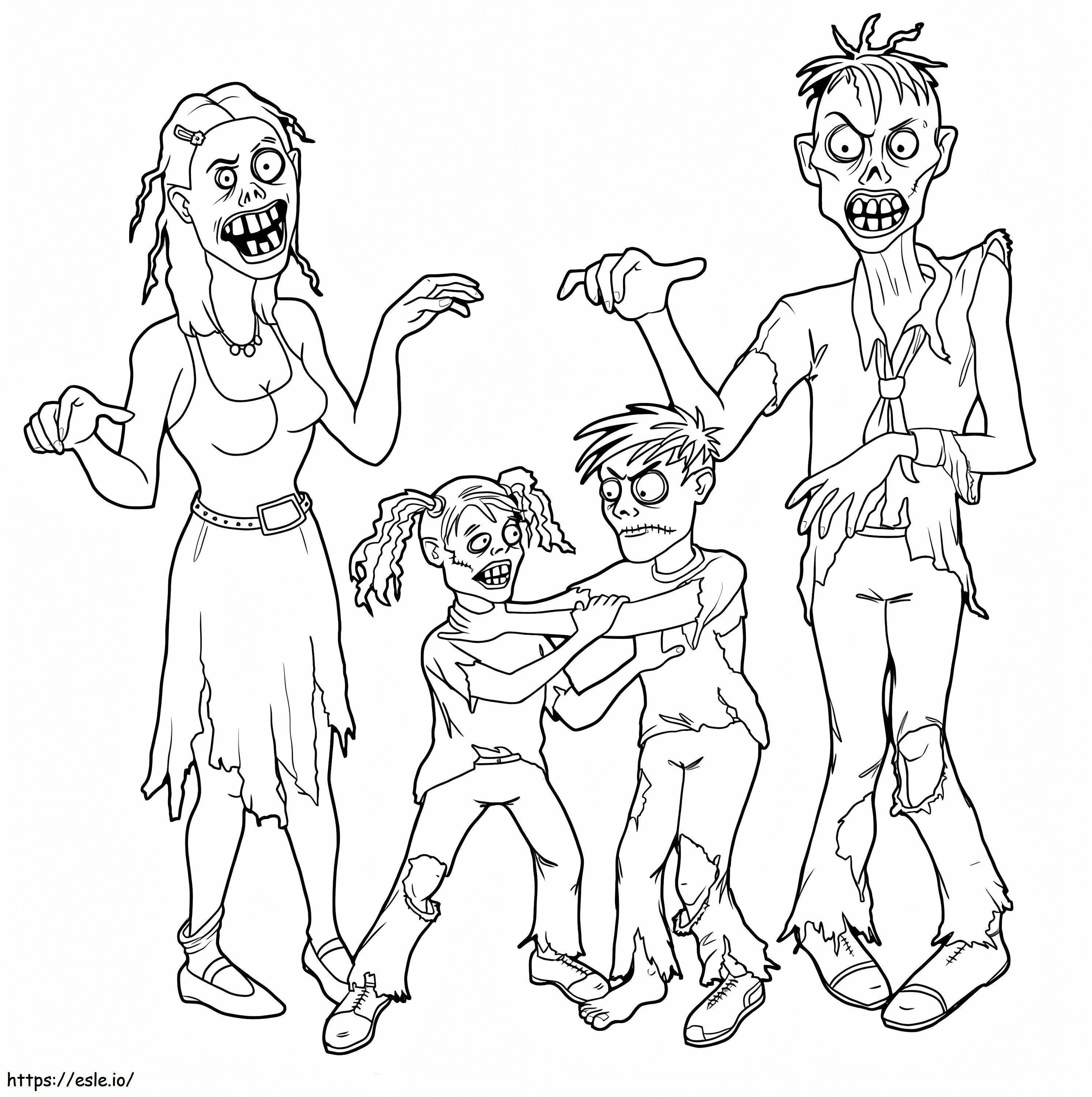
You’re lying in bed, the house is quiet, and suddenly you start wondering if your front door is actually strong enough to withstand a coordinated shoulder-shove from a decaying corpse. It’s a weirdly specific anxiety. We call it zombies in your head, that persistent mental loop where you’re constantly running survival simulations for an apocalypse that—rationally—is never going to happen. Why do we do this? Honestly, it’s not because we’re all secretly hoping for the end of the world. It’s deeper. It’s about how our brains handle stress, societal collapse, and the very human fear of being "eaten" by a system we can't control.
The concept of the zombie has mutated more than the fictional viruses that create them. We went from the folklore of Haiti—where the "zombi" was a victim of soul-stealing sorcery—to the flesh-eating ghouls of George A. Romero’s 1968 classic Night of the Living Dead. Now, they’re everywhere. They’re in our video games, our prestige TV dramas, and, most importantly, they’re a permanent fixture of our subconscious.
The Science of Why Zombies Live Rent-Free in Our Brains
Neuroscience actually has a lot to say about why we get zombies in your head. Dr. Steven Schlozman, a child psychiatrist at Harvard Medical School and author of The Zombie Autopsies, has spent significant time "diagnosing" the undead from a medical perspective. He points to something called Ataxic Neurodegenerative Satiation Deficiency Syndrome (ANSD). It’s a mouthful, but basically, it describes a brain where the frontal lobe—the part that handles logic and impulse control—is completely dark, while the amygdala—the primitive "fight or flight" center—is screaming at full volume.
When we obsess over zombies, we’re often projecting our own feelings of burnout. Think about it. You’re stuck in a cubicle, answering emails that don’t matter, feeling like a mindless drone. Suddenly, the zombie becomes a metaphor for the modern worker. We aren’t afraid of becoming the zombie; we’re afraid we already are one.
There’s also the "Uncanny Valley" effect. This is that creepy feeling you get when something looks almost human, but just off enough to trigger a primal "get away" response. Research published in the journal Perception suggests that our brains are hardwired to detect disease and death as a survival mechanism. Zombies sit right in that sweet spot of evolutionary terror. They look like our neighbors, but their eyes are vacant. They move like us, but they’re rotting. It’s a visual glitch that our brains can't stop trying to resolve.
The Psychology of Disaster Rehearsal
Psychologists often refer to this mental preoccupation as "disaster rehearsal." It sounds grim. It kind of is. But it serves a purpose. By playing out these scenarios, we’re exercising our agency in a world that often feels chaotic. You can't control the economy or global warming, but in the world of zombies in your head, you can control which exit you take at the mall or how much canned tuna you’ve stored in the garage.
It’s a form of escapism. Weird, right? Escaping to a world where everyone wants to eat you. But the rules of a zombie world are simple: survive. There are no taxes. No social media drama. No 9-to-5 grind. Just the raw, binary choice of living or dying. For a lot of people, that simplicity is strangely refreshing compared to the soul-crushing complexity of the 21st century.
Real-World Parasites That Mimic the Undead
If you think the idea of a "mind-controlled zombie" is strictly for Hollywood, you haven't looked at a biology textbook lately. Nature is terrifying. Seriously.
Take Ophiocordyceps unilateralis. This is the "zombie ant fungus" that inspired the hit game and show The Last of Us. When this fungus infects an ant, it takes over the insect's nervous system. It forces the ant to climb a leaf, bite down on a vein with a "death grip," and stay there until the fungus erupts through the ant's head to spread spores to the colony below. The ant is alive the whole time. It just isn't in control.
Then there’s Toxoplasma gondii. This parasite usually lives in cats, but it can infect humans too. In mice, it actually rewires their brains to lose their fear of cats, making them easy prey so the parasite can return to a feline host. While it doesn't turn humans into shuffling monsters, some studies—like those discussed in Evolutionary Psychology—suggest a link between "Toxo" infections and increased risk-taking behavior or slower reaction times in people. It’s a subtle version of having zombies in your head—a literal biological intruder influencing your thoughts.
The Folklore vs. The Hollywood Monster
We have to talk about the roots. Most people think zombies started with Romero, but the actual history is much more tragic. The original zombie stories emerged from the slave trade in Haiti. For the enslaved people under French rule, the "zombie" represented the ultimate horror: being a slave even after death. The belief was that if you died by suicide or lived a certain way, a bokor (sorcerer) could reanimate your corpse to work in the fields forever.
In this context, the zombie wasn't a predator. It was a victim. It was the "living dead" in the most literal, heartbreaking sense. It wasn’t until the 20th century, specifically with films like White Zombie (1932), that Western audiences started turning the zombie into a monster to be feared rather than a soul to be pitied. This shift is crucial because it changed the zombies in your head from a fear of being exploited to a fear of being consumed.
Why the Zombie Archetype Never Dies
Trends come and go. Vampires had their moment in the late 2000s with Twilight. Werewolves pop up occasionally. But zombies? They have stayed consistently popular for decades. Max Brooks, author of World War Z, argues that zombies represent "anxiety of the collective."
When we worry about pandemics, we watch Contagion or 28 Days Later. When we worry about social breakdown, we watch The Walking Dead. They are the perfect blank canvas for whatever we're currently scared of. In the 50s, it was radiation and communism. In the 2020s, it's viral outbreaks and misinformation.
- The Relentless Pace: Unlike a vampire, you can outrun a zombie. But they don't stop. Ever. This mirrors the feeling of modern burnout—the endless "piling on" of responsibilities.
- The Loss of Identity: The most horrifying part of a zombie isn't the teeth; it's the fact that it's your mom or your best friend, and they don't recognize you. It represents the death of the "self."
- The Moral Vacuum: In a zombie story, the "hero" often has to do terrible things to survive. It forces us to ask: Who would I be if the lights went out?
Breaking the Cycle: Dealing with Your Own "Head Zombies"
If you find yourself spiraling into "apocalypse prep" mode too often, it’s worth looking at what’s actually causing the stress. Most of the time, the zombies in your head are just placeholders for real-life anxieties.
First, acknowledge that the "prepping" impulse is often just a desire for control. Instead of obsessing over a fictional virus, channel that energy into actual emergency readiness. Do you have a basic first aid kit? Do you know where your water shut-off valve is? Taking small, practical steps in the real world can often silence the "what-if" loops in your brain.
Second, limit the "doom-scrolling." It’s no coincidence that zombie popularity spikes during times of political and social unrest. Our brains are sponges. If you feed them a constant diet of "the world is ending" news, they’re going to give you zombie dreams in return.
Finally, recognize the metaphor. If you feel like a zombie, look at your routine. When was the last time you did something creative? When did you last have a conversation that wasn't about work or chores? Reclaiming your "humanity" is the best way to kill the zombie in your head.
Move Toward Practical Resilience
Instead of worrying about the undead, focus on building "human" capital. Community is the number one predictor of survival in any real-world disaster—be it a flood, a power outage, or a financial crisis.
- Meet your neighbors. In every zombie movie, the loner eventually gets cornered. The people with a network survive.
- Learn a tactile skill. Whether it’s gardening, basic carpentry, or sewing, doing something with your hands anchors you in reality.
- Understand the history. Knowing that the "zombie" started as a symbol of human rights and labor exploitation helps strip away the mindless "monster" movie trope and makes it a tool for empathy.
The zombies aren't coming for your brain. They're already there, serving as a mirror for our collective fears. Once you understand what they're trying to tell you about your own life and society, they stop being scary and start being useful. Stay sharp, but don't forget to live while you're at it.