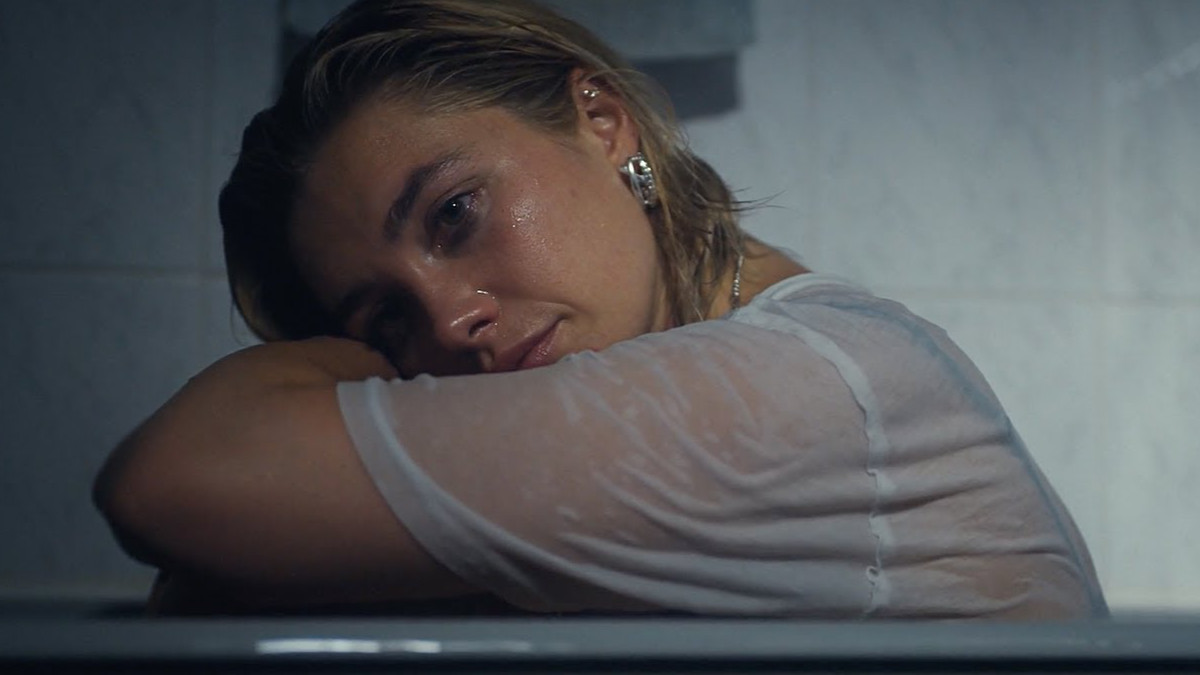
You’ve heard it. That guttural, distorted wail. It cuts through the radio static like a jagged blade. Dolores O’Riordan didn’t just sing the zombie lyrics; she exorcised them.
Most people think it’s just another loud grunge song from 1994. They’re wrong.
It is actually a visceral response to a tragedy that most of the world has already filed away in a dusty history folder. If you’ve ever found yourself screaming "in your head, in your head" while stuck in traffic, you’re participating in one of the most successful protest songs ever written. But do you actually know what she was talking about?
It wasn't about monsters. It was about a trash can.
The Day the World Broke in Warrington
On March 20, 1993, two bombs planted by the Provisional Irish Republican Army (IRA) exploded in Warrington, Cheshire, England. They weren't in a military base. They were hidden in cast-iron litter bins on a busy shopping street.
Jonathan Ball was three years old. He died at the scene. Tim Parry was twelve. He died five days later in his father’s arms.
Dolores O’Riordan was on tour with The Cranberries when the news broke. She was 21. She was horrified. The lyrics to Zombie weren't the result of a long, calculated songwriting session in a sleek studio. They were born out of a private, frustrated moment in her flat in Limerick. She wrote it on an acoustic guitar, but she knew immediately that it needed to be heavy. It needed to sound like the violence it was describing.
"I remember being on tour and being in the UK at the time when the child died, and just being really saddened by it all," she told Vox magazine back in 1994. It wasn't just about the IRA; it was about the cycle of violence that had been tearing at Ireland since 1916. When she sings "it’s the same old theme since nineteen-sixteen," she is referencing the Easter Rising.
She was calling out the fact that the same ghosts were still killing children nearly eighty years later.
Decoding the Meaning of the Word Zombie
Why "Zombie"? It sounds like a horror movie trope. It isn't.
In the context of the song, the "zombie" is the person who follows orders without thinking. It’s the blind adherence to an ideology that justifies the murder of a toddler. It’s the brainless, mechanical nature of sectarian violence.
The zombie lyrics ask a very uncomfortable question: Who is actually pulling the trigger? When she sings "With their tanks and their bombs / And their bombs and their guns," she isn't just talking about the men in balaclavas. She’s talking about the mental state of a society that has become desensitized to "another mother’s breaking heart."
The repetition of "in your head" is the most brilliant part of the songwriting. It suggests that the war isn't happening on a battlefield. It’s happening in the psychological conditioning of the people involved. The conflict is an inherited mental illness.
Honestly, the sheer anger in her voice during the "du-du-du-du" section isn't just a vocal warm-up. It’s a mimicry of gunfire. It’s a rhythmic representation of the "tanks and the bombs" she’s protesting.
Why the Sound Had to Change
The Cranberries were known for "Linger." They were the kings of dreamy, jangle-pop. Then No Need to Argue came out and "Zombie" hit the airwaves like a sledgehammer.
The band’s producer, Stephen Street, was initially surprised by the direction. But the heavy distortion was necessary. You can't sing about the death of a three-year-old over a light, airy synth pad. It would be insulting.
Dolores insisted on the heavy guitars. She wanted the song to be "aggressive," as she told Rolling Stone. She was tired of the "pretty" label. She had something to say, and she needed the volume to make people listen.
The video, directed by Samuel Bayer, drove the point home even further. He’s the same guy who did Nirvana’s "Smells Like Teen Spirit," and he brought that same grit to "Zombie." The footage of real soldiers and children in Northern Ireland wasn't staged. Bayer went to Belfast and filmed the actual "Peace Walls" and the British soldiers patrolling the streets.
That gold paint on Dolores? That wasn't just a fashion choice. She was surrounded by silver-painted boys, representing a sort of religious, martyred purity amidst the grey rubble of war.
The Controversy You Probably Forgot
It’s easy to look back now and see "Zombie" as a universal peace anthem. At the time, it was polarizing.
Some critics in Ireland felt Dolores was being "naive." They argued she was oversimplifying a 400-year-old conflict into a catchy chorus. Others were offended that she, a woman from the Republic of Ireland, was commenting on the Troubles in the North.
She didn't care.
"I don't care whether it's Protestant or Catholic, I care about the fact that innocent people are being harmed," she famously said. She was a humanist, not a politician. That’s why the song has lasted. It doesn't take a side in the way a political manifesto does. It takes the side of the victim.
The Lasting Legacy of the Zombie Lyrics
The song has over two billion views on YouTube. It was the first song by an Irish band to hit the one-billion mark.
Think about that.
A song about a 1993 bombing in a small English town is more popular today than it was when it was released. Why? Because the "zombie" mentality hasn't gone away. Whether it’s conflict in the Middle East, school shootings in America, or political extremism in Europe, the core message remains: the violence is "in your head."
The song found a second life in 2018. Dolores was scheduled to record a cover of "Zombie" with the rock band Bad Wolves in London. She died in her hotel room the morning she was supposed to go into the studio.
The band released their version anyway, donating the proceeds to her children. They updated the lyrics—changing "since nineteen-sixteen" to "in twenty-eighteen"—and swapped "tanks" for "drones." It was a haunting reminder that the song is, unfortunately, timeless.
How to Truly Listen to the Song Today
If you want to appreciate the zombie lyrics beyond the radio edit, you have to look at the phrasing.
Notice how she stretches the word "ca-aa-aa-n-not." That yodel-like vocal break (an Irish vocal technique called "keening") is literally the sound of traditional Irish mourning. She is wailing for the dead.
When you listen next time, pay attention to the bassline. Mike Hogan keeps it steady and driving, like a heartbeat that refuses to stop even when the world is falling apart.
What you should do next:
- Watch the Official Video Again: Don't just look at the gold paint. Look at the eyes of the children in the Belfast footage. Those are real kids living in a war zone.
- Listen to the Unplugged Version: To hear the raw pain in the lyrics without the "loud" distraction, find the Something Else acoustic version. It’s devastating.
- Read About the Parry and Ball Families: The Tim Parry Johnathan Ball Peace Foundation was set up by Tim’s parents. They turned a tragedy into a massive force for peace and conflict resolution. It’s the real-world "answer" to the song.
The song isn't a museum piece. It’s a warning. The next time you hear that heavy riff, remember that it started with a grieving 21-year-old girl in a flat, trying to make sense of why a three-year-old had to die for a cause he couldn't even spell.
Understanding the history makes the song harder to hear, but it makes it impossible to forget.