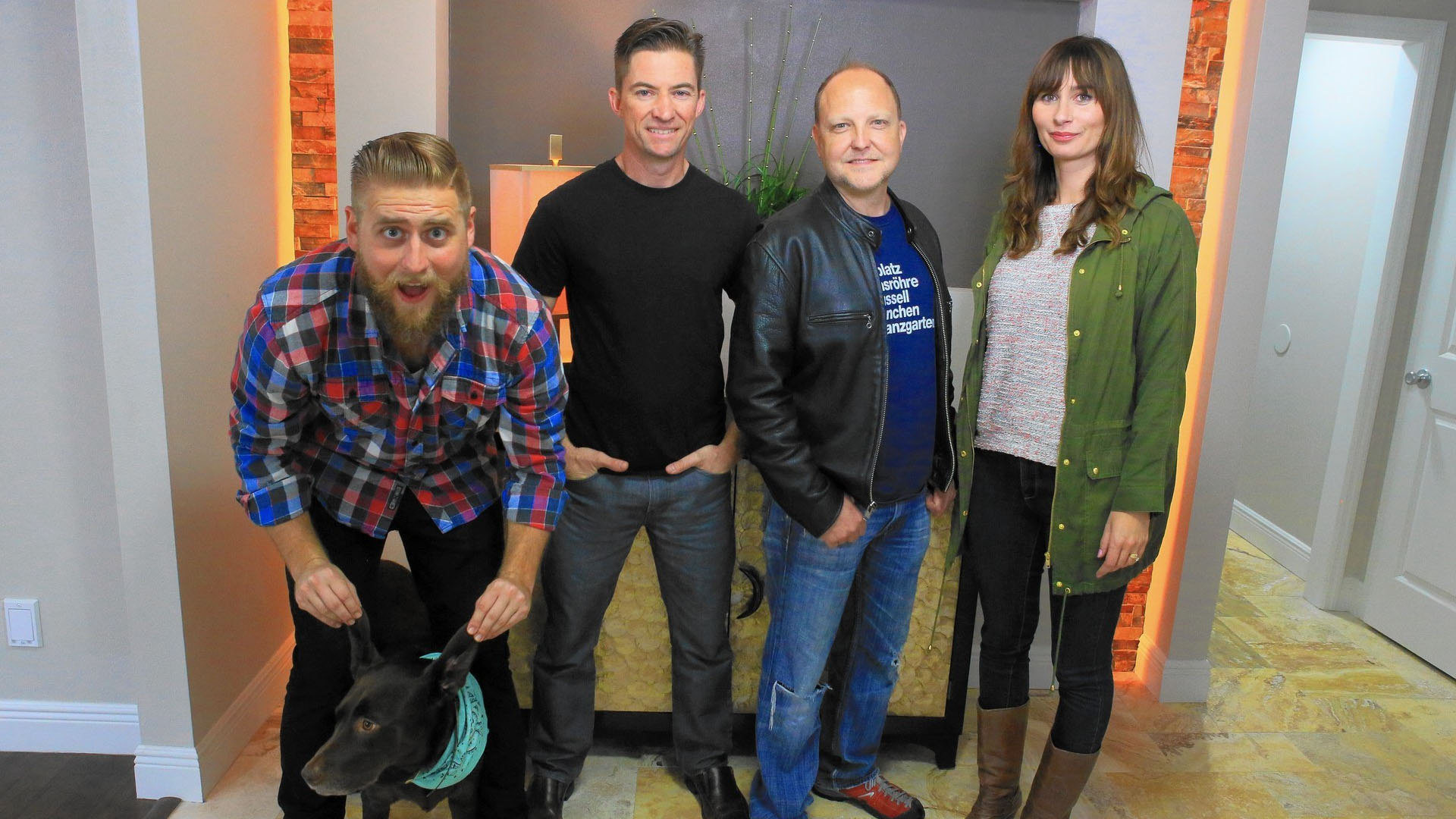
You know that feeling when you walk past a house that’s basically a rotting corpse? Peeling paint. A lawn that looks like a jungle. Maybe a literal family of raccoons living in the attic. That’s a zombie house. Most of us just walk faster, but for Justin Stamper and his crew in Orlando, those eyesores are basically a massive payday waiting to happen. If you’ve spent any time scrolling through A&E or FYI lately, you've probably gotten sucked into a few zombie house flipping episodes and realized that this show is way different from the polished, cookie-cutter renovations you see on other networks. It’s grittier. It’s messier. Honestly, it’s a bit of a miracle some of these places don't just fall over the second they swing a sledgehammer.
What Really Happens Behind the Scenes of Zombie House Flipping Episodes
Most people think reality TV is 100% fake. While every show has a bit of "produced" drama, the structural nightmares in these episodes are unfortunately very real. I've watched enough of these to notice a pattern: they find a "zombie" (a house abandoned for years, often in foreclosure), and then the real horror starts. We aren't talking about needing new subway tile or a "pop of color." We’re talking about massive sinkholes in the backyard or black mold that requires a full hazmat suit just to step inside the front door.
Take the early seasons with the original Orlando team—Justin, Ashlee, Keith, and Duke. They had this weirdly specific chemistry. Justin was the visionary/gambler, Ashlee handled the "make it pretty" side, Keith was the grumpy contractor who actually knew how to fix a foundation, and Duke was the scout. The tension wasn't just for the cameras; when you're sinking $100,000 of your own capital into a house that might have a cracked slab, you’re going to be stressed. You've probably seen that one episode where they find out the previous owner basically stripped the copper wiring out of the walls before leaving. That’s a $15,000 mistake you can't just "edit" away.
The Shift to New Markets
Eventually, the show expanded. It wasn't just about Florida anymore. They branched out to places like Tampa and Dallas, bringing in new teams. Some fans hated this. They wanted the original crew back. But if you look at the Dallas episodes, the problems change. In Texas, it’s all about that shifting soil and foundation issues that can swallow a budget whole. It’s fascinating because it shows that "zombie houses" aren't a monolith; they’re a reflection of the local environment.
Why We Can't Stop Watching the "Glow Up"
There is something deeply satisfying about watching a house go from a neighborhood menace to the best-looking property on the block. It’s a classic redemption arc, but for real estate. In many zombie house flipping episodes, the neighbors actually show up to thank the crew. Think about it. If you live next to a house with a green pool breeding mosquitoes and a roof that’s caving in, your own property value is tanking. When the team finishes a flip, they aren't just making money; they’re literally cleaning up the neighborhood.
But it's not all sunshine and high appraisals.
The math is often the scariest part. You'll see them buy a place for $120,000, spend $80,000 on the reno, and pray they can sell it for $250,000. On paper, that’s a $50,000 profit. But once you factor in the "holding costs"—the taxes, the insurance, the interest on the loans—that profit shrinks fast. Then there's the "discovery" phase. Almost every episode features a moment where Keith or one of the other contractors opens a wall and just sighs. Termites. Bad plumbing. A literal dead animal. It’s these moments that make the show feel human. We’ve all had that "oh no" moment during a DIY project, just usually not on a six-figure scale.
The "Staging" Secret
Have you ever noticed how the houses look almost too good at the end? That’s the power of professional staging. In the world of flipping, an empty house feels cold and small. By the time the open house rolls around in these episodes, they’ve trucked in thousands of dollars worth of mid-century modern furniture and fake plants to sell a lifestyle. It works. The "before and after" shots are the primary reason the show stays high in the ratings. Seeing a kitchen go from "biohazard" to "chef’s dream" hits a specific part of the human brain that loves order over chaos.
The Risks Most Viewers Ignore
Don't let the 42-minute runtime fool you. Flipping a zombie is incredibly dangerous from a financial standpoint. In the real world, outside of TV magic, these projects can take six months to a year. During that time, the market can shift. Interest rates can spike. If the team can't sell the house within the first thirty days of listing, they start losing money every single day the house sits empty.
Also, the "zombie" status makes these houses harder to fix than your average fixer-upper. Because they’ve been sitting empty, the systems have seized up.
- HVAC units that haven't run in three years usually need a total replacement.
- Stagnant water in pipes leads to corrosion.
- Lack of airflow creates a breeding ground for spores.
It’s a grueling business. Justin Stamper has talked openly about how the "glamour" of the show is backed by a lot of sweat and very late nights dealing with contractors who don't show up. It’s a logistical nightmare that requires a very specific type of personality to survive.
Is the Drama Real?
Kinda. Look, it's television. If everything went perfectly, nobody would watch. The editors definitely lean into the "we might lose everything on this one" narrative. However, the stakes in real estate are genuinely that high. If you over-improve a house for a neighborhood, you won't get your money back. If you under-improve it, it sits on the market. Finding that "sweet spot" is an art form that the show actually captures pretty well. You see them arguing over whether to spend $5,000 on high-end countertops or stick with laminate. Those are real business decisions that determine if they go home with a paycheck or a debt.
Lessons You Can Actually Use
Even if you aren't planning on buying a haunted-looking shack in Orlando, there’s a lot to learn from watching these pros work. They prioritize the "bones" over the beauty. They don't spend a dime on paint until the roof is sealed and the foundation is level. That’s a huge lesson for any homeowner.
If you're watching zombie house flipping episodes to learn the trade, pay attention to the "comps." They always talk about what other houses in the area sold for. That is the most important number in real estate. It doesn't matter if you put gold toilets in a house; if the neighbor’s house sold for $200k, you’re probably not getting $400k.
The show also highlights the importance of a "contingency fund." Usually, they set aside 10-20% of their budget for "surprises." In the world of zombies, surprises are guaranteed. If you take anything away from the series, let it be that you should never start a renovation without a pile of "just in case" cash sitting in the bank.
Actionable Insights for Aspiring Flippers
Watching the show is fun, but if you're thinking about jumping into the game, you need a reality check. Here is how you actually handle a "zombie" property:
- Run a "Melt" Test: Before buying, check the utilities. If the water and electricity have been off for years, assume every major system (HVAC, Water Heater, Electrical Panel) needs a total overhaul.
- The 70% Rule: Most successful flippers try to pay no more than 70% of the After Repair Value (ARV) minus the cost of repairs. If a house will be worth $300k, and it needs $50k in work, you shouldn't pay more than $160k for it.
- Permit History is King: Check if the previous owners did "bootleg" work. Dealing with unpermitted additions is a common nightmare in these episodes that can lead to the city forcing you to tear down your hard work.
- Narrow Your Scope: Don't try to flip in a city you don't know. The Orlando team succeeds because they know every street and every local quirk.
- Audit the Neighborhood: A zombie house is often a symptom of a zombie street. If three other houses on the block are also boarded up, your "beautiful" renovation won't matter because nobody will want to move in.
The world of zombie flipping is a high-stakes poker game played with bricks and mortar. Whether you're in it for the "before and after" eye candy or you're trying to figure out if you have the stomach for the business, these episodes offer a raw look at the side of real estate most people are too afraid to touch. Just remember: the mold is always deeper than it looks on the screen.