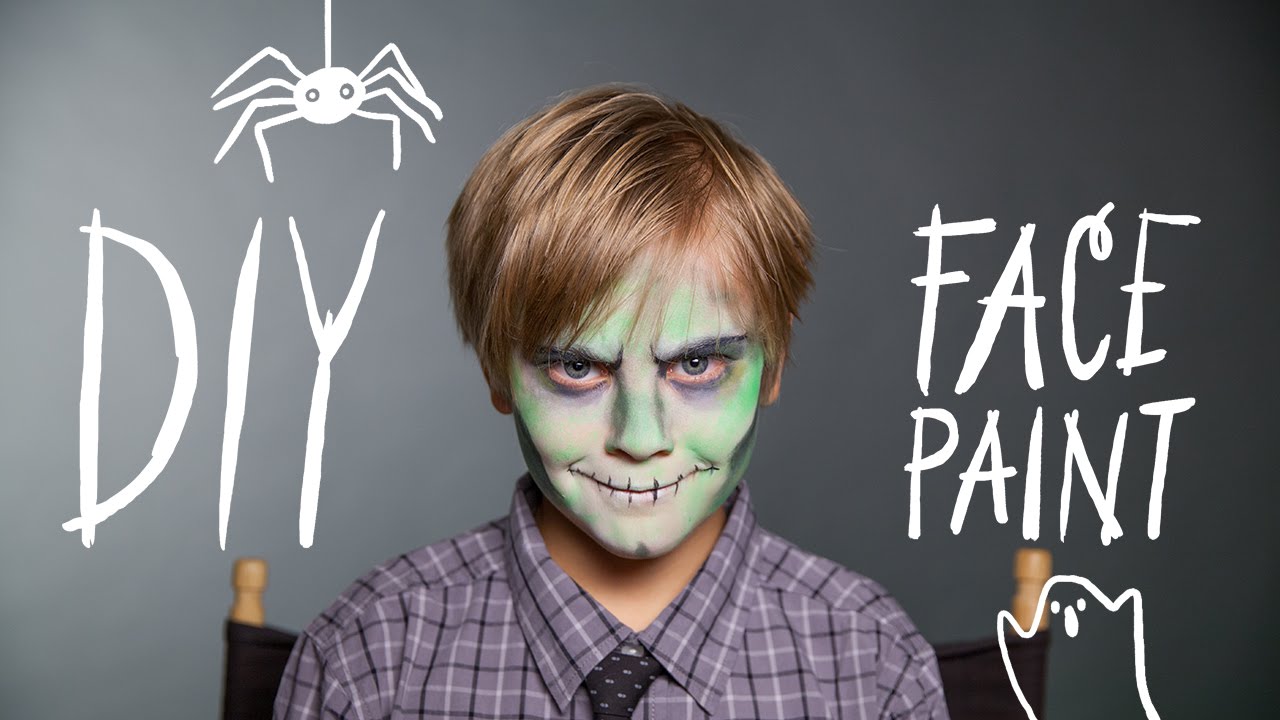
You’re standing in the makeup aisle, staring at a cheap tube of white grease paint and wondering if you’re about to look like a "Walking Dead" extra or just a very sad clown. We've all been there. Most people think they need a degree in special effects to pull off a decent undead look, but honestly, zombie face paint easy techniques are more about the texture than the artistic talent. If you can smudge a finger and dab a sponge, you’re basically halfway to the apocalypse.
The biggest mistake? Starting with a flat white base. Real skin—even dead skin—isn't a solid sheet of printer paper. It’s mottled. It’s bruised. It’s got weird veins and patches of dehydration. To make your zombie face paint easy to execute and high-impact, you have to embrace the mess. Forget perfection. Perfection is for vampires. Zombies are a literal disaster.
The "Dirty Sponge" Secret to a Realistic Base
The foundation of any good zombie look is the skin tone. If you just slap on white paint, you look like a mime. Instead, grab a stipple sponge or even just a torn-up kitchen sponge. You want something with irregular holes. Mix a tiny bit of grey or a sickly yellow into your white base on a palette (or a paper plate, let’s be real).
Dab it on. Don't swipe. Swiping creates streaks, and streaks look like makeup. Dabbing creates the illusion of decaying tissue. Professional makeup artists like Ve Neill, who worked on Beetlejuice, often talk about layering colors to create depth. You want to start with your lightest "dead" color and then go back in with a muddy green or a bruised purple in the hollows of your face.
Focus on the areas that naturally sink in: the eye sockets, the temples, and under the cheekbones. If you’ve ever stayed up for 48 hours straight, you know exactly where those dark circles live. Just exaggerate them. Use a dark brown or a deep plum—avoid pure black unless you’re going for a very stylized comic book look, as black tends to look flat and fake in person.
Why Texture Trumps Color
Texture is the difference between "I'm wearing a costume" and "Get that thing away from me." One of the best zombie face paint easy hacks involves something you probably have in your pantry: oatmeal or tissue paper.
If you want peeling skin, apply a thin layer of skin-safe lash glue or liquid latex to a small area. Lay a single ply of toilet tissue over it, let it dry for a minute, and then gently rip holes in the center. When you paint over this, the jagged edges of the paper look like torn flesh. It’s gross. It’s effective. And it’s incredibly cheap.
The Mouth and Teeth: Where Most People Fail
You can have the best eye makeup in the world, but if you open your mouth and reveal pearly white teeth, the illusion is shattered. Professional kits often include "tooth enamel" in shades like nicotine or rot. If you don't want to buy that, you can dry your teeth with a tissue and dab a tiny bit of brown cream makeup (make sure it’s non-toxic!) onto the crevices.
Don't forget the lips. Zombies don't use Chapstick. Use a nude or pale concealer to wash out the natural pink of your lips. Then, take a dark red or purple and smudge it from the inside of your lips outward. This makes it look like you’ve been, well, snacking on something you shouldn't have.
Sunken Eyes and Shadow Placement
To get that "freshly risen" look, you need to understand where the bone structure sits. Take a look in the mirror and tilt your head down. See where the shadows fall naturally around your eyes? That’s your roadmap.
- Start with a matte reddish-brown shadow around the entire eye. This makes the eyes look irritated and sore.
- Layer a darker charcoal or deep purple right in the inner corners and along the lower lash line.
- Skip the mascara. If you have light lashes, leave them. If they’re dark, you can actually run a bit of the pale base makeup through them to make them "disappear."
Blood: The Good, The Bad, and The Sticky
Not all fake blood is created equal. The bright red, runny stuff you find in gallon jugs at seasonal shops is usually too translucent and looks like strawberry syrup. For a realistic zombie, you want "scab blood" or a thicker gel.
If you're making it at home, corn syrup mixed with red food coloring and a tiny drop of blue or green (to darken it) works in a pinch. Adding a spoonful of cocoa powder gives it a brownish, dried-blood tint that looks much more menacing.
When applying blood, think about gravity. If you have a wound on your forehead, the blood shouldn't just stay in a circle; it should drip toward your eyebrows. Use a flicking motion with a toothbrush to create "splatter" marks. It adds a level of chaotic realism that a single drip can't achieve.
Safety First: Your Skin Will Thank You
We need to talk about the "easy" part of zombie face paint easy—the cleanup. Cheap grease paints are notorious for breaking people out or staining the skin for days. Always start with a barrier spray or at least a good moisturizer. This creates a layer between your pores and the pigment.
Also, do a patch test. Seriously. Put a little bit of the makeup on your inner arm 24 hours before you go full-zombie. Nothing ruins a party like an actual allergic reaction that turns your "fake" rash into a real one.
The Costume-Makeup Connection
Your face might look incredible, but if you’re wearing a brand-new, clean T-shirt, you’re just a person with a dirty face. The makeup has to extend past the jawline. Drag that greyish-green base down your neck and onto your ears. If your hands are visible, give them the same treatment.
For the clothes:
- Sandpaper the edges of your collar.
- Soak the shirt in strong black tea to make it look aged and grimy.
- Use the leftover "blood" mixture to stain the areas where a zombie might have been grabbed or where they might have wiped their mouth.
Common Pitfalls to Avoid
I see people making the same three mistakes every October. First, they use glitter. Unless you are a very specific "Twilight" style zombie, glitter has no place in the apocalypse. Keep everything matte.
Second, they forget the "dead spots." Skin isn't just one shade of decay. Real bruises go through stages of yellow, green, and purple. Adding a few faint yellow splotches around the edges of your "wounds" makes them look much older and more "settled" into the skin.
Third, they stop at the hairline. If you have light hair, the contrast between your scalp and the pale face paint is a dead giveaway. Smudge a bit of the dark eye shadow or some of the base makeup into your roots. It makes your hair look greasy and unwashed, which is exactly the vibe we want.
Advanced (But Still Simple) Detailing
If you want to take your zombie face paint easy routine to the next level without spending hours, focus on veins. Take a very thin brush and some navy blue or dark teal face paint.
Don't draw straight lines. Think about a river delta or a lightning bolt. Keep your hand slightly shaky. Draw these "broken" veins around the temples or stemming from the neck. If the lines look too sharp, lightly tap them with your finger to "press" them into the skin. This makes it look like the veins are under the surface, which is deeply unsettling to look at.
Another pro tip: clear lip gloss. Not for your lips, but for "wet" wounds. A little bit of clear gloss over a red-painted area makes it look like a fresh, raw injury. The way it catches the light is much more effective than just using paint alone.
Taking it All Off
When the night is over, don't just scrub with soap. Most face paints are oil-based. You need an oil-based cleanser or even just plain coconut oil to break down the pigment. Massage the oil into your face, let it sit for a minute, and then wipe it away with a warm cloth. Follow up with your regular cleanser. Your skin has been through a lot; treat it nicely.
Actionable Next Steps
- Audit Your Kit: Check if you have matte eye shadows in browns, purples, and greys before buying expensive "zombie" palettes.
- The Texture Test: Try the tissue-and-glue trick on the back of your hand today to see how the "torn skin" effect reacts with your movements.
- Color Check: Mix a batch of DIY blood with cocoa powder to find the right "dried" shade that matches your costume's fabric.
- Prepare Your Skin: Apply a heavy-duty moisturizer at least 30 minutes before you start the painting process to prevent the makeup from clinging to dry patches.