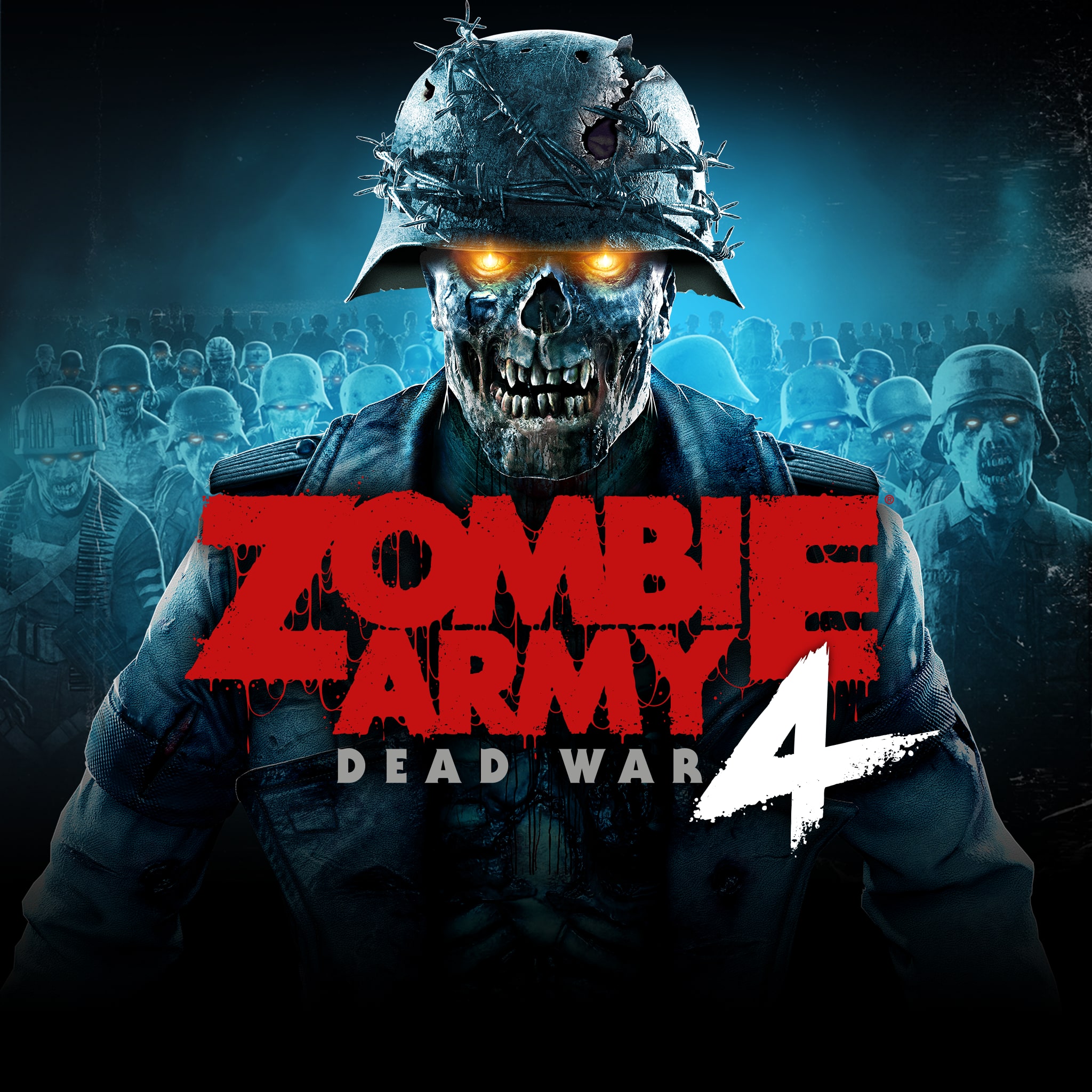
You've probably seen the trailers. Shambling Nazis, high-caliber snipers, and a version of Adolf Hitler that just won't stay in the ground. Honestly, on the surface, Zombie Army 4: Dead War looks like just another generic shooter trying to cash in on the undead craze that peaked a decade ago. It feels like it should be bargain-bin fodder. But it isn't.
It’s actually incredible.
Rebellion Developments, the team behind the Sniper Elite series, basically took their X-ray kill-cam tech, turned the gore dial up to eleven, and dropped it into a 1940s occult apocalypse. It’s loud. It’s messy. Most importantly, it understands exactly what makes a co-op game sticky in a way that modern live-service titles often forget. While big-budget games try to be everything to everyone with complex crafting trees and "meaningful" choices, this game just wants you to shoot a zombie in the lung from 300 yards away.
Why the Sniper Elite DNA matters
If you’ve played Sniper Elite, you know the rhythm. You hold your breath, the heart rate slows, and you pull the trigger. Then you watch a bullet travel in slow motion through a skull. In Zombie Army 4: Dead War, this mechanic is the backbone of the entire experience, but it’s tuned for speed.
You aren't just creeping through bushes anymore. You're being swarmed.
The ballistics are real, though. Gravity matters. Wind matters, at least on the harder settings. This isn't Left 4 Dead where bullets are basically laser beams. Every shot has weight. When you nail a headshot on a Suicider—those screaming guys strapped with explosives—and it triggers a chain reaction that wipes out a whole hallway of creeps, it feels earned. It's satisfying in a primal, "I'm a genius tactician" kind of way.
Most people don't realize how much the engine handles under the hood. Rebellion's Asura engine allows for a massive amount of "de-corpsing," which is a fancy way of saying the game can handle dozens of entities on screen without turning your console into a space heater. It’s smooth. That smoothness is why the gunplay feels so much tighter than its predecessors.
The occult setting is weirder than you think
The story is total B-movie schlock. It knows it. You've got the Resistance fighting back against the "Plan Z" fallout. But the level design is where the personality really shines through.
You aren't just in gray bunkers. You’re in a Venice flooded with blood. You’re in a zoo where the exhibits have definitely seen better days. You’re on a "Hell Base" that looks like something ripped off a heavy metal album cover from 1984.
- The Venice levels are a standout because of the verticality.
- The inclusion of "Hell Machines"—basically giant, demonic tanks—changes the scale of the fights.
- Environmental traps (like propellers or electrical wires) let you save ammo when things get hairy.
It’s the little details that get you. The haunted dolls hidden in corners that whisper to you. The typewriter collectibles that fill out the lore of how the world fell apart. It’s not "prestige" storytelling, but it builds an atmosphere that’s genuinely unsettling when you’re playing solo at 2:00 AM.
Progression that actually rewards your time
A lot of modern shooters feel like a second job. You login to do dailies. You grind for a skin that’s 2% shinier than the last one. Zombie Army 4: Dead War handles progression differently.
Every weapon has a mastery challenge. If you use the Gewehr 43 enough and hit specific milestones—like 50 long-range headshots—you unlock permanent stat boosts. You can turn your pistol into a semi-automatic shotgun. You can add "Divine" damage to your sniper rifle that heals your teammates when you get kills. It's a power fantasy that scales with your skill.
Characters have perks, too. You can build a "tank" who deals more melee damage or a "medic" who can revive people from a distance. But it’s not restrictive. You can swap these out between every mission. It encourages experimentation rather than locking you into a build you might hate ten hours later.
The DLC Controversy
Let's be real: the post-launch support for this game was a bit of a mess. Rebellion released "Season Passes" that cost almost as much as the base game. If you're looking at the store page today, the sheer amount of DLC icons is intimidating.
Here's the truth: You don't need all of it. The base game has a massive campaign. The Season Pass content adds cool maps and weapons, but the core experience is complete without them. If you’re a newcomer, wait for a "Legendary Edition" sale. Don't buy the individual weapon skins unless you really want a crossbow that shoots lava. It's cool, sure, but unnecessary for the platinum trophy or a good time with friends.
The "Horde Mode" is the unsung hero
While the campaign is the meat of the game, the Horde Mode is where the mechanics truly breathe. It starts slow. Just a few shamblers. By wave 12, you're dealing with Elites carrying chainsaws, Snipers that jump between rooftops, and Flamers that force you out of cover.
It’s a test of resource management. Ammo becomes scarce. You start arguing with your friends over who gets the Medkit. "I'm at 10 HP, let me have it!" is a common refrain in my Discord calls. It forces you to use the environment. You find yourself lures and landmines, setting up "kill zones" because you simply cannot click heads fast enough to survive.
Tactical Reality: How to actually survive
If you're jumping in now, especially on the "Hard" or "Brutal" difficulties, you're going to die. A lot. The game doesn't play fair.
- Dismemberment is a mechanic, not just a visual. Shoot the legs off the heavy guys. They move slower. It sounds obvious, but in the heat of a fight, everyone aims for the head. If you've got five armored giants coming at you, take their legs out first.
- Combine your explosives. Throw a bait grenade to bunch them up, then hit them with a Preacher (the game's version of a heavy shotgun/grenade launcher).
- Secondary weapons are for utility. Don't just pick the gun that does the most damage. Pick the one with the best "crowd control" mods. An SMG with electric rounds is worth ten heavy rifles when you're cornered in a cramped hallway in a bunker.
- Watch the X-ray cam timing. You can actually toggle how often the slow-motion kills happen. If you’re playing co-op, turn them down. It looks cool, but it breaks the flow of a chaotic firefight when you're trying to cover your buddy's back.
Is it worth it in 2026?
The gaming world has moved on to "Extraction Shooters" and "Hero Shooters," but there is something deeply refreshing about Zombie Army 4: Dead War. It’s a finished product. It’s polished. It doesn't ask you for a battle pass subscription every three months.
It reminds me of the Xbox 360 era of gaming where the goal was just to have a blast with three other people. The community is still surprisingly active, too. You can usually find a lobby within a minute or two, which is impressive for a game that’s been out this long.
Moving Forward: Your Plan Z
If you’re tired of the sweaty competitive nature of Modern Warfare or the grind of Destiny, this is your pallet cleanser.
First, grab the base game. Don't overthink the DLC yet. Play through the "Dead Ahead" mission solo to get a feel for the bullet drop. Once you're comfortable, jump into a public Horde match. Pay attention to how high-level players use their "Takedowns." Takedowns aren't just for style; they're the only way to reliably regain health without using a precious medkit. Master the timing of the melee-kill-to-heal pipeline, and you’ll become the MVP of any squad you join.
Stop aiming for the center of the head—aim for the eye socket. The game actually tracks that level of detail. It’s gross, it’s ridiculous, and it’s one of the best co-op experiences of the last decade.