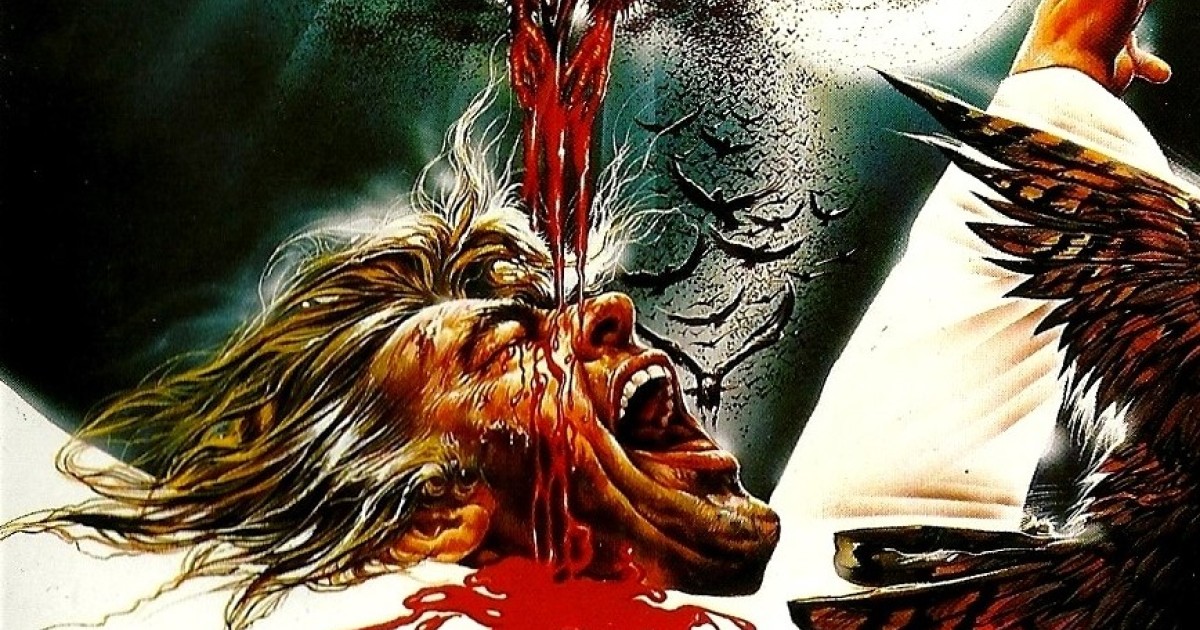
Italian horror in the late 80s was a fever dream. It was a time when logic didn't just take a backseat—it was kicked out of the car entirely. If you’re looking for Zombie 5: Killing Birds, you’re probably already aware that the "Zombie" franchise is a complete mess of branding, litigation, and opportunistic marketing. It’s chaotic.
You’ve got to understand the context here. In the United States, George A. Romero's Dawn of the Dead was a standalone masterpiece. In Italy, they released it as Zombi. Because it was a hit, Lucio Fulci made a "sequel" called Zombi 2. Then came Zombi 3 and Zombi 4. By the time we get to Zombie 5: Killing Birds, we aren’t even looking at a zombie movie anymore. We’re looking at a movie called Uccelli Assassini (Killing Birds) that was slapped with a franchise title just to move VHS tapes.
It's weird.
The film was directed by Claudio Lattanzi, though horror aficionados have spent decades debating how much influence the legendary Joe D'Amato had on the set. D’Amato produced it, and his fingerprints are all over the cinematography. The plot? It's basically a haunted house story with some taxidermy and a very small number of actual birds.
Why Zombie 5: Killing Birds is a Marketing Lie
Let’s be honest. If you buy a ticket for a movie called "Zombie 5," you expect a horde of the undead. You want shuffling corpses. You want flesh-eating. Instead, Zombie 5: Killing Birds gives you a group of college students (the classic trope) looking for a rare, supposedly extinct woodpecker.
They end up in a house. A blind man lives there. Bad things happen.
The "zombies" don't show up until the final act. And even then, they aren't your typical Romero ghouls. They are more like vengeful spirits or reanimated corpses tied to a specific tragedy that happened years prior. It’s a bait-and-switch. This happened all the time in the 80s Italian film industry. Distributors would take a random supernatural thriller and rename it to fit whatever series was currently selling. It’s why the Evil Dead sequels are called La Casa 3, 4, and 5 in Italy.
The title Killing Birds is also a bit of a stretch. While there are birds, and they are definitely menacing, they don't do as much killing as the title suggests. It’s more of a slow-burn atmospheric piece that leans heavily on its 1987-1988 aesthetic.
The Joe D'Amato Connection
You can't talk about this film without mentioning Joe D'Amato (Aristide Massaccesi). He was a powerhouse of "trash" cinema, known for working fast and cheap. Lattanzi was his protégé. For years, rumors swirled that D'Amato actually directed the whole thing and gave Lattanzi the credit to help jumpstart his career.
Lattanzi has since cleared this up in various interviews, explaining that while D'Amato was very hands-on with the camera work and lighting, the directorial vision was his. You can feel that tension in the film. It has moments of genuine, eerie beauty—fog-drenched woods and lingering shots of decaying wood—and then it has moments of pure, unadulterated exploitation cinema.
Breaking Down the Plot (Such as it is)
The story kicks off with a soldier returning from Vietnam. He finds his wife in bed with another man. He kills them. He kills the parents. He keeps the baby. Oh, and he gouges his own eyes out because a bird attacks him.
Fast forward twenty years.
A group of "teenagers" (who look like they are in their late 20s) arrive at the house. They are led by Steve, played by Robert Vaughn. No, not that Robert Vaughn—wait, actually, it is Robert Vaughn. The Oscar-nominated actor from The Magnificent Seven and The Man from U.N.C.L.E. is actually in this movie. It’s one of the most "how did he get here?" moments in cult cinema history.
Vaughn plays the blind man, Dr. Fred Brown. He spends most of his time sitting in a chair, looking dignified while the movie gets progressively crazier around him.
- The students are looking for a bird.
- The house is full of taxidermy.
- The ghosts of the murdered family are restless.
- The birds are watching.
The pacing is deliberate. Some would call it slow. I’d call it "atmospheric." It builds a sense of dread that doesn't always pay off, but it keeps you watching because you’re trying to figure out if it’s a ghost story, a slasher, or a nature-run-amok film.
The "Zombies" in Question
When the dead finally rise in Zombie 5: Killing Birds, they are remarkably well-dressed. They look like people in slightly dusty suits rather than rotting corpses. This is a far cry from the practical effects seen in Fulci’s Zombi 2 or even the weirdness of Zombi 3.
Their presence is more about a curse than a virus. In the 80s, the "zombie" label was used loosely. Anything that stayed mobile after death counted. If you go in expecting a gore-fest like Day of the Dead, you're going to be disappointed. If you go in expecting a weird, gothic Italian ghost story, you might actually have a good time.
Critical Reception and Cult Status
When this film hit the home video market, it was roasted. Critics hated the slow pace and the lack of traditional zombie action. But time is kind to weird movies.
Today, it’s a staple for fans of "Euro-cult." People appreciate it for the synth-heavy score and the dreamlike logic. It represents the end of an era. By 1988, the golden age of Italian horror was dying. Big budgets were gone. The industry was pivoting to television. Zombie 5: Killing Birds feels like one last gasp of that specific, grainy, 35mm Italian madness.
It’s also surprisingly well-shot. The lighting in the house is evocative. There’s a scene involving a misty forest that looks better than it has any right to, considering the budget was likely the cost of a used sedan.
Technical Specs and Where to Find It
For the longest time, the only way to see this was on grainy VHS rips or bootleg DVDs. Thankfully, boutique labels have stepped in.
- Vinegar Syndrome and Severin Films have both done work on preserving these kinds of titles.
- Look for the 2K or 4K scans. They reveal details in the shadows that were completely lost in the 90s.
- The audio is usually available in both English and Italian. The English dub is... well, it’s an 80s Italian movie dub. It’s part of the charm.
What Most People Get Wrong
The biggest misconception is that this is a sequel to Zombi 4: After Death. It isn't. Not even close. There is no narrative continuity between any of the movies in this "series" after the second one. Each film is a standalone project that was rebranded by distributors.
Another error is the idea that the birds are the main villains. Honestly, the birds are more like witnesses. The real threat is the past. It’s a movie about trauma and domestic violence that manifests as supernatural horror.
Is it a "good" movie? By traditional standards, probably not. The acting is stiff, and the plot has holes you could drive a truck through. But it’s an interesting movie. It has a vibe that modern, CGI-heavy horror can't replicate. It feels tactile. It feels dirty.
How to Watch Zombie 5 Today
If you’re going to dive into this, do it with the right mindset.
- Check the Title: Make sure you are watching the Claudio Lattanzi version. There are a few movies with "Bird" in the title from this era.
- Turn off the Lights: This movie relies heavily on its dark, oppressive atmosphere.
- Appreciate the Score: The music is genuinely good. It’s that classic 80s electronic dread.
- Research the "La Casa" Connection: If you really want to go down a rabbit hole, look into how this film was also marketed as a sequel to Evil Dead in different territories.
The legacy of Zombie 5: Killing Birds isn't its contribution to the zombie genre, but its place as a bizarre artifact of film history. It's a reminder of a time when the movie industry was the Wild West, and a title was just a suggestion.
If you're a fan of Robert Vaughn, it’s worth a watch just to see him navigate a low-budget Italian horror set with the grace of a man who knows he’s getting a paycheck. If you’re a horror completionist, it’s an essential piece of the Italian puzzle. Just don't expect the birds to do all the heavy lifting.
To get the most out of your viewing, seek out the recent Blu-ray restorations that include interviews with Lattanzi. Hearing him talk about working with D'Amato provides a much-needed layer of context that makes the film's oddities feel intentional rather than accidental. Focus on the cinematography in the second act—it's where the film's hidden quality actually lies.