So, if you’ve been scrolling through political Twitter or catching the late-night news lately, you’ve probably seen the name Zohran Mamdani popping up alongside Narendra Modi. It’s a collision that feels almost inevitable in the current climate. On one side, you have the Prime Minister of the world’s largest democracy. On the other, a 34-year-old democratic socialist who just pulled off a massive upset to become the Mayor of New York City in late 2025.
Honestly, the tension is thick.
Mamdani isn't just another politician taking potshots from the sidelines. He’s the son of world-renowned filmmaker Mira Nair and academic Mahmood Mamdani. His roots are in Uganda and India, specifically Gujarat—the same state where Modi served as Chief Minister. That connection is exactly where things get messy and, frankly, pretty heated.
The "War Criminal" Comment That Went Viral
Earlier in his mayoral campaign, during a high-stakes debate in June 2025, Mamdani didn't hold back. When asked if he’d share a stage with Narendra Modi at a hypothetical Madison Square Garden rally, he gave a flat "no." But he didn't stop there. He called Modi a "war criminal."
He specifically pointed to the 2002 Gujarat riots. Mamdani’s argument is that the violence back then was more than just a riot; he describes it as an orchestrated effort that left the Muslim community in Gujarat feeling invisible. "People don't even believe that we exist anymore," he said during the campaign. It’s a heavy accusation. It’s also one that the Indian government and many in the diaspora have spent years fighting against, especially since the Indian Supreme Court cleared Modi of complicity years ago.
For Mamdani, this isn't just about history. It’s about the vision of India. He talks a lot about the India he "grew up with"—a pluralistic place where everyone belongs. He basically thinks the current BJP-led government is narrow-minded, creating a version of India that only has room for "certain kinds of Indians."
Why This Matters for New York City
You might wonder why a guy running for mayor of a city 8,000 miles away from Delhi cares this much about Indian internal politics.
New York is home to one of the largest Indian-American populations in the world. It’s a massive voting bloc. By taking a hard line on Zohran Mamdani on Modi, he’s doing two things. First, he’s solidifying his base among progressives and younger voters who view global human rights through a very specific lens. Second, he’s intentionally distancing himself from the "Howdy Modi" style of South Asian politics that has been popular in the US for the last decade.
But this has backfired in some corners.
The Backlash from the Diaspora
Not everyone in Queens or Jersey City is cheering him on. A coalition of Hindu-American groups recently issued an open letter calling his rhetoric "divisive." They argue that by labeling Modi a war criminal, Mamdani is actually fueling Hinduphobia in the US. Even Indian Foreign Secretary Vikram Misri (and his predecessors) have dismissed such comments as "communal propaganda" disguised as secularism.
During his Diwali outreach in October 2025, Mamdani tried to thread a very thin needle. He visited temples—including the BAPS mandir in Queens—and told voters that while he’s critical of Modi, he’s running to represent all New Yorkers, even those who love the Prime Minister.
It was a classic political pivot. He basically said: I don't like the guy you like, but I'll still make sure your trash gets picked up and your rent stays frozen.
The Trump Factor
Then there’s Donald Trump.
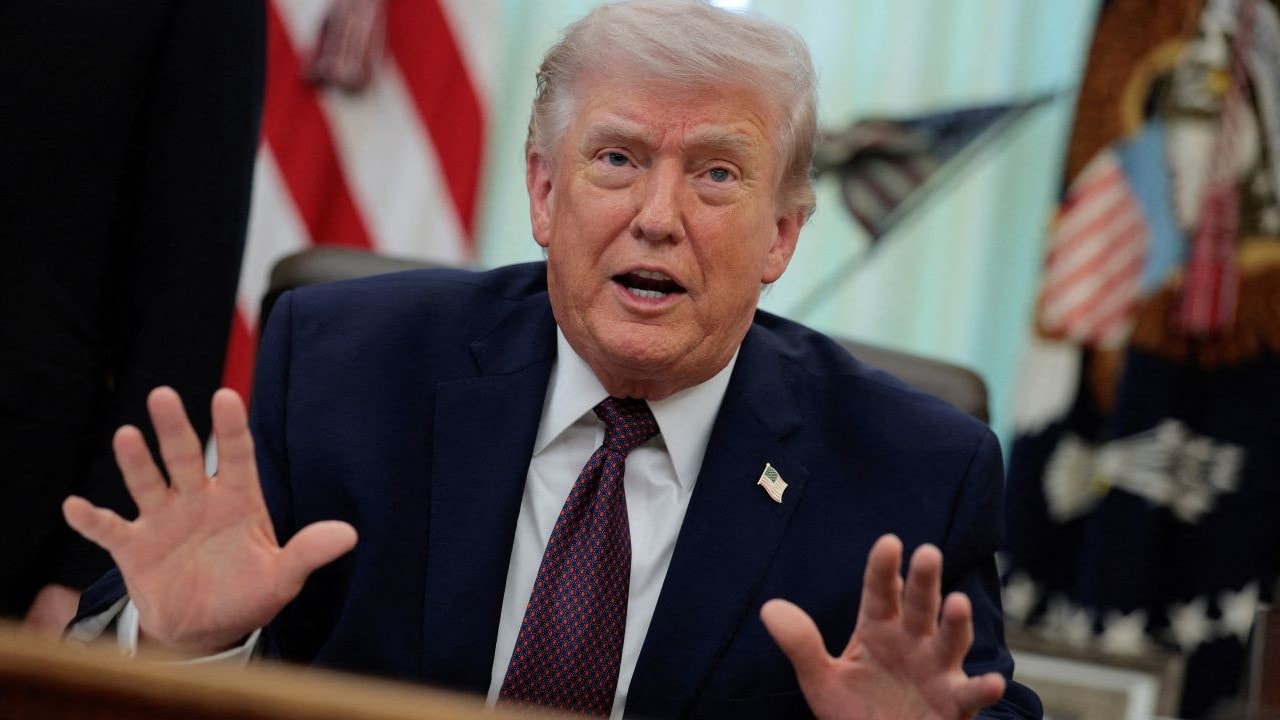
In the lead-up to the 2025 NYC election, Trump actually weighed in on the race. He called Mamdani a "100% communist lunatic." Trump, who has a famously "best-friend" relationship with Modi, used Mamdani’s stance as proof that the Democrats have gone off the deep end.
This creates a weird dynamic. If Modi visits New York again in 2026, the city’s mayor might be the one leading the protest outside. That’s a diplomatic nightmare for the State Department. Usually, the NYC mayor plays the role of the ultimate host for world leaders at the UN. Mamdani has already signaled he’s not interested in that role if the guest is someone he deems a human rights violator.
A Different Kind of Identity Politics
What’s really interesting is how Mamdani frames his "Indian-ness."
Most Indian-American politicians—think Nikki Haley or even Kamala Harris—tend to lean into the "model minority" success story. Mamdani does the opposite. He leans into the "struggle." He connects the plight of New York taxi drivers (many of whom are South Asian) to global anti-colonial movements.
His middle name, Kwame, is a tribute to Kwame Nkrumah, the first president of Ghana. This tells you everything you need to know about his worldview. He sees the struggle for housing in Astoria and the political situation in India as part of the same big fight against "capitalist overreach" and "exclusionary nationalism."
What Most People Get Wrong
The biggest misconception is that Mamdani is "anti-India."
If you listen to his long-form interviews, he talks about India with a lot of affection. He’s a fan of the culture, the food, the history. His beef isn't with the country; it's with the ideology of Hindutva. He’s trying to reclaim what it means to be an "Indian in the West" by saying you can be proud of your roots while being a fierce critic of the current government's policies.
Whether you think he’s a "truth-teller" or a "dangerous radical" usually depends on where you stand on the political spectrum. There isn't much middle ground here.
Actionable Insights for Following This Story
If you're trying to keep up with the fallout of the Zohran Mamdani on Modi saga, here’s how to separate the signal from the noise:
- Watch the UN General Assembly (UNGA) 2026: This will be the first major test. If Modi attends, see if Mamdani denies him the traditional keys to the city or city-sponsored security perks for private rallies. That will be the ultimate "put your money where your mouth is" moment.
- Track the "Caste" Legislation: Keep an eye on whether Mamdani uses his mayoral platform to push for city-wide protections against caste discrimination. This is a huge flashpoint in the diaspora and a direct challenge to the "unity" narrative often pushed by the BJP.
- Look at Local Polling: Watch how the Indian-American vote in NYC shifts over the next year. If Mamdani manages to keep their support while maintaining his stance on Modi, it could provide a roadmap for other progressive South Asian candidates across the US.
- Follow the "Hindus for Zohran" movement: This is a small but vocal group that argues you can be a devout Hindu and still support a socialist critic of the BJP. Their growth (or lack thereof) will tell you if Mamdani’s message is actually landing.
Basically, the "Mamdani vs. Modi" dynamic is a preview of the next decade of diaspora politics. It’s no longer just about "making it in America"—it’s about which version of the homeland you want to represent.