New York City politics just got a massive electric shock.
If you haven't been following the headlines in early 2026, Zohran Mamdani—the 34-year-old Democratic Socialist who basically came out of nowhere to beat the political establishment—is now the Mayor. He didn't just win; he won big. But as he settles into Gracie Mansion, a specific conversation is following him like a shadow: the tension between his "housing for all" platform and the city's wealthier, historically white neighborhoods. Learn more on a related issue: this related article.
There’s this narrative floating around that Mamdani is "at war" with these areas. You’ve probably seen the viral clips. People are asking if he’s going to tax certain zip codes into oblivion or if he’s planning to forcibly change the demographics of the Upper East Side.
Honestly? The reality is a lot more nuanced—and a lot more interesting—than a 30-second TikTok rant would have you believe. More analysis by The New York Times highlights similar perspectives on the subject.
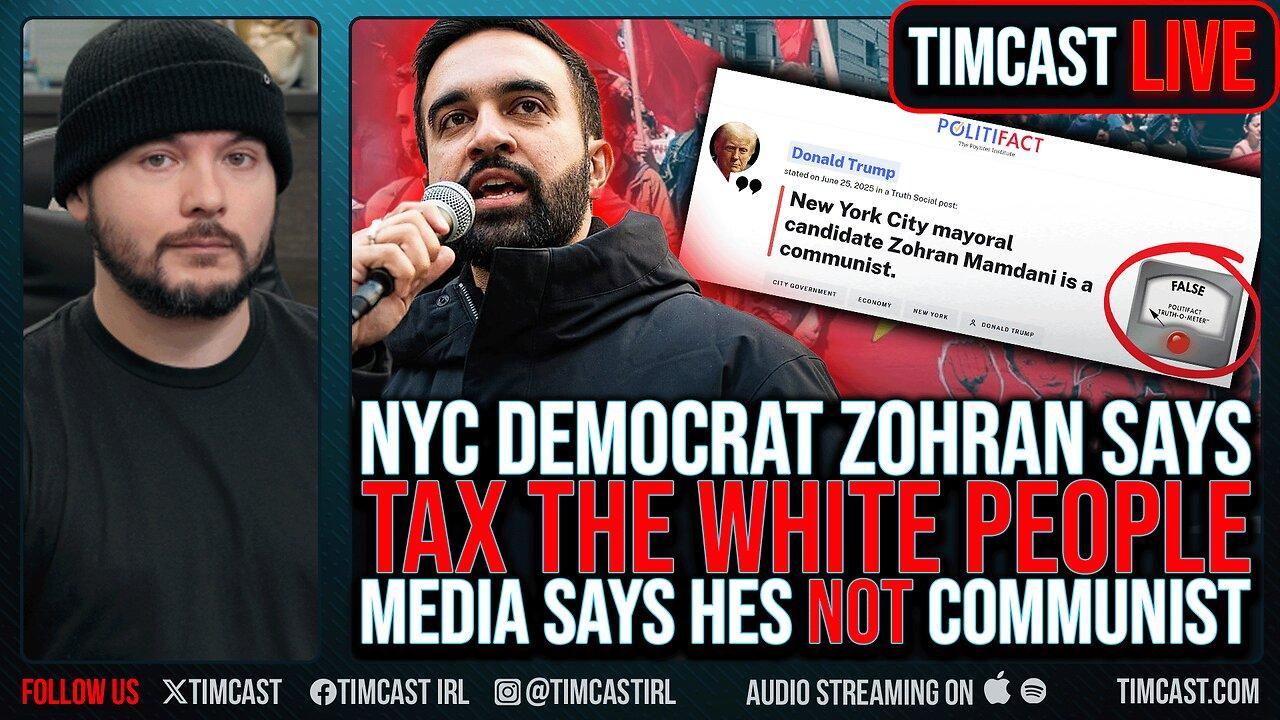
The Viral Moment: "So You Intend to Tax the White Neighborhoods More?"
It all sort of exploded during a press conference in late 2025. A reporter looked Mamdani in the eye and asked, point-blank, if he intended to tax white neighborhoods more to fund his social programs.
It was a "gotcha" moment that didn't quite get him.
Mamdani’s response wasn't about race in the way the question intended. He pivoted hard toward class and property value. His argument, which he’s been making since his days in the State Assembly representing Astoria, is that the current property tax system is fundamentally broken. In New York, it's a known (and weird) fact that a condo in a glass tower in Billionaires' Row often pays a lower effective tax rate than a working-class family in a multi-family home in the Bronx or Queens.
He isn't targeting "white neighborhoods" because they are white. He’s targeting high-value real estate because that's where the money is. But in a city as segregated as New York, those two things often overlap.
The Cea Weaver Controversy: When Social Media Meets Policy
If the tax question was the spark, the appointment of Cea Weaver was the gasoline.
Mamdani tapped Weaver—a legendary tenant organizer—to lead the Mayor’s Office to Protect Tenants. Almost immediately, critics dug up her old tweets. One from 2017 called homeownership a "weapon of white supremacy masquerading as wealth." Another suggested "impoverishing" the white middle class to achieve equity.
The backlash was swift. Former Mayor Eric Adams called the remarks "detached from reality." The Department of Justice even caught wind of it.
Mamdani didn't flinch.
He didn't defend the specific phrasing of the tweets, but he defended Weaver's record. To Mamdani and his base, the "white neighborhood" anxiety is a distraction from the fact that 2.4 million New Yorkers live in rent-stabilized apartments and are one paycheck away from being on the street. He sees himself as a Mayor for the renter class, regardless of race, but he’s acutely aware that the "owner class" in New York remains disproportionately white.
Where Mamdani Actually Won (And Where He Didn't)
To understand the "Zohran Mamdani white neighborhoods" dynamic, you have to look at the map of the 2025 election. It tells a story of two different New Yorks.
Mamdani absolutely dominated in:
- Northern Brooklyn: Bushwick gave him a 67-point margin.
- Upper Manhattan: He swept Harlem, Morningside Heights, and Washington Heights.
- Western Queens: His home turf of Astoria and Long Island City stayed loyal.
But then you look at the "Old Guard" neighborhoods. Andrew Cuomo, who ran against him, cleaned up in the Upper East Side, Midtown East, and Battery Park. These are the areas with the highest concentrations of white, high-income homeowners.
There is a genuine fear in these neighborhoods that a Mamdani administration means the end of "neighborhood character." They hear "upzoning" and "social housing" and they see their property values dipping. Mamdani, meanwhile, looks at those same neighborhoods and sees "high-resource areas" that have successfully fought off affordable housing for decades.
The "Public Stewardship" Plan
This is where things get real. Mamdani has proposed something called "public stewardship." Basically, if a landlord is a "bad actor"—meaning they have thousands of building code violations or owe the city massive amounts in fines—the city wouldn't just fine them again. They would force them to negotiate a sale of the building to the city or a non-profit.
For residents in wealthy, well-maintained white neighborhoods, this sounds like a radical overreach. For a tenant in a crumbling building in Flatbush, it sounds like a miracle.
Is He Actually "Anti-White"?
This is the loudest accusation from the far-right and even some centrist Democrats. But if you look at his actual voting bloc, it doesn't hold up.
Mamdani won several "market-rate" neighborhoods that are plurality white, like Greenpoint and Williamsburg. These aren't the billionaires; these are the 20-somethings and 30-somethings who are getting crushed by $4,000-a-month studio apartments.
His "socialist" brand of politics actually appeals to a huge segment of the white middle class that has been priced out of the very neighborhoods they grew up in. They don't see him as an enemy; they see him as the only person willing to stop the "Real Estate State."
The Real Risks Ahead
It’s not all sunshine and revolution, though.
Mamdani’s plan to build 200,000 units of social housing requires $70 billion. He needs the state government in Albany to let him raise the city's debt cap. If he can't get that money, his bold promises to transform neighborhoods might just end up as broken campaign slogans.
Also, there’s the "flight" risk. Critics argue that if he aggressively taxes the wealthiest neighborhoods, the people who provide the bulk of the city's tax revenue will just move to Florida or Westchester.
He’s betting they won't. He’s betting that New York is too special to leave, and that a more equitable city is actually a more stable city for everyone.
What This Means for You
If you live in one of these "targeted" neighborhoods, or if you're just watching from the sidelines, here is what to actually watch for:
- The Rent Guidelines Board: Watch his appointments here. This is how he’ll deliver on his "rent freeze" promise. It’ll happen fast.
- Upzoning Battles: Keep an eye on the first "high-resource" neighborhood he tries to upzone. That will be the real test of his political capital.
- The "Rental Ripoff" Hearings: These are starting now. They are designed to publicly shame the city’s biggest landlords.
Actionable Insight: If you’re a renter, get involved with your local tenants' union. The Mamdani administration is literally built on their input. If you’re a homeowner worried about your taxes, don't just look at the headlines—look at the proposed changes to Tax Class 2. The goal is often to equalize the burden, which might actually help small-scale owners while hitting the ultra-luxury market.
New York is changing. It’s messy, it’s loud, and it’s definitely not "business as usual." Whether Mamdani can actually bridge the gap between his socialist vision and the city’s wealthiest enclaves remains the biggest question of 2026.
Keep a close watch on the Mayor's Office to Protect Tenants website for updates on new "Public Stewardship" pilot programs in your borough.