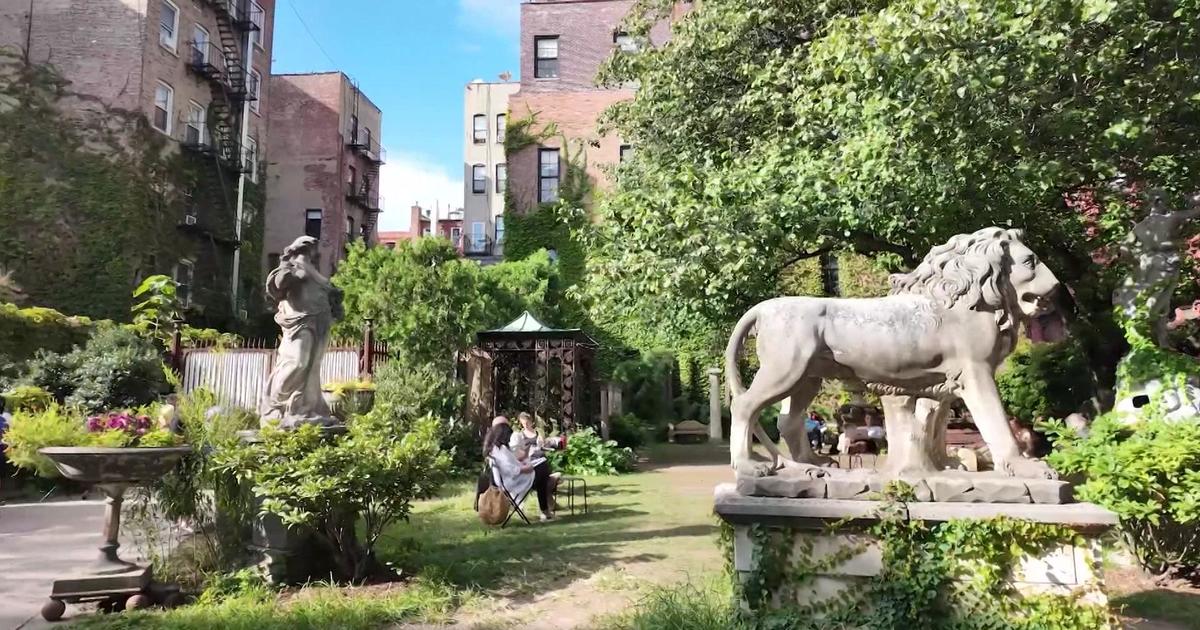
You’ve probably seen the photos. Statues covered in moss, iron gates, and a slice of green in Nolita that feels like it belongs in a fever dream of 19th-century Paris rather than modern-day Lower Manhattan. It's beautiful. But if you ask New York City's new mayor, Zohran Mamdani, he’ll tell you it’s a luxury the city can no longer afford.
The fight over Elizabeth Street Garden has been going on for over a decade. It’s a classic NYC stalemate: green space vs. housing. But things just got way more complicated. Just as the garden's supporters thought they’d finally won a "forever" victory, Mamdani stepped into the ring with a very different plan.
Honestly, the timeline of the last few months feels like a political thriller. Here’s the deal on why Zohran Mamdani is so set on this one-acre plot and what it actually means for the neighborhood.
The 11th-Hour Move That Changed Everything
In the final weeks of 2025, outgoing Mayor Eric Adams did something that caught everyone off guard. He officially designated the Elizabeth Street Garden as permanent parkland.
Why does that matter? Because once something is parkland in New York, you can’t just bulldoze it to build apartments. You need the State Legislature in Albany to "alienate" the land—basically, a legal act of God to strip away its protection.
Adams' team called it a "win-win." They struck a deal with local Council Member Christopher Marte to build roughly 620 units of affordable housing at alternative sites nearby, like 22 Suffolk Street. In their eyes, the garden stays, and the city gets five times more housing than the original project at Elizabeth Street would have provided.
But Zohran Mamdani isn't buying it.
During his campaign, Mamdani was blunt. He called the garden's preservation a "false choice" and a "betrayal." Even after the parkland designation, he’s signaled that he wants to move forward with the original plan to build Haven Green—a 123-unit affordable senior housing complex—directly on top of the garden.
Why Mamdani is Digging In
It’s easy to paint Mamdani as the "anti-garden" guy, but his logic is pretty consistent with his socialist platform. To him, the garden represents a specific type of New York privilege.
- The "NIMBY" Argument: Mamdani and his supporters argue that the garden was basically a private backyard for decades, only opening to the public once the city threatened to build housing there.
- Public Land for Public Good: The land is city-owned. Mamdani's stance is that in a housing crisis this severe, city land should prioritize the most vulnerable—in this case, low-income seniors—over an "eclectic" sculpture park.
- The Precedent: If the city keeps moving projects to "alternative sites" every time a neighborhood gets loud, Mamdani argues, nothing will ever actually get built.
He’s called Adams’ last-minute parkland move an act of "dysfunction and inconsistency." For Mamdani, this isn't just about 123 apartments; it’s a symbolic fight about who the city belongs to.
The Developer Plot Twist
While the politicians are arguing, the people who were actually supposed to build the housing—developers like Pennrose, Habitat for Humanity, and RiseBoro—are suing.
They filed a lawsuit in late 2025 challenging the parkland designation. They claim the city bypassed the entire public review process (ULURP) to protect the garden. They’re basically saying the city "ghosted" them on a project they’ve spent years and millions of dollars planning.
Ironically, the developers and the socialist mayor-elect are temporarily on the same side of the legal battle. They both want the parkland designation thrown out, though for very different reasons.
What People Get Wrong About the "Win-Win"
The Garden's executive director, Joseph Reiver, and Council Member Marte keep pushing the idea that there’s a better way. They’ve pointed to sites just a few blocks away that could hold way more people.
Critics of this "alternative" plan, however, point out that these sites aren't ready to go. They require new environmental reviews, new funding, and years of red tape. The Elizabeth Street project was "shovel-ready." In a city where people are being priced out every single day, Mamdani’s camp argues that a bird in the hand—even if it’s a smaller bird—is worth more than 600 hypothetical apartments five years from now.
What Happens Now?
We’re in a bit of a legal limbo. As of early 2026, the status of Elizabeth Street Garden is essentially "it’s complicated."
- The Lawsuit: The developers' case against the city is moving through the Manhattan Supreme Court. If a judge rules that the parkland designation was illegal, Mamdani has a clear path to proceed with the eviction.
- The Albany Factor: If the parkland status holds, Mamdani will have to lobby the State Legislature. This is a tall order. Many state lawmakers aren't eager to be the ones who voted to destroy a "beloved" community garden.
- The Mayor’s Prerogative: As mayor, Mamdani controls the Department of Housing Preservation and Development (HPD). He could effectively stop the city from defending Adams' parkland designation in court, potentially letting the developers win by default.
Actionable Insights for New Yorkers
Whether you’re a Nolita local or just someone watching the housing crisis unfold, here’s how to stay informed and get involved:
- Check the Court Calendar: Follow the case of Pennrose NY Developer LLC v. The City of New York. This is where the actual fate of the dirt will be decided.
- Visit While You Can: The garden is still open. If you haven't seen it, go now. Regardless of who wins, the space will likely change—even the "win-win" plan involves changing how the garden is managed.
- Engage with Community Board 2: This is the local board that handles land use for this area. They hold public meetings where the "alternative sites" (like 22 Suffolk) are being debated.
- Look Beyond the Headlines: Don't just pick a side between "trees" and "houses." Look at the numbers. The debate is really about permanently affordable units vs. immediate construction.
The Zohran Mamdani Elizabeth Street Garden saga is a perfect microcosm of New York in 2026. It's messy, it’s expensive, and nobody is going to walk away completely happy. But it’s also proof that in this city, even one acre of land can start a revolution.