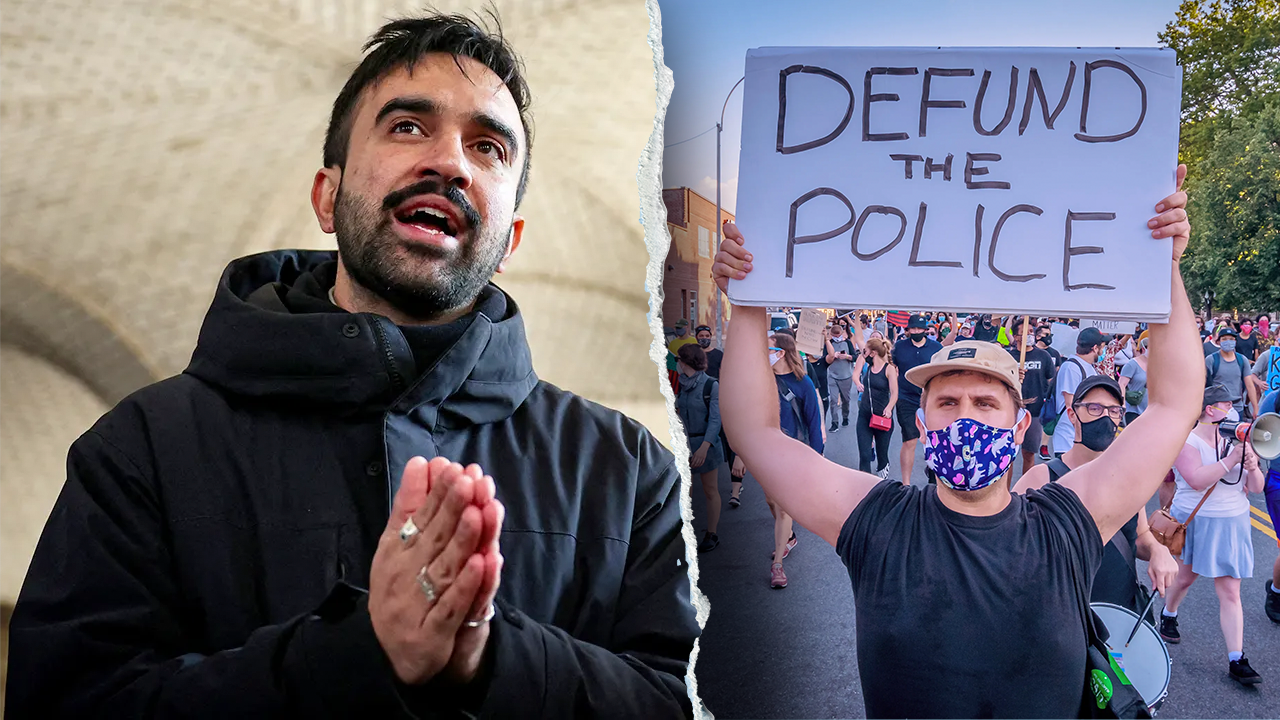
So, you’ve probably seen the headlines or heard the heated chatter at the local coffee shop. Zohran Mamdani—the 34-year-old Democratic Socialist who just moved into Gracie Mansion—is officially the Mayor of New York City. It’s a wild moment for the city, honestly. But the one thing everyone keeps coming back to is his history with the phrase "defund the police."
Depending on who you ask, Mamdani is either a radical ready to dismantle the NYPD or a pragmatist who finally realized that running a city of 8 million people requires more than just a catchy slogan. The truth is a bit more complicated than a 280-character tweet.
The 2020 Context: "Wicked and Corrupt"
To understand where we are in 2026, we have to look back at the summer of 2020. This was the peak of the George Floyd protests. Mamdani, then an Assemblymember-elect from Astoria, wasn't just a supporter of the movement; he was one of its most vocal digital advocates.
He didn't mince words. He called the NYPD "racist, anti-queer & a major threat to public safety." He tweeted that there was "no negotiating with an institution this wicked & corrupt." He explicitly called to #DefundTheNYPD. For his base, this was the kind of moral clarity they’d been waiting for. For his critics, it was a disqualifying attack on the people who keep the city safe.
Fast forward to the 2025 mayoral race. Suddenly, the rhetoric shifted.
Zohran Mamdani and the Defund the Police Pivot
Politics is a game of evolution, and Mamdani’s campaign was a masterclass in it. During the primary and the general election against Andrew Cuomo, Mamdani started using a very different vocabulary. He didn’t just soften his tone; he went on a full-blown apology tour.
He showed up on Fox News—yes, that Fox News—and looked Martha MacCallum in the eye and apologized to the rank-and-file officers of the NYPD. He said those 2020 tweets were born out of "frustration" and that he now recognizes that "police have a critical role to play in creating public safety."
Some people called it growth. Others called it "political theater" or a "hollow" attempt to win over moderate voters who were terrified of rising crime rates.
But here’s the thing: Mamdani didn't actually abandon his core ideology. He just repackaged it. Instead of saying "Take money away from the cops," he started saying "Let's give the cops less to do."
The $1.1 Billion Department of Community Safety
This is the centerpiece of his 2026 agenda. It’s a massive plan. Basically, he wants to create a new civilian agency called the Department of Community Safety (DCS).
The idea is to take about $1.1 billion—some of it moved from existing programs and some of it brand new funding—and use it to handle things that currently fall on the NYPD’s lap. Think mental health crises, homelessness outreach, and subway safety.
- B-HEARD on Steroids: He wants to expand the city's pilot program where social workers and EMTs respond to 911 mental health calls instead of police.
- Violence Interrupters: A 275% increase in funding for the Crisis Management System. These are the folks who work on the ground to stop a shooting before it starts.
- Subway Ambassadors: Replacing the "flooding the zone" police tactics with civilian "wayfinders" and mental health teams in the 100 busiest stations.
Mamdani argues this actually helps the police. He points out that about 65% of crimes from the first quarter of last year went unsolved. His pitch is simple: If the NYPD isn't busy babysitting a person having a mental breakdown in a park, they can actually go out and solve murders.
The Reality of Governing in 2026
Now that he's actually in office, the honeymoon is over. The budget reality is hitting hard. New York is looking at a $120 billion budget, and the NYPD takes up about $11 billion of that.
Mamdani isn't calling for massive layoffs. He’s looking at "attrition"—basically not hiring new people when the old ones retire. Since the department is already losing roughly 300 officers a month, this is a way to shrink the force without a "defund" headline that causes a riot in the tabloids.
But the pressure is coming from all sides.
The New York City Bar Association has already warned him that his DCS proposal might be taking on too much too fast. Meanwhile, his decision to keep Police Commissioner Jessica Tisch in her role has infuriated the "abolitionist" wing of his supporters. They feel betrayed. They thought they were electing a revolutionary, and they got a guy who reports to the police commissioner every morning.
What Most People Get Wrong
There’s a huge misconception that Mamdani is currently defunding the NYPD. He isn't. In fact, his first budget proposal involves a massive 11% increase in the city's overall tax burden just to pay for all his new social programs.
He’s trying to build a "parallel" safety system. He wants to see if you can make a city safe by fixing streetlights, cleaning vacant lots, and providing universal childcare, rather than just increasing the number of arrests.
It’s a gamble. A huge one.
Actionable Insights for New Yorkers
Whether you voted for him or you're already counting down the days until the next election, here is what you actually need to know about the current state of policing in NYC:
- Monitor the DCS Legislation: The bill to create the Department of Community Safety was introduced in December. Watch how it’s funded. If the money comes directly out of the NYPD’s operating budget, that’s when the "defund" fight will get real.
- Watch the B-HEARD Expansion: If you call 911 for a non-violent mental health issue, you’re increasingly likely to see a social worker instead of a badge. Pay attention to how those interactions go in your neighborhood.
- Check the "Precision Policing" Stats: Commissioner Tisch is still using data-driven enforcement. If crime continues to drop, Mamdani can claim his social programs are working. If it spikes, the pressure to "re-fund" or hire more officers will be immense.
The "Zohran Mamdani defund the police" saga isn't over. It has just moved from the streets and Twitter threads into the boring, high-stakes world of municipal budget hearings and executive orders. He’s trying to prove that you can be a socialist mayor and still keep the lights on and the subways running.
The next six months will tell us if he’s right—or if he’s just the latest politician to learn that slogans don't survive contact with reality.