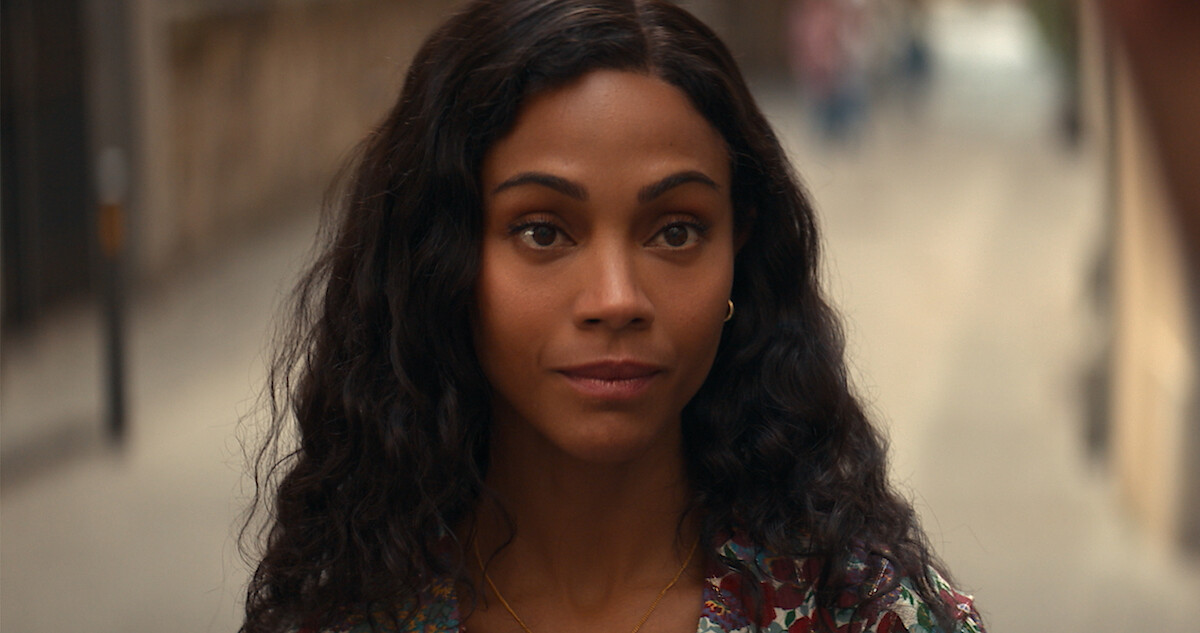
You’ve seen her as a green-skinned assassin in the Marvel universe and a blue-skinned warrior on Pandora. But back on Earth, the question of Zoe Saldana ethnicity is something people have been Googling for decades. Honestly, it’s kinda funny how we can accept her as an alien but get tripped up by her actual human heritage.
Zoe isn't just one thing. She’s a mix. To be specific, she has often described herself as being three-quarters Dominican and one-quarter Puerto Rican.
Her late father, Aridio Saldaña, was Dominican. Her mother, Asalia Nazario, is half Dominican and half Puerto Rican. That’s the "math" of it, but the reality is way more lived-in than just percentages. She grew up in a household where Spanish was the first language, though she was born in Passaic, New Jersey. It’s that classic Nuyorican/Dominicanyork vibe where you’re juggling two worlds at once.
The Move That Changed Everything
When Zoe was only nine years old, tragedy hit. Her father died in a car crash.
Basically, her mom decided the best thing for the girls was to move back to the Dominican Republic. They lived there for seven years. This is a huge detail people miss when they talk about her background. She didn't just "visit" her heritage; she lived it during her most formative years. She studied at the ECOS Espacio de Danza Academy in the DR, which is where those ballet skills came from—the same ones that eventually landed her a role in Center Stage.
Is She Black? The Afro-Latina Identity
This is where the internet gets heated.
Zoe identifies as Afro-Latina. She has been very vocal about the fact that she is a Black woman. In a 2016 interview that still makes the rounds on Reddit and Twitter, she said, "There's no one way to be Black. I'm Black the way I know how to be."
- She’s raising three Black sons with her husband, Marco Perego.
- She often references her grandmother, Argentina Cesse, who immigrated to the US in 1961.
- She has mentioned having Haitian and even some Lebanese roots further back in her family tree.
It’s a "tapestry," as some bloggers put it, but she mostly sticks to the Dominican and Puerto Rican labels because that’s the culture she breathes.
Why the Nina Simone Controversy Still Matters
You can't talk about her ethnicity without bringing up the 2016 Nina biopic.
It was a mess. People were upset because Zoe used dark makeup and a prosthetic nose to play the legendary singer. The argument was that a light-skinned Afro-Latina shouldn't be playing a woman whose dark-skinned features were central to her struggle and her art.
Zoe later apologized for taking the role. In 2020, she admitted she "should have never played Nina" and that she should have used her leverage to make sure a Black woman who looked more like Nina got the part. It was a big moment of growth for her, showing that she understands the nuances of colorism within the Black and Latino communities.
Making History at the Oscars
Fast forward to 2025, and Zoe is making history for the right reasons.
She became the first American of Dominican origin to win an Academy Award. She took home the Best Supporting Actress Oscar for her role in Emilia Pérez. This was a massive deal because the role actually allowed her to sing and speak in Spanish on screen.
During her acceptance speech, she was visibly emotional. She dedicated the win to her grandmother and called herself a "proud child of immigrant parents." It felt like a full-circle moment for a woman who spent years being told she was "too this" or "not enough of that" for certain roles.
Why It Matters to You
So, why are we still talking about this? Because Zoe Saldana is currently the highest-grossing actor of all time. We're talking over $15 billion in box office revenue.
When the biggest star in the world is a bilingual Afro-Latina who grew up between Queens and the DR, it shifts the needle for everyone else. It proves that "universal appeal" doesn't have to mean "erasing where you came from."
Actionable Insights for Fans and Creators:
- Support Afro-Latino Cinema: If you want to see more of the "real" Zoe, watch Emilia Pérez or her earlier work where she isn't under layers of CGI.
- Understand the Spectrum: Recognize that being Latino isn't a race; it's an ethnicity. You can be Black and Latino, White and Latino, or Indigenous and Latino.
- Follow the Trailblazers: Keep an eye on the Saldana Productions (now Cinestar) company, which she runs with her sisters, focusing on diverse storytelling.
Next time someone asks "what is Zoe Saldana's ethnicity," you can tell them it's not a simple one-word answer. It's a mix of Caribbean history, New York grit, and a whole lot of Dominican pride.