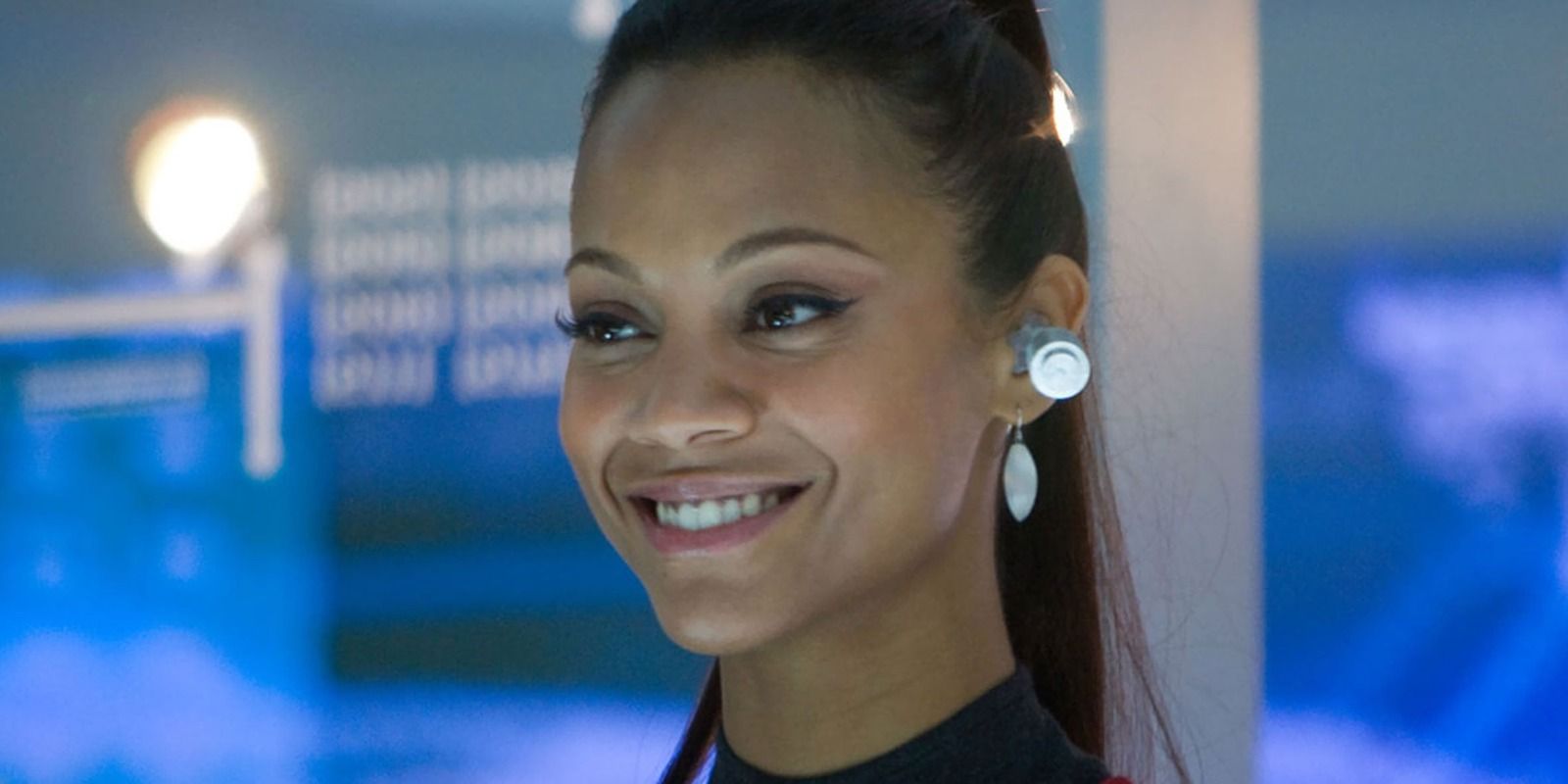
Zoe Saldana didn’t just walk onto the bridge of the Enterprise. She basically kicked the door down. Back in 2009, when J.J. Abrams decided to reboot the most sacred cow in sci-fi, the casting of Zoe Saldana as Uhura was one of the few things most people actually agreed on. She had the look. She had the presence. Most importantly, she had the blessing of the late, great Nichelle Nichols.
But honestly? If you look back at the Kelvin Timeline trilogy now, her portrayal is way more complicated than just "the new Uhura." It was a massive shift in how Star Trek treated its female leads, for better and, occasionally, for worse.
The Casting That Almost Didn’t Happen
It’s kinda wild to think about, but Zoe wasn't even a Trekkie. Not at all. Her mom was the fan. In fact, her mother used to leave her voice-mails while she was filming, giving her tips on how to handle the character’s legacy.
J.J. Abrams wanted her because he’d seen her work and loved her "androgynous essence"—his words, not mine. He saw a version of Nyota Uhura that was tougher and more academic than the 1960s version. She wasn't just there to open hailing frequencies. She was a linguistics genius who could translate three different dialects of Romulan while a ship was exploding around her.
Before she ever stepped on set, Zoe reached out to Nichelle Nichols. This is the part that usually gets glossed over. Nichols didn’t just give a thumbs up; she told Zoe to play the role with "all the confidence in the world." She essentially gave her permission to make the character her own, rather than doing a karaoke version of the original.
Why the Spock Romance Set the Internet on Fire
You can’t talk about Zoe Saldana as Uhura without talking about Spock. "Spuhura" (or "Sponyata" depending on which corner of the internet you live in) was the most controversial change in the 2009 reboot.
Hardcore fans lost their minds. In the Original Series, there were hints of flirting—Spock once played his Vulcan lute while Uhura sang to him—but a full-blown relationship? That was unheard of.
The reality of the romance:
- It gave Uhura a personal life outside of her station.
- It humanized Spock through her eyes.
- It occasionally turned Uhura into the "nagging girlfriend" trope, which was a huge bummer for some viewers.
In Star Trek Into Darkness, there’s that infamous scene where they’re arguing about their relationship while flying into a war zone on Qo'noS. Some people loved the drama. Others felt it made Uhura look unprofessional. Honestly, it’s a bit of both. While it was great to see a Black woman at the center of the film's emotional core, it did sometimes feel like her character growth was tethered to Spock’s internal struggle.
She Did Her Own Stunts (Mostly)
By the time Star Trek Beyond rolled around in 2016, Zoe was a veteran of the genre. She was already Gamora. She was already Neytiri. She told the producers she didn't want to be "a hero" this time because she had just had her twin sons six months prior.
She wanted to take it easy. But then she saw the choreography for her fight scene with the villain Krall’s scavengers.
She basically treated it like a dance. Because of her background in ballet (remember Center Stage?), she picked up the stunt moves in minutes. If you watch Beyond again, look at how she moves during the escape from the Enterprise. It’s fluid. It’s precise. That’s all her.
The "Nyota" Problem and the Legacy of the Name
Did you know Uhura didn’t have a first name on screen for over 40 years?
It’s true. In the Original Series, she was just Lieutenant Uhura. The name "Nyota" (which means "star" in Swahili) existed in tie-in novels and fandom, but J.J. Abrams was the one who finally made it canon. There’s that great scene where Kirk keeps trying to guess her name at the bar, and she just shuts him down.
When she finally says it to Spock at the end of the first movie, it felt like a massive payoff for the fans who had been waiting since 1966. It gave the character a sense of history and identity that had been missing for decades.
How to Appreciate This Version of Uhura Today
If you’re revisiting the films, don't look for the 1960s version. You won’t find her. Instead, look for the following "Easter eggs" and nuances that Zoe brought to the table:
- The Language Mastery: Unlike the original movies where Uhura famously used books to translate Klingon (which Nichelle Nichols hated), Zoe’s version is fluent. In Into Darkness, she actually speaks it to the Klingon patrol.
- The Wardrobe Evolution: From the mini-dress in the first film to the more practical, tactical gear in Beyond, her look evolved as she became more of a field officer.
- The Authority: Pay attention to how she treats Kirk. She’s one of the few people who doesn’t buy his "charming rogue" act for a second. That dynamic is pure gold.
Zoe Saldana as Uhura was the bridge between the past and the future. While we now have Celia Rose Gooding playing a younger Uhura in Strange New Worlds, Zoe’s version remains the most "action-heavy" take we’ve ever seen. She proved that the communications officer wasn't just a desk job—it was a front-line position.
If you want to dive deeper, go back and watch the "Qo'noS" scene in Star Trek Into Darkness. Watch it not for the Spock drama, but for how Zoe handles the Klingon dialogue. It's a masterclass in making a fictional language feel terrifying and real. That’s the real legacy she left behind.