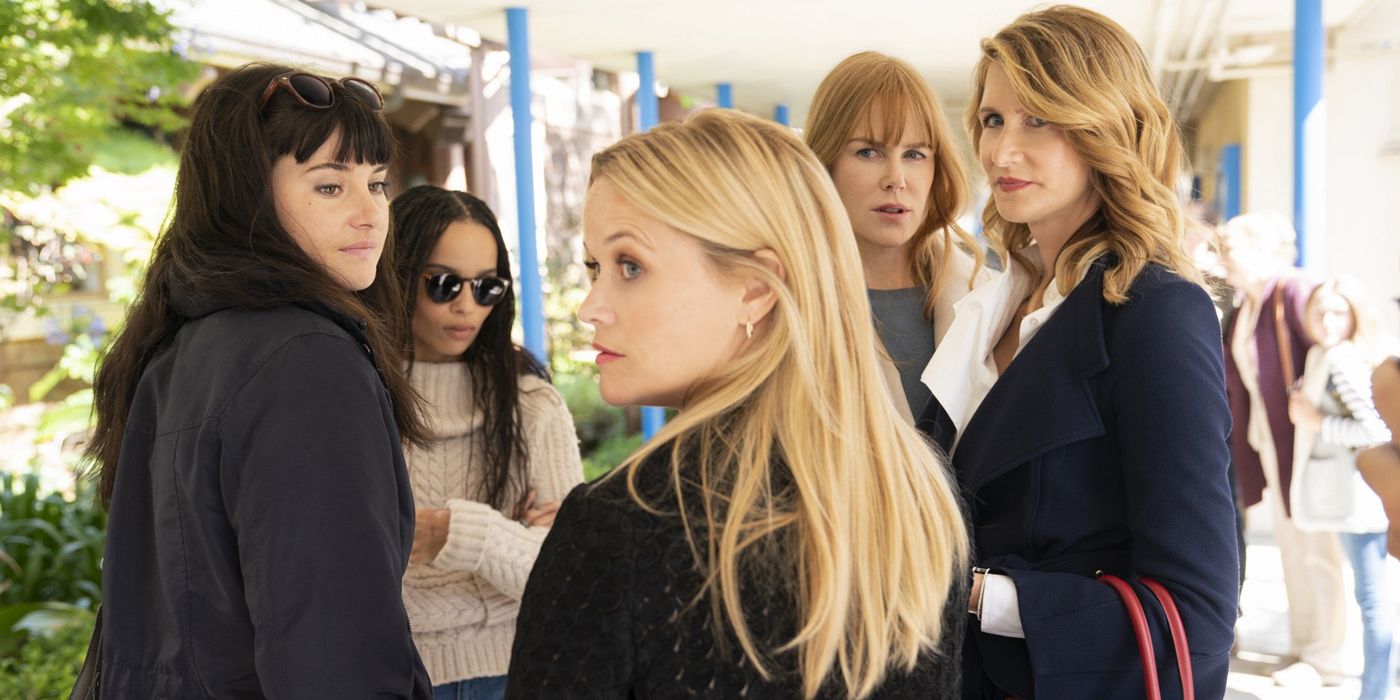
Honestly, if you go back and watch the first season of Big Little Lies, it’s kind of wild how much we all overlooked Bonnie Carlson. For a while, she was just "the other woman"—the yoga-teaching, jewelry-making, younger wife who made Madeline Mackenzie’s blood boil. She was the peaceful foil to a bunch of high-strung, wealthy women in Monterey. But then the finale happened. That one push.
Suddenly, Zoe Kravitz wasn't just a supporting character in the background of a Reese Witherspoon and Nicole Kidman showdown. She was the center of the entire story. Read more on a connected issue: this related article.
Most people think her character was just a "free spirit" who snapped. But there is a lot more to Zoe Kravitz in Big Little Lies than just a shocking finale. If you look at the source material versus the show, or the messy production of the second season, you’ll see a character that was actually fighting to be heard in a very white, very loud room.
The Bonnie Everyone Saw vs. The Bonnie in the Book
In Liane Moriarty’s original novel, Bonnie Carlson is white. When HBO cast Zoe Kravitz, they didn't just change the look of the character; they changed the entire social dynamic of the show without actually talking about it for a long time. Additional journalism by The Hollywood Reporter explores comparable perspectives on this issue.
Kinda weird, right?
In Season 1, nobody mentions that Bonnie is the only woman of color in this elite inner circle. The show treats her race as an "aesthetic" choice rather than a lived experience. It makes her feel like an outsider, but the characters act like it’s just because she’s younger and likes crystals.
But there’s a bigger change that most fans missed. In the book, the reason Bonnie pushes Perry is explicitly tied to her father being abusive. She has this deep-seated trauma that triggers her when she sees Perry attacking Celeste. In the show’s first season, they stripped that backstory away. They wanted the push to be a total surprise.
Zoe Kravitz basically had to play a "mystery" for seven episodes. She’s often just staring, observing, and holding her tongue while the other moms bicker over birthday parties. It’s a quiet performance, which is why some people—incorrectly, I’d argue—thought she didn't have much to do. She was doing the heavy lifting of being the group's conscience before they even knew they needed one.
Season 2 and the "Course Correction"
When Season 2 rolled around, the writers realized they had a problem. They had this character who committed the central act of the show, but we didn't really know her.
Enter Elizabeth Howard, Bonnie’s mother, played by Crystal Fox.
This is where things got heavy. Instead of the book's abusive father, the show pivoted to an abusive, alcoholic mother. It was an attempt to give Bonnie a "why," but it felt... different. There was a lot of talk about "Black girl wounded" tropes and whether the show was leaning too hard into the "tragic" side of her life.
Kravitz has been pretty open about her experience filming in Monterey. She mentioned in interviews that it felt "uncomfortable" at times because it was such a white area—not just on screen, but the actual location. You can see that discomfort in Bonnie’s eyes in Season 2. She isn't just guilty about the murder; she’s drowning in the isolation of being the only one who truly understands the weight of what happened.
While Madeline is busy worrying about her marriage and Renata is screaming about being "rich as fuck," Bonnie is literally contemplating walking into the ocean.
What Zoe Kravitz Actually Brought to the Table
Let's talk about the acting for a second. It’s easy to get lost when you’re sharing a screen with Meryl Streep and Laura Dern. But Kravitz’s Bonnie is the only person in the "Monterey Five" who feels like a real human being sometimes.
She doesn't have the "armor" the other women wear. She doesn't have the snappy dialogue. She has the truth.
There’s a specific scene in Season 2 where she tells Madeline that she’s the one who has to carry the "actual" death. The others are just carrying a lie. It’s a subtle distinction, but it’s everything.
Why the "Carefree" Label is a Lie
For a long time, critics called Bonnie a "Carefree Black Girl" archetype. That’s a bit of a lazy take. If you watch her body language, she’s never carefree. She’s performing. She’s performing the "peaceful yoga teacher" role so she doesn't scare the wealthy white people around her. She’s performing the "perfect stepmother" so Nathan doesn't regret his second marriage.
When she pushes Perry, the mask doesn't just slip—it shatters.
The Messy Reality of Season 2’s Ending
You might have heard the rumors about the "behind-the-scenes" drama with Director Andrea Arnold. Apparently, a lot of the footage and the creative vision for Season 2 was changed in post-production to match the style of Season 1.
A lot of people feel like Bonnie’s story was the one that suffered most from those edits.
Her catharsis—telling her mother she resents her while her mother lies in a hospital bed—is one of the most powerful moments in the series. But then, the show kind of rushes to a "sisterhood" ending at the police station. It leaves you wondering: did Bonnie ever actually get the help she needed, or did she just become another secret for the group to keep?
How to Re-watch Bonnie’s Arc
If you’re going back for a re-watch, keep these three things in mind to see the nuance you probably missed:
- Watch her eyes during the Trivia Night (S1 Finale). She isn't just watching a fight; she’s recognizing a monster. She sees Perry for exactly who he is before anyone else even moves.
- Notice the lack of "stuff." Unlike the other women’s houses, which are filled with expensive status symbols, Bonnie’s space is sparse and earthy. It’s a deliberate choice to show she’s trying to stay grounded in a world that feels fake to her.
- The "Drowning" Vision. In Season 2, her mother has visions of someone drowning. Everyone thought it was literal. But it’s actually a metaphor for Bonnie’s soul being submerged by the lie.
Actionable Takeaway for Fans
If you want to truly appreciate the character, look into the "Monterey Five" through the lens of social isolation. Bonnie Carlson is the ultimate study in what happens when you are "included" in a group but never actually "seen."
The next time you hear someone say Zoe Kravitz was the "weakest link" in the cast, remind them that she had to play a character who wasn't allowed to speak her truth for nearly two full seasons. That takes a specific kind of talent.
What to do next:
- Compare the versions: Grab a copy of the Liane Moriarty book and read the final chapters. The internal monologue for Bonnie gives way more context to the "push" than the show ever could.
- Watch "High Fidelity": If you want to see Kravitz in a role where she’s allowed to be as loud and messy as the other Big Little Lies characters, this is the one.
- Check the S3 updates: As of 2026, there are still whispers about a Season 3. Keep an eye on HBO’s official press releases, as Kravitz has recently hinted that the "Monterey Five" story might not be as finished as we thought.
- Analyze the soundtrack: Listen to Bonnie’s song "Don't" from the Season 1 finale. The lyrics are a massive foreshadowing of her mental state that most people completely ignore.