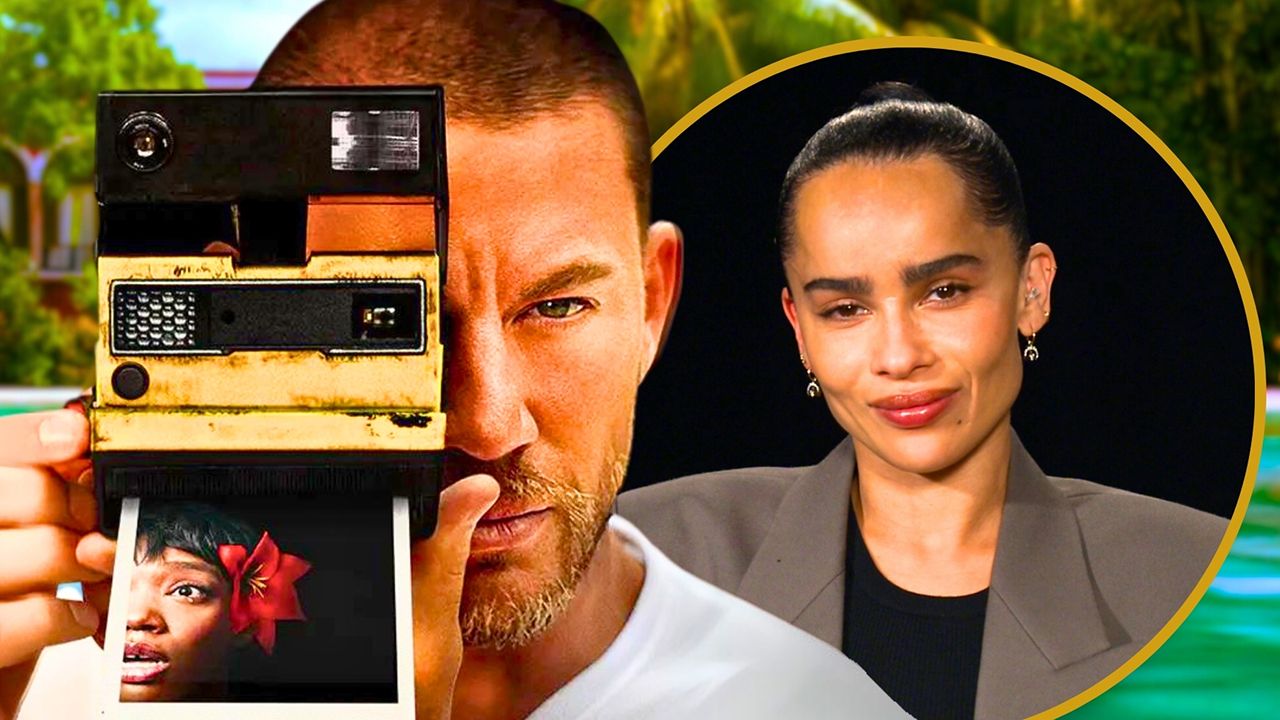
Honestly, it's rare to see a directorial debut that’s as unapologetically loud as Zoe Kravitz Blink Twice. Most actors-turned-directors play it safe with a quiet indie drama, but Zoe decided to jump headfirst into a $20 million psychological thriller that basically feels like a fever dream in the Yucatan. It’s got Channing Tatum playing against type, Naomi Ackie absolutely carrying the emotional weight, and a plot that makes you want to scrub your brain with soap.
If you’ve seen it, you know. If you haven't, you've probably heard the whispers about the original title, Pussy Island, and wondered if it was just shock value. It wasn't. The film, which hit theaters in August 2024 and eventually dominated Prime Video charts by early 2025, is a jagged pill of a movie about power, memory, and how "forgiving" is often just a fancy word for "forgetting."
The Premise: More Than Just a "Get Out" Clone
People love to compare this to Get Out or The Menu. I get it. We love "social thriller" vibes where wealthy people do unhinged things on private islands. But Zoe Kravitz Blink Twice isn't just about rich people being mean; it’s about the specific way trauma is literally erased to keep the status quo humming along.
The story follows Frida (Naomi Ackie), a cocktail waitress who basically manifests her way onto the private island of tech billionaire Slater King (Channing Tatum). For the first hour, it’s all champagne, white linens, and psychedelic haze. It’s beautiful. Too beautiful. You’re waiting for the floor to drop, and when it does, it’s not a trap door—it’s a meat grinder.
Kravitz and co-writer E.T. Feigenbaum used a specific plot device: a memory-erasing perfume. Every time the women on the island are subjected to horrific abuse, they’re sprayed with this scent. They wake up the next day with nothing but a vague sense of bliss and some unexplained bruising. It’s a literalization of gaslighting.
Why Channing Tatum as a Villain Was a Genius Move
Let’s talk about Slater King. Channing Tatum is usually the "nice guy" or the "funny guy." Here, he’s the "I’m doing the work" guy. He’s the billionaire who went on a public apology tour for a past scandal and retreated to his island to grow "spiritual" chickens and practice mindfulness.
It’s terrifying because we know this guy. He uses the language of therapy to shield himself from accountability. Zoe Kravitz actually met Channing through the casting process for this film, and they ended up engaged (though they eventually split in late 2024 after the film’s release cycle). Tatum was her "rock" on set, often giving her pep talks when the first-time director jitters kicked in.
His performance is a masterclass in toxic charisma. He’s not a mustache-twirling villain; he’s a guy who genuinely believes he’s "helping" these women by taking away their memories of the trauma he inflicts. In his head, if you don't remember it, it didn't happen.
The Real Cost of the Island
Production for the film took place in the Yucatan and Quintana Roo, Mexico, starting back in 2022. It wasn't an easy shoot. You can see the heat on screen. The film grossed about $48 million globally—modest for some, but a win for a $20 million budget. It proved that Kravitz has a visual eye that most veteran directors would kill for. The sound design is particularly jarring; things like the crackle of a vape or the slicing of a knife are dialed up to 11 to keep the audience as unsettled as the characters.
That Ending: Success or Just More Cycles?
The biggest debate surrounding Zoe Kravitz Blink Twice is that final scene. If you need a refresher: Frida survives. She doesn't just survive; she drugs Slater with his own perfume, makes him forget he’s the predator, and essentially takes over his life.
A year later, Frida is the CEO of King Tech. Slater is her "husband," but he’s basically a lobotomized puppet she keeps in line by lacing his vape with the memory-wiping toxin.
- Viewpoint A: It’s a "girlboss" revenge fantasy. Frida won. She took the power.
- Viewpoint B: It’s a tragedy. Frida didn't break the cycle; she just became the new Slater King.
Zoe Kravitz herself has called it "sweet revenge," but also admitted it’s meant to spark conversation. Frida’s mother told her that "success is the best revenge," and Frida took that literally. She didn't want to kill Slater; she wanted to be Slater. By the end, she is. She’s the one in the silk robe, controlling the narrative, while the people around her remain blissfully unaware of the skeletons in the closet.
What Most People Miss: The "Red Rabbit"
You probably noticed the "Red Rabbit" thing. The maid who keeps shouting it, the nail art Frida finds in old Polaroids. It’s the anchor. In the film’s internal logic, the human brain tries to leave breadcrumbs even when it's being chemically wiped.
The "Red Rabbit" was Frida’s nail art from her first trip to the island. Yeah, she had been there before. She’d bit off the finger of Vic (Christian Slater) during a previous assault and had her memory wiped so thoroughly she came back for a second round. It’s a bleak commentary on how easily we can be manipulated back into toxic situations if we don't have the "venom" (the truth) to see clearly.
Actionable Insights for Your Next Watch
If you’re planning on revisiting the movie on streaming, or if you’re a filmmaker looking to learn from Kravitz’s style, keep an eye on these specifics:
- Watch the Background: In the early "blissful" scenes, look at the staff. They aren't smiling. The disconnect between the "guests" and the "servants" is where the horror lives.
- Listen to the Sound: Pay attention to the repetitive sounds—the "snip snip" of the garden shears. It’s rhythmic and meant to induce a trance-like state in the viewer.
- The Color Palette: Notice how the reds become more dominant as Frida regains her memory. It’s subtle but effective.
- The Casting of Sarah: Adria Arjona’s character, Sarah, is the MVP. Her shift from "rival" to "ally" is the emotional core of the film’s second half.
Zoe Kravitz Blink Twice isn't a perfect movie—some critics found the third act a bit rushed and the tone inconsistent—but it’s an ambitious one. It’s a film that demands you pay attention, and in an era of "background noise" streaming content, that’s a victory in itself. If you want to dive deeper into the themes, look up interviews with Kravitz regarding the "female gaze" in horror; she intentionally avoided the "torture porn" tropes to focus on the psychological toll of being silenced.
The film serves as a harsh reminder that in the world of the ultra-wealthy, the most expensive commodity isn't gold or data—it's your own memory.
To get the most out of the experience, try watching it back-to-back with Promising Young Woman. Both films deal with the fallout of trauma and the lengths women go to for a version of justice that the law simply doesn't provide. Just maybe don't wear your favorite perfume while you do it.