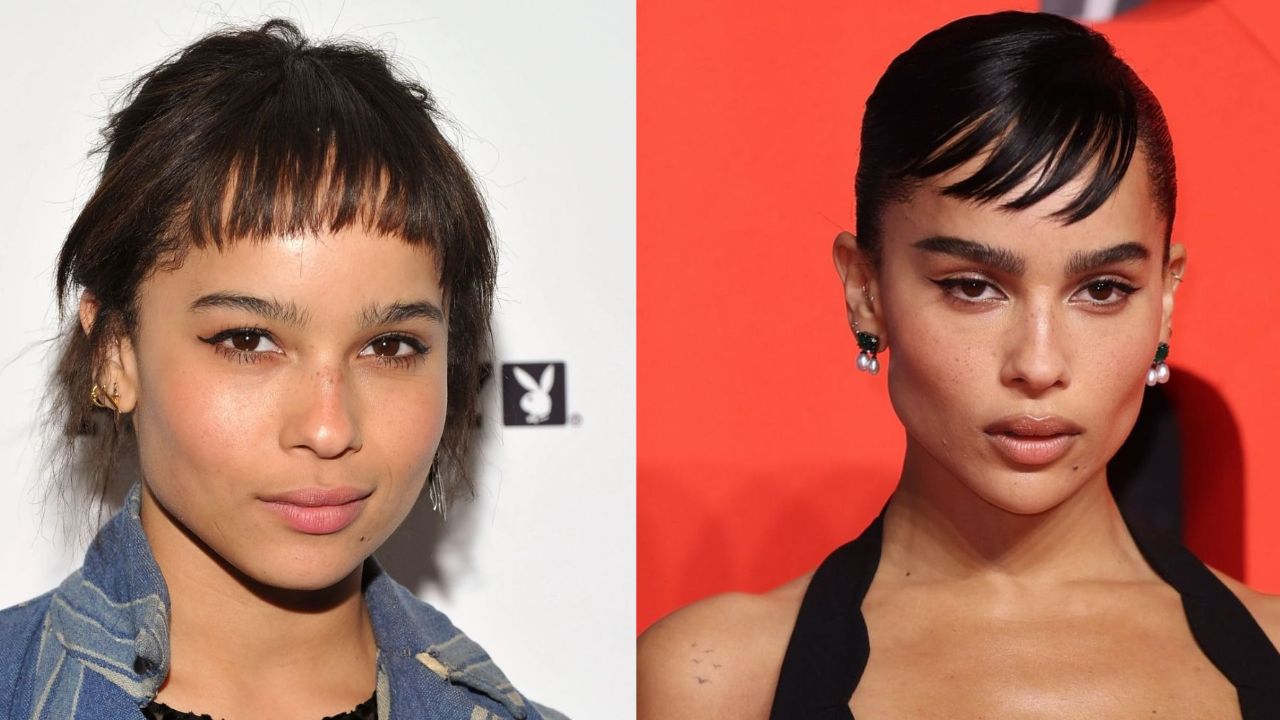
Everyone knows the "cool girl" archetype. It’s that effortless, slightly disheveled but somehow perfect vibe that Zoë Kravitz has basically trademarked over the last decade. But if you scroll back through the archives—past the Batman premieres and the Saint Laurent campaigns—you find a different version of her. A version with softer edges.
Looking at Zoe Kravitz before plastic surgery rumors took over the internet is like looking at a completely different era of Hollywood. Back in 2007, when she was just Lenny Kravitz’s daughter showing up to indie movie premieres, she had a roundness to her face. It was youthful. It was, dare I say, "normal."
Today? Her face is a series of sharp, architectural angles. Her cheekbones look like they could actually cut glass, and her jawline is so defined it almost looks 3D-printed. It’s led to a massive wave of speculation. Did she just grow up? Did she lose the "baby fat" we all shed in our late twenties? Or did a surgeon’s scalpel help nature along? Honestly, the truth is likely a mix of both, but the shift is undeniable.
The Early Years: That 2007 "Baby Face"
When Zoë first stepped onto the scene, she was the spitting image of her mother, Lisa Bonet. She had those same soft, soulful features. If you look at photos from the The Brave One premiere in 2007, her face is heart-shaped and full.
There’s no "hollow" under the cheekbone. Her nose had a slightly wider bridge and a softer tip. It was a beautiful face, but it didn't have that "high-fashion alien" look she’s known for now. You’ve probably noticed that most people’s faces change as they hit 30. Collagen drops, and the fat pads in our cheeks start to shift. But for Zoë, the change felt... targeted.
Many fans argue that the Zoe Kravitz before plastic surgery look was simply a result of being nineteen. But critics and cosmetic experts, like Dr. Jonny Betteridge, have pointed out that some of these changes don't usually happen just from eating clean and aging.
The Buccal Fat Removal Obsession
You can’t talk about Zoë’s transformation without mentioning buccal fat removal. It’s the "it" procedure in Hollywood right now. Basically, a surgeon snips out the fat pads in your lower cheeks to give you a permanent contour. No makeup needed.
- Then: Full, rounded lower cheeks that moved when she smiled.
- Now: Deep hollows beneath the cheekbones that stay put regardless of expression.
By 2023, the speculation hit a fever pitch. People on TikTok were comparing her to a Tim Burton character—specifically the Corpse Bride. It sounds harsh, but it highlights how extreme the "chiseled" look has become. When you remove that fat, the bone structure underneath pops. It’s a vibe, sure, but it’s also permanent. And as some doctors warn, those fat pads are what keep you looking young when you’re 50. Removing them now might lead to a "skeletonized" look later.
Did She Get a "Finesse" Rhinoplasty?
Another big talking point is her nose. It’s subtle. Very subtle. This isn't a "shave it all off" kind of job. Instead, it looks like what surgeons call a "finesse rhinoplasty."
If you compare her 2010 Met Gala look to her more recent appearances, the bridge of her nose looks slightly slimmer. The tip seems more refined and pointed. It’s the kind of work that’s hard to spot unless you’re staring at high-res side-by-sides for an hour. Which, let’s be real, the internet definitely does.
Is it possible it’s just expert contouring? Maybe. But makeup can only do so much when the physical width of the nasal bone appears to have changed.
The Jawline and "Cat Eye" Lift
Then there’s the "snatched" look of her eyes and jaw.
Her jawline used to be softer. Now, it’s incredibly wide and square at the back, which some suggest could be the result of a subtle chin implant or even jawline fillers. It creates a more "masculine" strength to the lower face that balances out her delicate features.
And those eyes? They’ve gone from a standard almond shape to a very lifted, cat-like slant. This is often attributed to a "fox eye" lift or a temporal brow lift. It pulls the tail of the brow upward, giving that perpetually "surprised but make it fashion" look.
Why the "Before" Version Still Matters
There is a certain nostalgia for the Zoe Kravitz before plastic surgery aesthetic. It represented a more natural, bohemian beauty. Today, her look is much more "engineered."
It raises a bigger question about Hollywood’s current beauty standards. When even someone as naturally stunning as Zoë Kravitz feels the need to sharpen every edge, what does that say for the rest of us? The "Instagram Face" has moved from social media into the real world.
What You Can Learn From This
If you’re looking at Zoë’s transformation and thinking about making changes yourself, here are a few things to keep in mind:
- Aging is a factor: Don't underestimate how much your face changes between 22 and 34. Bone structure becomes more prominent naturally.
- The "Hollow" Risk: Buccal fat removal is permanent. Before jumping on the trend, consider how you'll feel about that sunken look in twenty years.
- Subtlety is Key: If she did have work, it was done over a decade, not a weekend. Small tweaks usually look better than a total overhaul.
- Lighting and Makeup: A lot of what we see on red carpets is the result of professional lighting and "taping" techniques that pull the skin back temporarily.
The fascination with Zoë’s face isn't going anywhere. Whether it’s genetics, aging, or a very talented surgeon in Beverly Hills, she remains one of the most influential beauty icons of our time. Just remember that the "before" was already world-class.
To get a better sense of these changes for yourself, start by looking at unedited red carpet photography from 2008 to 2012. Compare the "malar" (cheek) area specifically during those years to her appearances from 2023 onwards. Pay close attention to how the light hits the hollows of her cheeks; if the shadow is consistent across different lighting setups, it’s usually a sign of structural change rather than just contouring.