Everyone remembers the screaming. When you think about the 2008 film Revolutionary Road, the first thing that usually pops into your head is Leonardo DiCaprio and Kate Winslet—the Titanic duo reunited—tearing each other’s souls apart in a beige 1950s kitchen. It’s loud. It’s sweaty. It’s devastating.
But look past the central wreckage of Frank and April Wheeler. There’s a quieter, arguably more tragic thread running through the movie. It belongs to Zoe Kazan.
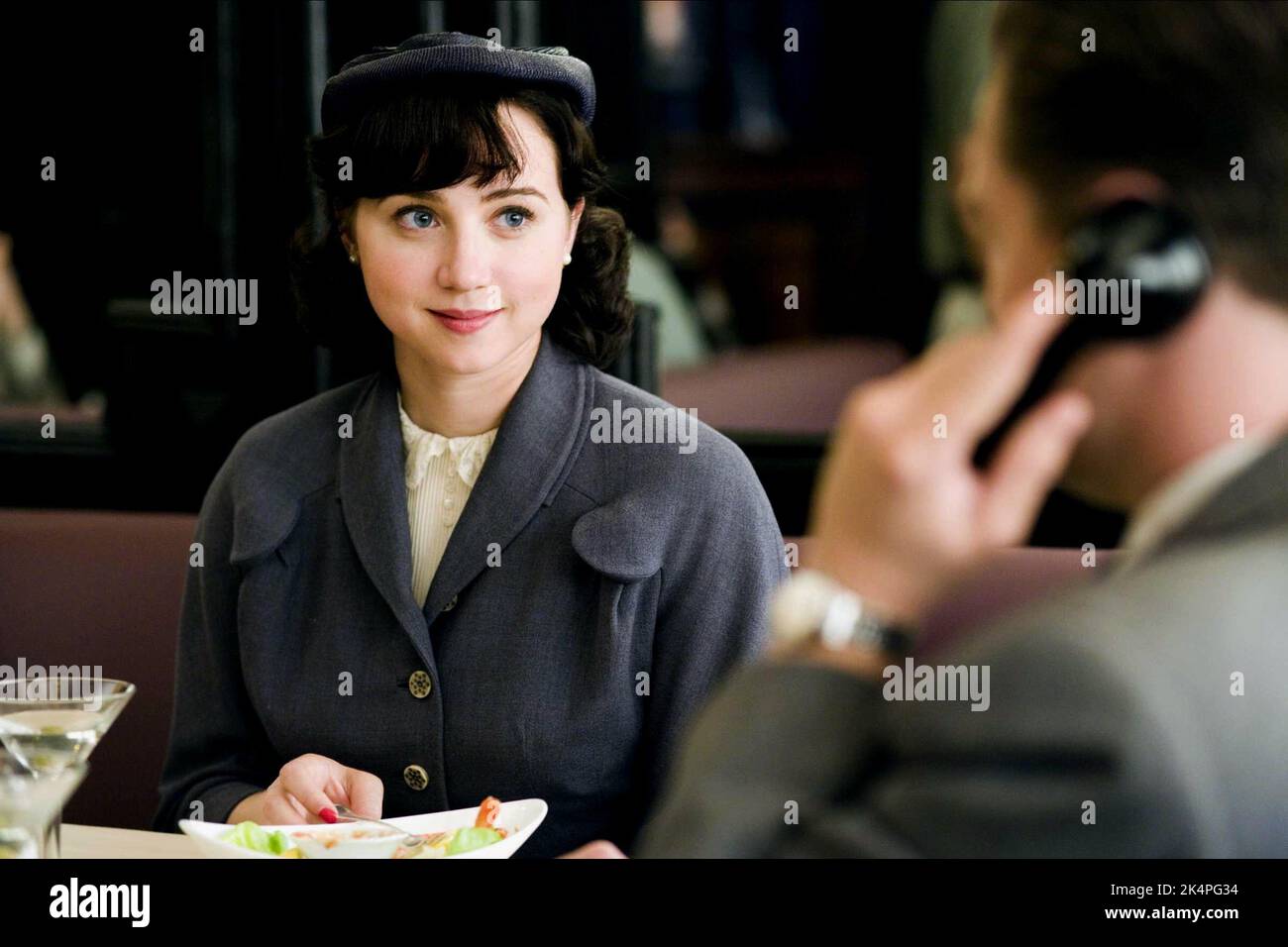
She was 23 at the time. Fresh out of Yale. She didn't have the "indie darling" reputation she has now. In fact, most people didn't know her name yet. In the film, she plays Maureen Grube, the secretary at Knox Business Machines who ends up having a brief, hollow affair with Frank. It’s a role that could have been a cardboard cutout of "the other woman," but Kazan turned it into something far more uncomfortable.
Why Zoe Kazan in Revolutionary Road Still Matters
Honestly, Maureen is the mirror Frank uses to feel like a man when he realizes he’s a failure at home. She’s young, she’s impressionable, and she looks at him like he’s actually important. Kazan plays her with this sort of breathless, wide-eyed sincerity that makes the eventual betrayal feel like a physical blow.
You’ve probably seen the scene. Frank takes her out, they drink, they end up back at her place. It’s not a glamorous "Hollywood affair." It’s sticky. It’s awkward. They filmed it in a cramped Harlem apartment during a heatwave with no air conditioning. Kazan later mentioned in interviews that they were all "sticky and blotchy"—not exactly the vibe you want for a nude scene, but perfect for the suffocating atmosphere of the movie.
Breaking the "Mistress" Stereotype
Maureen isn't a villain. She isn't even particularly seductive. She’s just... there. She’s a girl looking for a connection in a world that tells her she should be grateful for any attention from a man like Frank.
When Frank eventually dumps her—calling her "swell" while she’s literally still in bed—the look on Kazan’s face is haunting. It’s the realization that she was never a person to him; she was just a temporary ego boost.
The Audition That Almost Didn't Happen
Here is a bit of trivia most people forget: Sam Mendes almost didn't cast her.
When she first walked in, the casting director took one look at her and said she looked too young. Which, to be fair, Kazan has always had that "eternal youth" look. But she was determined. She kept coming back. Finally, Mendes asked her to come in dressed as herself—no 50s makeup, no costume—just to talk.
They sat over coffee and croissants, and instead of doing a scene, they talked about why she wanted to act. That was it. She got the part because she understood the loneliness of the character, not because she "looked" like a 1950s secretary.
Fact Check: The Nudity Controversy
There’s often a lot of chatter about the "topless scene" in the film. Kazan has been refreshingly blunt about this. While she had done much more intense scenes on stage (like in The Prime of Miss Jean Brodie), she was actually glad the film version was edited down. Why? For her parents' sake. It’s a very human, very "Zoe" reaction to a high-pressure Hollywood moment.
How This Role Shaped Her Career
Without Revolutionary Road, we might not have gotten Ruby Sparks or The Big Sick.
This movie proved she could hold her own against heavyweights. Think about it: she was a newcomer sharing scenes with DiCaprio at the height of his "prestige actor" era. She didn't blink. She matched his energy, providing the soft, vulnerable contrast to his manic dissatisfaction.
- The Emotional Depth: She didn't play Maureen as a victim, but as someone trying to find joy in a bleak landscape.
- The Career Shift: Immediately after this, the industry started viewing her as a serious dramatic force, leading to her breakout in The Exploding Girl.
- The Writing Connection: Seeing how Sam Mendes handled the Richard Yates adaptation likely influenced her own transition into screenwriting. She learned how to write the "unsaid" things.
A Legacy of Suburban Sadness
Revolutionary Road is a tough watch. It’s a movie about the death of dreams. But Zoe Kazan’s performance provides a necessary perspective. It reminds us that Frank and April weren't the only ones suffering in those leafy Connecticut suburbs. There were people like Maureen, too—the ones left in the wake of other people’s mid-life crises.
If you haven't watched it in a while, go back and focus on the office scenes. Look at how Kazan uses her eyes. She says more with a hesitant smile than Frank does with all his grand speeches about "the essence of things."
Actionable Next Steps for Fans
If you want to see the full evolution of Kazan's work from this starting point, here is the roadmap:
- Re-watch Revolutionary Road specifically for the Maureen/Frank dynamics. Notice the power imbalance.
- Watch The Exploding Girl (2009). It was her next major role and won her Best Actress at Tribeca. It shows the "quiet" acting style she mastered in the Mendes film.
- Check out Wildlife (2018). She didn't act in this one; she co-wrote it. It’s another 1950s/60s suburban drama, and you can clearly see the DNA of Revolutionary Road in the way she writes about crumbling marriages.
Kazan has always been more than just a famous granddaughter (of Elia Kazan) or a romantic lead. She’s a craftsman. And that craft started getting noticed the moment she stepped into Maureen Grube’s sensible shoes.