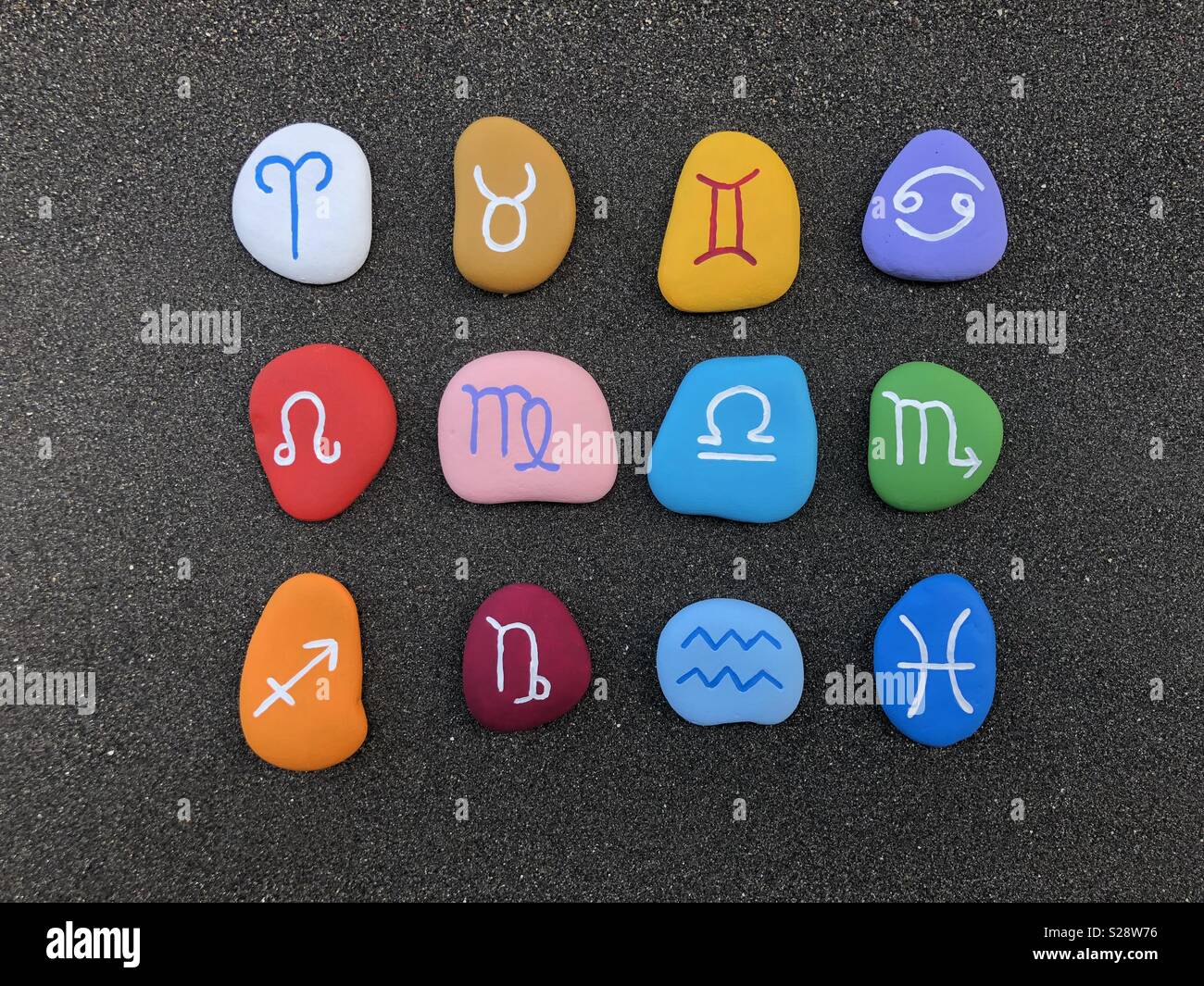
You’ve seen them everywhere. Those spinning carousels at gift shops with cheap plastic rings or the $200 "healing" kits on Instagram. Everyone tells you that if you're a Leo, you need Peridot, or if you're a Pisces, you’re stuck with Amethyst. But honestly? Most of that is marketing fluff from the early 20th century. It’s kinda frustrating how the real history of zodiac stones has been buried under layers of commercialized jewelry trends.
The link between the stars and the earth isn't just about a color you like. It's about mineral chemistry and ancient Babylonian observations. Gemstones weren't always "birthstones." They were tools.
The Messy History of Zodiac Stones
We have to go back. Way back. The concept of linking specific stones to the heavens actually stems from the Breastplate of Aaron, described in the Book of Exodus. It had twelve stones. Later, in the 1st and 5th centuries, scholars like Josephus and St. Jerome started making the connection between those twelve stones and the twelve signs of the zodiac. But here is where it gets weird: people didn’t just wear one stone. They wore a different stone every month.
The idea that you have "one" stone based on your birth month is actually a fairly modern invention. In 1912, the American National Association of Jewelers (now Jewelers of America) met in Kansas City and basically "standardized" the list to make it easier to sell jewelry. They swapped out rare stones for ones that were easier to source in bulk. For example, they pushed Aquamarine for March because it was more "marketable" than the traditional Bloodstone.
When we talk about zodiac stones today, we’re often looking at a mix of Hindu (Ayurvedic) traditions, Tibetan lists, and that 1912 commercial list. If you feel like your "official" stone doesn't vibe with you, there’s a biological and historical reason for that. You aren't just one sign. You’re a whole map of planetary placements.
Aries and the Aggression of Iron
Aries is ruled by Mars. Mars is red. So, naturally, people jump to Rubies. But if you look at the mineral makeup, the traditional stone for Aries is actually Bloodstone (Heliotrope). It’s a green chalcedony with red inclusions of iron oxide.
Iron.
That’s the key. Mars is the "Iron Planet." Aries individuals often deal with high energy—sometimes too much of it. While a Diamond (the modern April stone) is pure carbon and represents clarity, Bloodstone is grounded. It’s heavy. It’s meant to tether that Martian "go-go-go" attitude to the physical earth.
Interestingly, many Aries find that Diamonds actually make them more irritable. It's too much "fire" on fire. If you're an Aries struggling with burnout, skipping the diamond and grabbing a piece of raw Jasper or Bloodstone might actually change your baseline stress levels. It’s about counterbalancing the internal heat.
The Taurus Grounding Problem
Taurus is an earth sign, but it’s ruled by Venus. This creates a weird tension. You want luxury, but you also want to sit in the dirt and garden.
The classic stone here is Emerald. Most people think Emeralds are just about "wealth." But geologically, Emeralds are beryl colored by chromium or vanadium. They are incredibly brittle. This mirrors the Taurus shadow side—the tendency to hold onto things so tightly that they eventually crack under the pressure.
- Rose Quartz: This is the "soft" Taurus stone.
- Copper: Not a stone, but the metal of Venus. Many Taurus folk find wearing copper more effective than any crystal.
- Sapphire: The ancient Septuagint lists Sapphire for the tribe associated with Taurus.
Why the Moon Rules Cancer’s Stones
Moonstone. It’s obvious, right? But the mineralogy of Moonstone is actually fascinating. It’s a sodium potassium aluminum silicate. It has this thing called adularescence—that ghostly blue shimmer.
For a Cancer, life is about cycles. Tides. Moods. If you’re a Cancer, you’ve probably noticed you feel "heavier" during a full moon. Pearls are the traditional organic "stone" here. They are created through irritation—a grain of sand inside an oyster. That is the most "Cancer" metaphor in existence: taking a hurt and layering it in calcium carbonate until it’s a gem.
But here’s a tip: stay away from synthetic "opalite." It’s just glass. If you want the actual energetic resonance of zodiac stones, you have to use what came out of the ground. Glass doesn't have a crystalline lattice. It doesn't hold a charge.
The Leo/Sun Paradox
Leo is the only sign ruled by the Sun. The modern stone is Peridot, which is... light green? It feels like a mismatch. Peridot is one of the few gemstones that occurs in only one color. It’s formed in the mantle and brought to the surface by volcanoes.
Ancient Egyptians called Peridot the "gem of the sun." They believed it protected the wearer from "terrors of the night." For a Leo, who is usually the life of the party but often suffers from deep, private insecurities, Peridot acts as a nightlight.
Then there’s Citrine. Most Citrine you see in stores is just "burnt" Amethyst. They heat it up in a kiln until it turns orange. It’s fake. Real Citrine is a pale, smoky yellow. It’s rare. If you’re a Leo trying to manifest something, using heat-treated Amethyst won't do much. You want the real, pale yellow stuff that hasn't been cooked in a lab.
Precision and Virgo
Virgo is ruled by Mercury. This sign is about analysis. The traditional stone is Blue Sapphire, but historically, Carnelian was often assigned here.
Why?
Because Virgos overthink. Their brains are like high-speed processors that never turn off. Carnelian is a warm, motivating stone. It moves the energy from the head down into the gut. It's sort of a "stop thinking, start doing" battery.
The Balance of Libra
Libras get Opal. Opals are 20% water. They are fragile. They can literally dry out and crack if you don't wear them, because they absorb the oils from your skin.
This is the perfect metaphor for Libra’s social needs. A Libra alone is like a dry opal—they lose their "play of color." But there's a superstition that Opals are unlucky. That actually came from a 19th-century novel by Sir Walter Scott (Anne of Geierstein), where a character dies after her opal touches holy water. It ruined the opal market for decades.
Don't believe the hype. Opals aren't unlucky; they're just sensitive. Just like Libras.
Scorpio and the Protection Myth
Scorpios are often told to wear Topaz or Citrine. That’s because Scorpio falls in November. But traditionally, the Scorpio stone is Obsidian or Jet.
Scorpio is about the "underworld"—the things we don't talk about. Obsidian is volcanic glass. It’s sharp. It was used for scalpels. It’s a stone of "severing." If you’re a Scorpio trying to move on from a toxic situation, a bright yellow Topaz isn't going to help you. You need something that mirrors your depth.
Sagittarius: The Traveler's Choice
Turquoise. This is one of the oldest stones in human history.
Sagittarius is the sign of the long journey. Ancient Persians believed Turquoise protected horsemen from falls. Today, it’s the stone for the "digital nomad." It’s about communication and protection while moving through unknown spaces.
Capricorn and the Weight of Time
Capricorns are ruled by Saturn. The planet of boundaries, time, and karma. Their stone is Garnet.
Garnets are heavy. They are dense. They aren't just red; they come in greens and oranges too. But the deep red Almandine garnet is the Capricorn staple. It’s about endurance. Capricorns don't need a "lucky" stone; they need a "strength" stone. They are the marathon runners of the zodiac.
The Aquarius Electric Connection
Aquarius is the weirdo of the zodiac. Ruled by Uranus (traditionally Saturn), this sign is about the future.
Amethyst is the modern assignment, but Labradorite is the true Aquarius vibe. Labradorite looks like a grey rock until the light hits it, and then it looks like the Aurora Borealis. It’s "electric." It represents the flash of insight.
- Amethyst: Good for staying sober and clear-headed.
- Labradorite: Good for "Aha!" moments and breaking the mold.
Pisces and the Dissolving Self
Finally, Pisces. The fish.
Aquamarine is the obvious choice. Its name literally means "water of the sea." For a Pisces, who often feels like they are absorbing everyone else's emotions, Aquamarine acts as a filter. It’s like a psychic colander. It lets the water through but keeps the junk out.
How to Actually Use This
Don't just buy a birthstone because a chart told you to. Look at your "Big Three"—your Sun, Moon, and Rising signs.
If you are a Leo Sun (Fire) but a Capricorn Moon (Earth), you might find that a fiery Citrine makes you feel anxious, while a grounded Garnet makes you feel like you finally have your life together.
Check the Mohs Scale. This is a real scientific measurement of hardness.
- Talc is 1.
- Diamond is 10. If you’re wearing an Opal (5.5-6.5) or a Fluorite (4) every day on your ring finger, you will break it. Use harder stones like Sapphires or Diamonds for daily wear.
Watch out for "Enhanced" stones. A lot of the zodiac stones on the market are dyed. Agate is often dyed neon pink or blue. If it looks like a highlighter, it’s fake. This matters because the dye fills the pores of the stone, essentially "choking" the natural mineral structure.
Cleanse your stones, but not with salt. People always say "put it in salt water." Please don't. Salt is corrosive. It will ruin the finish on your Opals, Turquoises, and Malachites. Use smoke, or just leave them on a windowsill during a new moon.
Actionable Steps for Your Zodiac Stone Journey
- Identify your "Dominant" sign. Use a free natal chart calculator (like ASTRO.com or Chani Nicholas's app) to see if you have a "Stellium"—three or more planets in one sign. That sign's stone will be more powerful for you than your birth month stone.
- Verify the source. If you’re buying zodiac stones, ask the seller if they are "Ethically Sourced" or "Fair Trade." The gemstone industry can be murky. Look for sellers who can name the specific mine in Arizona, Madagascar, or Sri Lanka.
- Test the resonance. Hold a stone in your left hand (the receiving hand). Do you feel a "pulse" or a change in temperature? If it feels "dead" or cold after a few minutes, it’s probably not the right mineral for your current biological state.
- Ignore the "Price Equals Power" myth. A $5 piece of raw Black Tourmaline is often more "effective" for a stressed-out Scorpio than a $5,000 Diamond. The price is based on clarity and rarity, not on how the mineral interacts with your field.
The stars might be millions of miles away, but the minerals are right here. They’re made of the same stardust. Choosing the right stone is just about finding the piece of earth that vibrates at the same frequency as your slice of the sky.