The grainy, black-and-white reality of the 1960s is terrifying. When you look at zodiac killer crime scene pics, you aren't just looking at evidence from a cold case; you're staring into the birth of the modern American obsession with true crime. It's visceral. It's uncomfortable.
Most people expect to see some cinematic horror show. The reality is much quieter and, frankly, way more disturbing because of how mundane the settings were. We are talking about gravel turnouts and quiet lakeside parks.
The Lake Herman Road Photos and the Reality of 1968
December 20, 1968, changed everything for Vallejo, California. David Faraday and Betty Lou Jensen were just kids. If you examine the forensic photography from that night, the first thing that hits you is the sheer isolation of the road. It was pitch black. The police photos show Faraday’s Rambler parked on a gravel turnout—a "lover's lane" spot.
Investigators like Sergeant Les Lundblad found a scene that looked chaotic under the harsh glare of camera flashes. The zodiac killer crime scene pics from this specific night show the bullet holes in the rear window of the car. It’s a chilling detail. It suggests the killer forced them out of the vehicle by firing into the glass first.
There's this specific photo of the chalk outlines. It’s haunting. Jensen was found over twenty feet from the car, having tried to run for her life. The distance captured in those wide-angle shots tells a story of pure, unadulterated panic that a witness statement just can't convey.
Blue Rock Springs: The Pattern Emerges
Roughly seven months later, it happened again. July 4, 1969. Darlene Ferrin and Mike Mageau. This time, the scene was the Blue Rock Springs Park parking lot.
Photographs from this scene focus heavily on Ferrin’s brown Corvair. What's wild is how little the killer seemed to care about being seen. The crime scene photos show the car's interior, riddled with shell casings from a 9mm Luger. You can see the tight grouping of the shots. It wasn't random spraying; it was calculated.
Detectives noted that the car’s lights were still on when they arrived. Those photos of the glowing headlights against the darkness of the park are iconic in the worst way possible. They represent the exact moment the Bay Area realized they weren't dealing with a one-off mugging gone wrong. They were dealing with a hunter.
The Horror at Lake Berryessa
The most famous—and arguably most disturbing—visual evidence comes from the September 27, 1969, attack on Bryan Hartnell and Cecelia Shepard. This wasn't a late-night shooting. This happened in the afternoon.
The zodiac killer crime scene pics from Lake Berryessa are different because they include a physical message left by the killer. He didn't just leave bodies; he left a manifesto on a car door.
"Vallejo / 12-20-68 / 7-4-69 / Sept 27-69 - 6:30 / by knife"
The photos of Hartnell’s Karmann Ghia door are central to the case. The handwriting, scrawled in black felt-tip pen, matches the letters sent to the San Francisco Chronicle. Seeing the crosshairs symbol—the Zodiac's "signature"—drawn directly onto the victim's property is a gut punch. It shows a level of ego that hadn't been seen in American crime before.
Then there are the photos of the evidence found on the ground. Wing Walker boot prints. Size 10.5. Experts like Paul Avery and investigators from the Napa County Sheriff's Department spent hours documenting these prints in the dirt. These aren't just pictures of shoes; they are the literal footprints of a ghost.
Paul Stine and the Presidio Heights Deviation
The murder of taxi driver Paul Stine on October 11, 1969, stands out because it happened in a wealthy neighborhood in San Francisco. The zodiac killer crime scene pics here look like something out of a noir film. The yellow cab is parked at the corner of Washington and Cherry Streets.
What makes this scene uniquely horrifying isn't just the body of Stine slumped over the seat. It’s what the killer took. He tore off a piece of Stine’s blood-stained shirt.
Later, he mailed pieces of that shirt to the newspapers to prove he was the one there. The forensic photos of the cab's interior show the missing fabric. This was a turning point. The Zodiac went from a regional threat to a predator who could strike in the heart of the city.
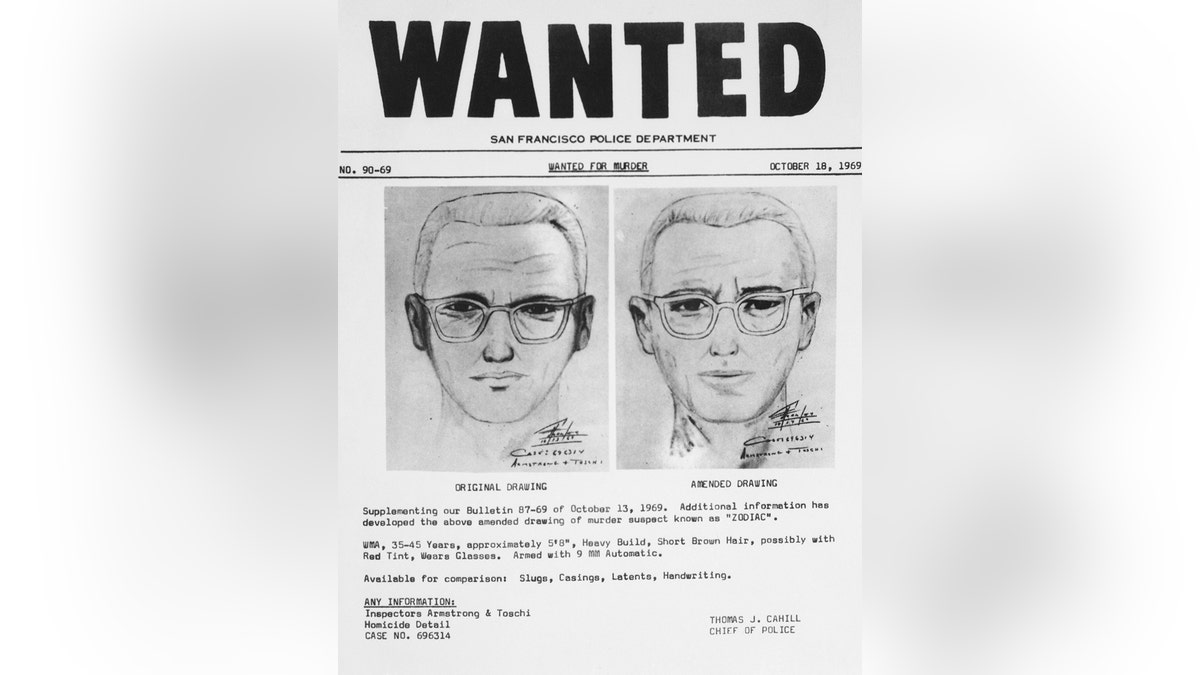
The police sketches based on witnesses from this night—three teenagers who saw the killer from across the street—are often grouped with the crime scene photos. That face. The heavy-rimmed glasses. The crew cut. It’s the face that launched a thousand theories.
Why the Public Still Looks for These Images
Why are people so obsessed with these photos? Curiosity? Maybe.
Honestly, it’s probably because we feel like the answer is right there. Hidden in the grain of a 1960s Polaroid or a 35mm police negative. Researchers like Tom Voigt and Bill Baker have spent decades analyzing the smallest details in these pictures. They look at the way a shell casing fell or the specific angle of a tire track.
There is a sense that if we just look hard enough, we can see something the original investigators missed. But it's important to remember that these were real people. The "Zodiac" was a man who caused immeasurable grief. The photos shouldn't be treated as entertainment; they are a record of a tragedy that remains unsolved.
Misconceptions About the Crime Scene Evidence
A lot of people think there are "secret" photos the FBI is hiding. While it's true that some forensic details are withheld to weed out false confessions, the bulk of the zodiac killer crime scene pics that exist are well-documented.
Another big mistake? Thinking the crime scenes were all the same. They weren't.
- Some were shootings.
- One was a stabbing.
- Some were in cars.
- One was on a blanket by a lake.
The Zodiac was a shapeshifter. The photos prove he was adaptable, which is exactly why he was never caught. He didn't have a "type" of location. He just had a type of victim: the vulnerable.
Analyzing the Forensic Limitations
Back then, DNA wasn't a thing. They had blood typing and fingerprints, but that's about it. When you look at the photos of the car door at Berryessa, you see investigators dusting for prints using old-school methods.
We now know that the Zodiac might have been wearing gloves or even putting airplane glue on his fingertips to mask his prints. The crime scene photos show the frustration of the era—men in suits and hats standing around a body, realizing they are being outmaneuvered by a guy who understands the media better than they do.
Actionable Steps for Cold Case Researchers
If you are diving into the history of these events, it is vital to approach the material with a structured, analytical mindset. Don't just browse; study.
1. Compare Handwriting Samples with Scene Markings Study the high-resolution images of the Karmann Ghia car door from Lake Berryessa. Compare the spacing and "slant" of the characters to the letters sent to the San Francisco Chronicle. Specifically, look at how he forms the letter 'r' and the number '7'.
2. Map the Locations Geographically Use contemporary crime scene sketches alongside modern satellite imagery. Many of these locations, like Lake Herman Road, haven't changed as much as you'd think. Seeing the topography helps explain why the killer chose these specific exit routes.
3. Reference the Graysmith vs. Police Reports Robert Graysmith’s books are famous, but they contain some dramatizations. Always cross-reference the visual evidence in zodiac killer crime scene pics with the actual redacted police reports from the Vallejo and San Francisco Police Departments.
4. Focus on the Ballistics Photos Look at the photos of the shell casings from the first two attacks. The markings on the brass can tell you a lot about the firing pin of the weapon used. While the guns were never recovered, the ballistics photos remain the best evidence of the hardware the Zodiac favored.
5. Understand the Timeline of the Presidio Heights Photos There is a specific window of time between the shooting of Paul Stine and the arrival of the first patrol car. By looking at the crime scene photos and the witness statements regarding where the killer walked, you can trace his likely path into the park. This remains one of the most studied "escape" routes in criminal history.
By treating these images as forensic data rather than macabre curiosities, we maintain respect for the victims while continuing the search for the truth. The answers are likely still there, hidden in the shadows of a fifty-year-old photograph.