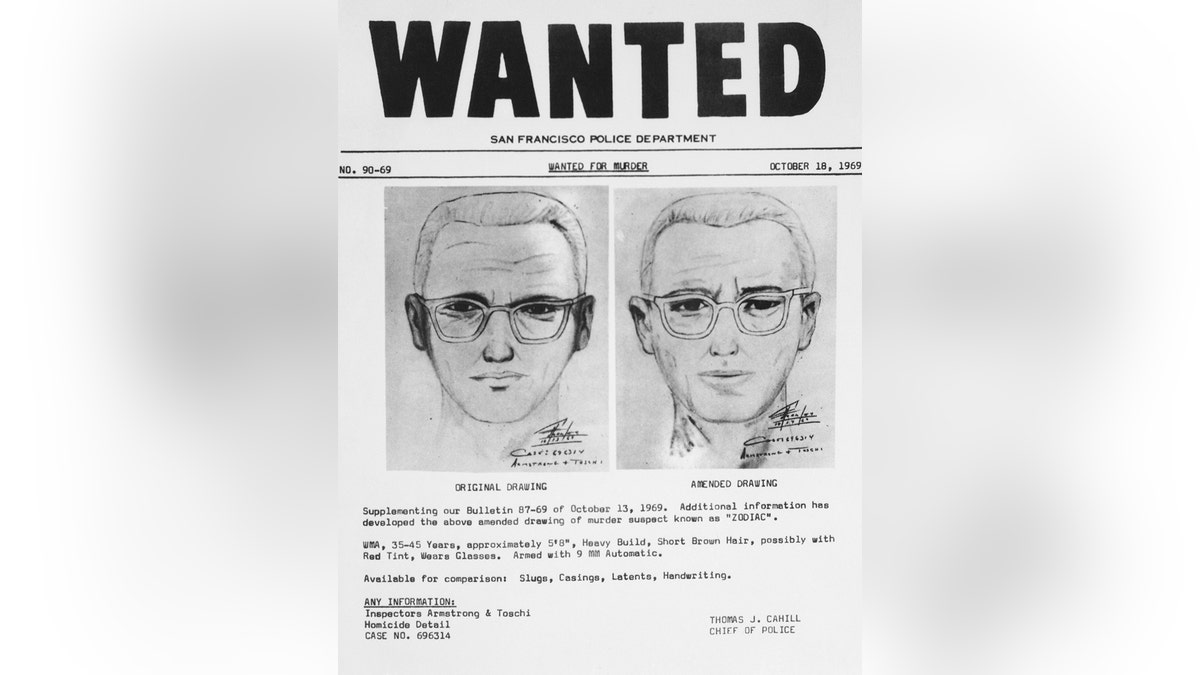
The grainy, black-and-white reality of the 1960s isn't just a stylistic choice in true crime documentaries. It’s a chilling reminder of how little investigators had to work with when the Bay Area was being stalked. When you look at zodiac killer crime scene photos, you aren't just looking at evidence. You’re looking at the failure of 20th-century forensic technology to catch a man who loved the spotlight but hated being seen.
Most people expect to see Hollywood-style horror. They want the cinematic gore. Honestly, the reality is much more clinical and, somehow, way more unsettling. It's the mundane details that stick with you—a stray shoe, the tire tracks in the gravel, or the way the moonlight hit the water at Lake Berryessa. These images represent the only tangible fragments we have of a phantom.
The Brutal Reality of the Lake Herman Road Images
December 20, 1968. It was cold. David Faraday and Betty Lou Jensen were just kids, really. If you’ve ever gone down the rabbit hole of the Lake Herman Road zodiac killer crime scene photos, you know they don't show a master criminal. They show a messy, desperate act of violence.
The police photos from that night capture a gravel turnout that looks like a thousand other spots in California. But then you see the chalk outlines. You see the position of the Rambler station wagon. It’s haunting because it feels so incredibly isolated. There were no security cameras. No digital footprints. Just the physical debris of a life cut short.
Investigators focused heavily on the ballistics, but the photos tell a story of proximity. The killer was right there. He wasn't some long-range sniper; he was standing inches away from the glass. When you study the crime scene photography from this first confirmed attack, you realize the Zodiac didn't start with a "persona." He started with a gun and a dark road.
Blue Rock Springs and the Evolution of the Scene
The July 4, 1969, attack at Blue Rock Springs Park changed everything. This wasn't just another lovers' lane shooting. This was the moment the Zodiac decided to claim his work.
The zodiac killer crime scene photos from this location are often overshadowed by the survivor testimony of Michael Mageau. However, the photographs of Darlene Ferrin’s Corvair provide a grim look at the killer's efficiency. You can see the bullet holes in the door and the shattered glass. It’s evidence of a blitz attack.
One thing that experts like Robert Graysmith or retired detectives often point out is the lack of "staging." In many serial killer cases, the offender rearranges the scene to send a message. The Zodiac didn't do that. His message was the letters he sent afterward. The scenes themselves were left as chaotic, bloody reminders of his presence. The photos from Blue Rock Springs show a scene that was processed quickly, perhaps too quickly, by modern standards.
Why the Lighting Matters in Forensic Photography
Photography in 1969 was a different beast. Flashbulbs were harsh. Shadows were deep. This actually makes the zodiac killer crime scene photos harder to analyze today. A shadow in a 1960s photo could be a blood splatter, a smudge on the lens, or just the way the chemicals reacted during development.
This technical limitation is why so many "amateur sleuths" think they see things in the photos that aren't there. They see faces in the bushes or shapes in the car windows. Basically, it's pareidolia. Your brain wants to find the killer, so it creates him out of grain and static.
The Lake Berryessa Costume: A Nightmare Captured
If there is one set of images that defines the case, it’s the photos from the September 27, 1969, attack on Bryan Hartnell and Cecelia Shepard.
This is the one that feels like a movie. But it wasn't.
The most famous "photo" isn't of a body; it’s of the door of Bryan Hartnell’s Karmann Ghia. The Zodiac wrote on the door in black marker:
- Valiejo
- 12-20-68
- 7-4-69
- Sept 27-69-6:30
- by knife
Seeing the official police photo of that car door is visceral. It’s the killer’s "resume" written on the side of a victim's vehicle. It’s arrogant. It’s terrifying.
Then you have the photos of the scene itself—the oak tree, the blanket, the discarded plastic clothesline used to tie the victims. These zodiac killer crime scene photos are unique because they involve a daytime attack. The lighting is clear. You can see the pastoral beauty of the lake contrasted against the sheer brutality of the stabbings.
The sketches of the "hooded man" are based on Bryan Hartnell’s description, but the crime scene photos verify the physical logistics. They show where the killer stood, the path he took down the hill, and the distance he traveled to reach the car. It’s a spatial puzzle that still hasn't been fully solved.
The Paul Stine Case: A Shift to the City
The murder of cab driver Paul Stine in Presidio Heights on October 11, 1969, is the only time the Zodiac was nearly caught in the act. It’s also the crime scene with the most "standard" forensic documentation.
In these zodiac killer crime scene photos, you see the interior of the yellow cab. It’s messy. There’s a missing piece of Paul Stine’s shirt—a piece the Zodiac would later mail to the San Francisco Chronicle as proof of his identity.
The photos here are crucial because they disprove the "super-genius" myth. The Zodiac left fingerprints on the cab. He left blood. He was seen by witnesses. The crime scene photography captures a man who was getting sloppy, or perhaps, getting bolder.
One of the most debated images is the overhead shot of the cab at Washington and Cherry Streets. It looks so normal. Just a taxi parked at an intersection. But inside that cab, the entire trajectory of the investigation changed.
What Modern Tech Tells Us About Old Photos
Today, researchers use AI upscaling and digital enhancement to look at these old zodiac killer crime scene photos. While it can help clarify some details, it also introduces "artifacts"—fake details created by the software.
True experts rely on the original negatives whenever possible. They look for things like:
- Shell casing distribution patterns.
- The specific angle of bullet entry in the vehicle upholstery.
- Subtle impressions in the soil that might indicate the killer’s shoe size or gait.
The problem? Most of the original physical evidence from the 60s was handled without gloves. DNA wasn't a thing. The photos are, in many ways, more "pure" than the physical evidence itself because they were frozen in time the moment the shutter clicked.
Common Misconceptions About the Images
People often think there’s a "secret" photo that shows the killer's face.
Honestly? There isn't.
There are no surveillance photos. There are no "selfies" the killer took. The zodiac killer crime scene photos that circulate online are almost entirely from the official police files or the Department of Justice. If there was a "smoking gun" image, the case would have been closed in 1970.
Another myth is that the photos show ritualistic symbols. While the Zodiac used a cross-circle symbol in his letters, he didn't carve it into victims or paint it at the scenes (except for the car door at Berryessa). He was a pragmatic killer. He used the scenes to kill; he used the newspapers to terrorize.
How to View This Evidence Responsibly
Studying zodiac killer crime scene photos isn't for everyone. It’s gruesome. It’s heartbreaking. But for those trying to solve the case, these images are the primary source material. They are the truth, unvarnished by 50 years of urban legends and movie adaptations.
If you are going to look into this, don't look for ghosts. Look for the logistics.
- Look at the terrain.
- Look at the lighting.
- Look at the distances between the street and the bodies.
These are the things that catch killers.
Actionable Steps for Further Research
If you’re serious about understanding the forensic side of the Zodiac case, don't just scroll through Google Images. You need context.
- Visit the Digital Archives: Websites like ZodiacKiller.com or ZodiacKillerFacts.com have curated the police reports alongside the photos. A photo without a report is just a picture; a photo with a report is evidence.
- Study the Ballistics Reports: Compare the images of the shell casings found at Lake Herman Road with those from Blue Rock Springs. This is how investigators linked the crimes before the letters even arrived.
- Analyze the Presidio Heights Sketch: Compare the famous police sketch to the crime scene photos of the cab. Notice the lighting at that intersection—it explains why the witnesses might have missed certain details.
- Read "Zodiac" by Robert Graysmith: While controversial for some of its theories, it provides the most vivid descriptions of what the scenes looked like to the first responding officers.
The search for the Zodiac continues, not because we lack photos, but because the photos we have are of a man who knew how to disappear into the shadows of a flashbulb. Every time you look at these images, you're looking at a puzzle that has remained unsolved for over half a century. The answers are likely in the frames—we just haven't learned how to see them yet.