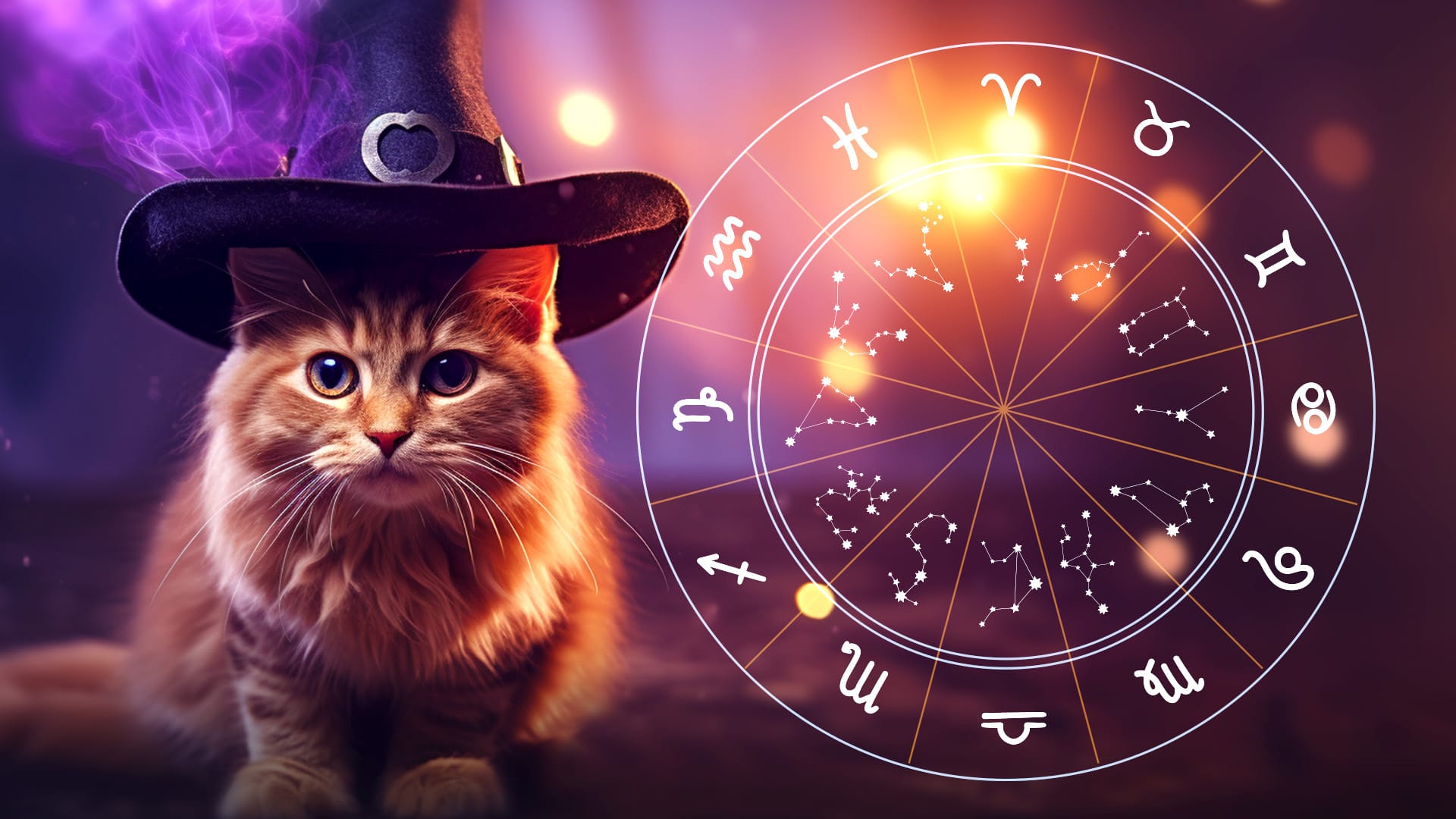
You’ve probably been asked "What’s your sign?" at a party or seen those oddly specific memes about Scorpios being vengeful. It’s everywhere. But when we talk about the zodiac what is it actually? Beyond the daily predictions in the back of a magazine, the zodiac is a massive, ancient coordinate system that maps the sky.
It’s a belt. Imagine a giant, invisible hula hoop surrounding the Earth. Astronomically speaking, this is the path the Sun appears to take across the sky over the course of a year, known as the ecliptic. It’s been used for thousands of years by everyone from Babylonian priests to NASA scientists—though they use it for very different reasons.
Honestly, most people get the zodiac confused with personality quizzes. While astrology uses the zodiac to guess if you're going to have a bad week, the zodiac itself is a geometric tool. It’s a division of the sky into twelve 30-degree segments.
The Mechanics of the Sky
To understand the zodiac what is it in a literal sense, you have to look up. Way up. The Greeks called it the zōdiakos kyklos, or "circle of little animals."
The Sun doesn't actually move around us, but from our perspective on Earth, it looks like it does. As we orbit the Sun, the stars behind it change. In March, the Sun looks like it's sitting in front of Aries. By July, it's shifted to Cancer. This celestial backdrop is the foundation of the whole system.
It’s not just the Sun, either. The Moon and the planets all stay within this narrow 16-degree band of the sky. It’s like a cosmic highway. If a planet is the car, the zodiac is the road it travels on. Without this "road," early astronomers wouldn't have been able to track time or predict seasonal shifts.
Why 12 Signs?
The number twelve wasn't just a random choice. The Babylonians, who were basically the math whizzes of the ancient world around 1000 BCE, decided to divide the ecliptic into 12 equal parts to match their 12-month calendar.
They knew the constellations weren't equal in size. Virgo is huge. Aries is tiny. But they ignored the actual boundaries of the stars to make the math work. They wanted 30-degree slices. It was clean. It was functional.
The Ophiuchus Drama and Scientific Reality
Every few years, the internet goes into a total meltdown because someone "discovers" a 13th sign called Ophiuchus. You might remember the viral posts claiming NASA changed your sign.
NASA didn't change anything. They just did the math.
The constellation Ophiuchus (the Serpent Bearer) actually does sit on the ecliptic. The Sun passes through it for about 18 days every year. But ancient astrologers left it out on purpose to keep the 12-month system tidy.
There's also something called precession. The Earth wobbles on its axis like a spinning top that's starting to slow down. Because of this wobble, the position of the constellations has shifted about 36 degrees since the signs were first named. If you were born a "Leo" 2,000 years ago, the Sun was actually in Leo. Today, if you’re born on that same date, the Sun is likely in Cancer.
Astronomers call this the difference between the Tropical Zodiac and the Sidereal Zodiac. Most Western astrologers use the Tropical version, which is fixed to the seasons (the spring equinox always starts Aries). Vedic astrology, common in India, uses the Sidereal version, which looks at where the stars actually sit in the sky right now. Neither is "wrong," they just use different maps.
Breaking Down the Four Elements
In the context of the zodiac what is it for personality mapping, the 12 signs are grouped into four elements: Fire, Earth, Air, and Water. This isn't just "vibes." It’s an ancient philosophical framework that dates back to Empedocles and later Aristotle.
The Fire Signs (Aries, Leo, Sagittarius) Think energy. Action. Spontaneity. These signs are generally associated with leadership and a certain level of "main character energy." When people talk about a Fire sign, they’re usually talking about someone who acts first and asks questions later.
The Earth Signs (Taurus, Virgo, Capricorn) This is the "get things done" group. These signs are often categorized as the builders of the zodiac. They value stability, material results, and sensory experiences. If you need someone to manage a budget or organize a move, you look for a Capricorn or a Virgo.
The Air Signs (Gemini, Libra, Aquarius) Air is about the mind. Communication. Ideas. These signs are social and analytical. They’re the ones who want to talk about the zodiac what is it and why it matters philosophically rather than just checking their horoscope.
The Water Signs (Cancer, Scorpio, Pisces) Emotions and intuition rule here. Water signs are often described as the "feelers." They are supposedly more in tune with the subconscious and the things left unsaid.
Modalities: The Often Forgotten Layer
If you really want to sound like an expert, you have to talk about modalities. This is where the zodiac gets complicated and interesting. Each element has three signs, and each of those signs falls into a different "quality" or "modality."
- Cardinal Signs: These occur at the start of a season. Aries (Spring), Cancer (Summer), Libra (Fall), and Capricorn (Winter). They are the initiators. The spark.
- Fixed Signs: These happen in the middle of a season. Taurus, Leo, Scorpio, and Aquarius. They are the stabilizers. They keep the momentum going. They can also be incredibly stubborn.
- Mutable Signs: These occur when a season is ending. Gemini, Virgo, Sagittarius, and Pisces. They are the adapters. They represent change and transition.
When you mix an element with a modality, you get the specific "flavor" of a sign. For example, Leo is Fixed Fire. That means it’s persistent, focused energy—like a campfire that stays burning. Sagittarius is Mutable Fire. That’s more like a wildfire or a sparkler—it moves fast and changes direction constantly.
The Big Three: Sun, Moon, and Rising
If you've ever looked at a birth chart, you know it looks like a confusing circular math problem. Most people only know their Sun sign—the one based on their birthday. But to understand the zodiac what is it in a personal sense, you need the "Big Three."
Your Sun Sign is your core identity. It’s the "ego."
Your Moon Sign represents your emotional world. How do you react when you’re scared? What makes you feel safe? That’s the Moon. Because the Moon moves so fast—changing signs every two to three days—this is the most "personal" part of a chart.
Your Rising Sign (or Ascendant) is the sign that was coming up over the eastern horizon at the exact minute you were born. This is why birth times are so important. This sign is like the "front door" of your personality. It’s how people perceive you when they first meet you.
Why Do We Still Care?
We live in a world of high-speed internet and space telescopes. Why are people still obsessed with ancient Babylonian sky-mapping?
Psychologists often point to the Barnum Effect (or Forer Effect). This is the phenomenon where individuals believe that personality descriptions apply specifically to them, even though the descriptions are actually vague enough to apply to almost anyone.
"You have a great need for other people to like and admire you."
Who doesn't?
But there’s also the Locus of Control. When the world feels chaotic—pandemics, economic shifts, political unrest—looking to the stars provides a sense of order. It suggests there is a pattern to the madness. Whether it's "real" or not, the zodiac provides a language for people to talk about themselves and their relationships. It's a tool for introspection.
The Difference Between Astronomy and Astrology
It’s crucial to draw a line here.
Astronomy is the scientific study of everything in the universe beyond Earth's atmosphere. Astronomers use the zodiac constellations to track the movements of celestial bodies. They use physics, calculus, and massive telescopes.
Astrology is a belief system. It suggests that the positions of those celestial bodies influence human affairs. There is no peer-reviewed scientific evidence that Mercury being in "retrograde" actually makes your phone break or your ex-boyfriend text you.
However, acknowledging that astrology isn't science doesn't mean the zodiac isn't culturally significant. It’s a bridge between our ancestors' view of the world and our own.
Common Misconceptions About the Zodiac
One of the biggest myths is that your sign "changes" because of the 13th sign or the Earth's wobble. As we discussed, if you follow Western (Tropical) astrology, your sign is fixed to the seasons, not the stars. So no, you aren't suddenly a different person.
Another weird one? That some signs are "bad." You’ll often hear people say they’d never date a Gemini or that Scorpios are evil. In actual astrological theory, every sign has a "higher" and "lower" expression. A "low" Taurus might be lazy, but a "high" Taurus is the most reliable person you’ll ever meet. It’s about archetypes, not moral judgments.
How to Actually Use This Information
If you want to move beyond the surface level of the zodiac what is it, don't just read your daily horoscope. Those are written for the masses and are usually too broad to be useful.
Instead, look at your Natal Chart. There are dozens of free tools online (like Astro-Seek or Cafe Astrology) where you can plug in your birth date, city, and exact time.
Look for your "Dominant" element. Are you all Water but no Earth? That might explain why you're great at empathy but struggle with paying bills on time. Understanding the balance of these ancient symbols can be a fun, low-stakes way to think about your personal growth.
Next Steps for Exploration:
- Find your birth time: Check your birth certificate. Even a 15-minute difference can change your Rising sign.
- Look up your "Saturn Return": If you're between ages 27 and 30, this is the astrological explanation for your quarter-life crisis.
- Observe the Moon: For a month, track how you feel as the Moon moves through different signs. Even if it’s just a placebo, the self-awareness is usually worth it.
The zodiac isn't a cage. It's a map. And like any map, it's only useful if you know how to read the legend. Whether you see it as a scientific relic or a spiritual guide, it remains one of humanity's oldest attempts to make sense of the infinite.