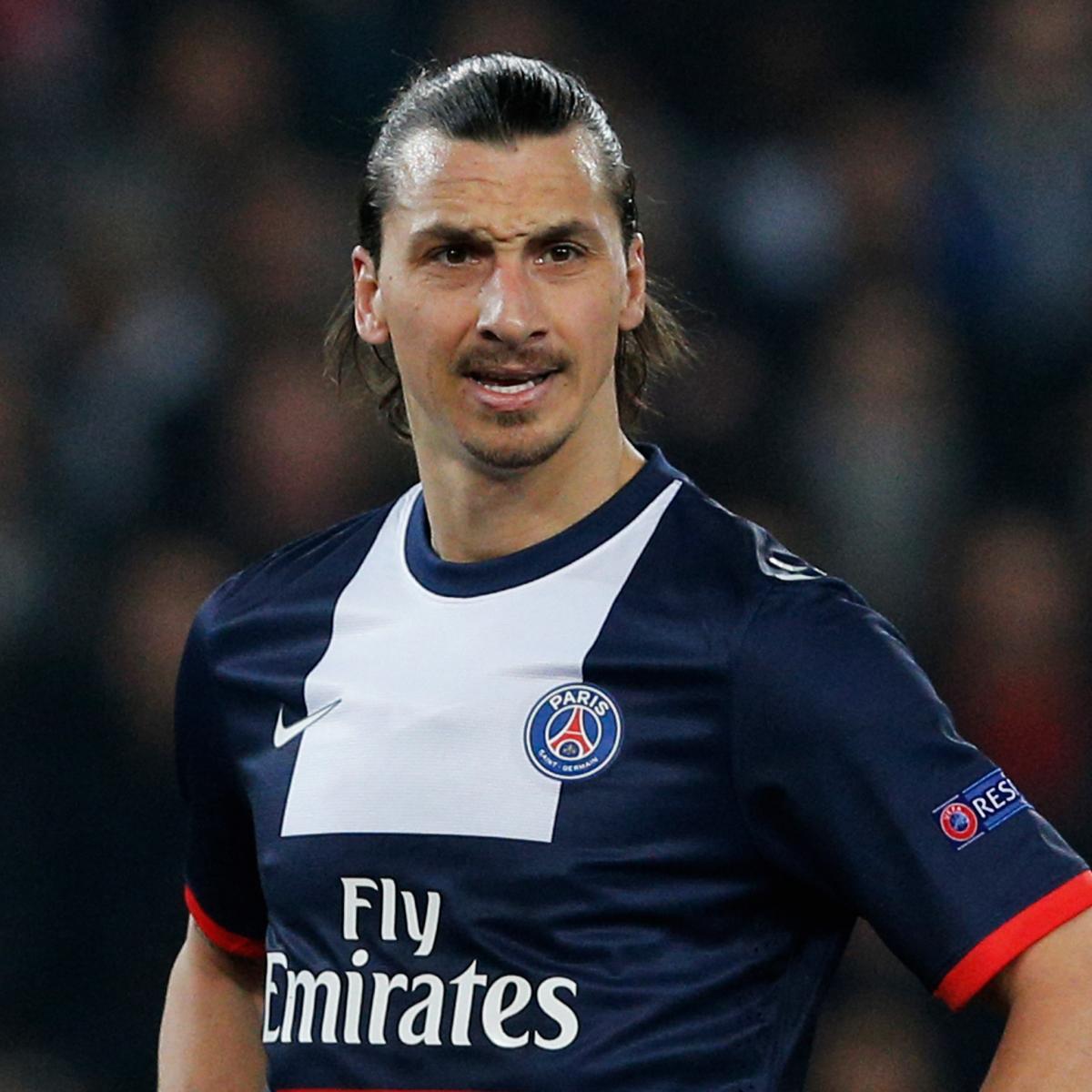
He showed up in a suit, looking like he owned the entire city of Paris before he’d even kicked a ball. That was July 2012. Most people remember the quote: "I don’t know the French league, but the French league knows me." It sounded like typical Zlatan Ibrahimovic arrogance, but honestly, he was right. Paris Saint-Germain was a club with a massive bank account and a massive identity crisis. They had the Qatari backing but zero street cred in the world of elite European football.
Zlatan changed that overnight.
He didn't just play for PSG; he became the gravitational center of the project. For four years, Ligue 1 wasn't just a French soccer competition. It was the Zlatan show. If you weren't watching to see if he’d score a 30-yard back-heel volley, you were watching to see who he’d offend next.
The Shock to the System
When Ibrahimovic arrived from AC Milan, the French league was, let’s be real, a bit of a backwater compared to the Premier League or La Liga. PSG had just finished second to Montpellier. Montpellier! No disrespect to them, but for a club with PSG's aspirations, that was a wake-up call. They needed a catalyst.
They got a hurricane.
Zlatan brought a level of professionalism that the club simply didn't have. Stories from the training ground at Camp des Loges suggest he was obsessive. He’d scream at teammates for a bad pass in a warm-up. He’d demand the chefs at the canteen improve the quality of the pasta. Basically, he treated the club like a startup that needed to be whipped into shape.
The numbers are frankly ridiculous. 156 goals in 180 games. He won the league title in every single one of his four seasons in Paris. He didn't just win; he dominated.
That Infamous Bordeaux Incident
It wasn't all statues and cheers, though. You can't talk about Zlatan Paris Saint Germain without mentioning the time he nearly got kicked out of the country.
After a frustrating loss to Bordeaux in 2015, he was caught on camera calling France a "sh*t country" that didn't deserve a club like PSG. The French political establishment went into a full meltdown. Marine Le Pen told him he should leave if he didn't like it. The sports minister demanded an apology.
He did apologize, sorta. He said he was talking about the refereeing, not the nation. But that was the Zlatan experience. He was a lightning rod. He gave the club a "bad boy" image that made them the most hated team in France, but also the most famous.
Why the Champions League Eluded Him
If there is a "but" in the Zlatan Paris Saint Germain story, it’s the big silver trophy with the ears. He never won the Champions League. Not in Paris, not anywhere.
In the biggest games—the quarter-finals against Barcelona or Manchester City—he often looked human. Some fans argue he dropped too deep, trying to do everything himself because he didn't trust the system. Others say the team was too reliant on him. When he had an off night, the whole of Paris had an off night.
Despite the lack of European glory, his individual peaks were insane. Who else scores four goals against Anderlecht, including a rocket volley from 30 yards that even the home fans stood up to applaud? Nobody.
The King and the Legend
His exit was as dramatic as his arrival. He announced it on Twitter, naturally. "I came like a king, left like a legend."
It’s a line that’s been memed to death, but at the time, it felt earned. In his final season (2015/16), he scored 38 goals in 31 league games. At 34 years old! He broke Carlos Bianchi’s long-standing club record for goals in a single season. He was playing the best football of his life while everyone else his age was looking at retirement homes in the MLS.
What Most People Get Wrong About His Legacy
A lot of casual fans think Zlatan was just a mercenary who went to Paris for the tax-free salary. That’s a massive oversimplification.
If you look at the players who came after him—Neymar, Messi, Mbappé—they all stepped into a club that Zlatan had already built. He was the one who established the standard. He was the one who made the Parc des Princes a place where winning was the only option.
He also formed a legendary partnership with Edinson Cavani, even if it was sometimes frosty. Cavani did the running; Zlatan did the "Zlataning." It worked. They won 12 trophies together in four years.
Actionable Insights for Fans and Historians
If you're looking back at this era of football, there are a few things to keep in mind to truly understand what happened:
- Watch the 2013-14 Season: This was his technical peak. His link-up play with Thiago Motta and Marco Verratti was world-class.
- Don't Just Look at Goals: Look at his assists. He had over 50 of them for PSG. He was a playmaker in a giant's body.
- Analyze the Culture Shift: Compare PSG pre-2012 to PSG post-2016. The "winning mentality" is his biggest contribution, more than any individual goal.
- Check the Records: While Kylian Mbappé eventually surpassed his total goal count, Zlatan’s goals-per-game ratio remains one of the highest in the club's modern history.
Zlatan’s time in Paris was a four-year fever dream. It was loud, it was expensive, and it was occasionally offensive. But more than anything, it was successful. He didn't just play for Paris Saint-Germain; he defined it.