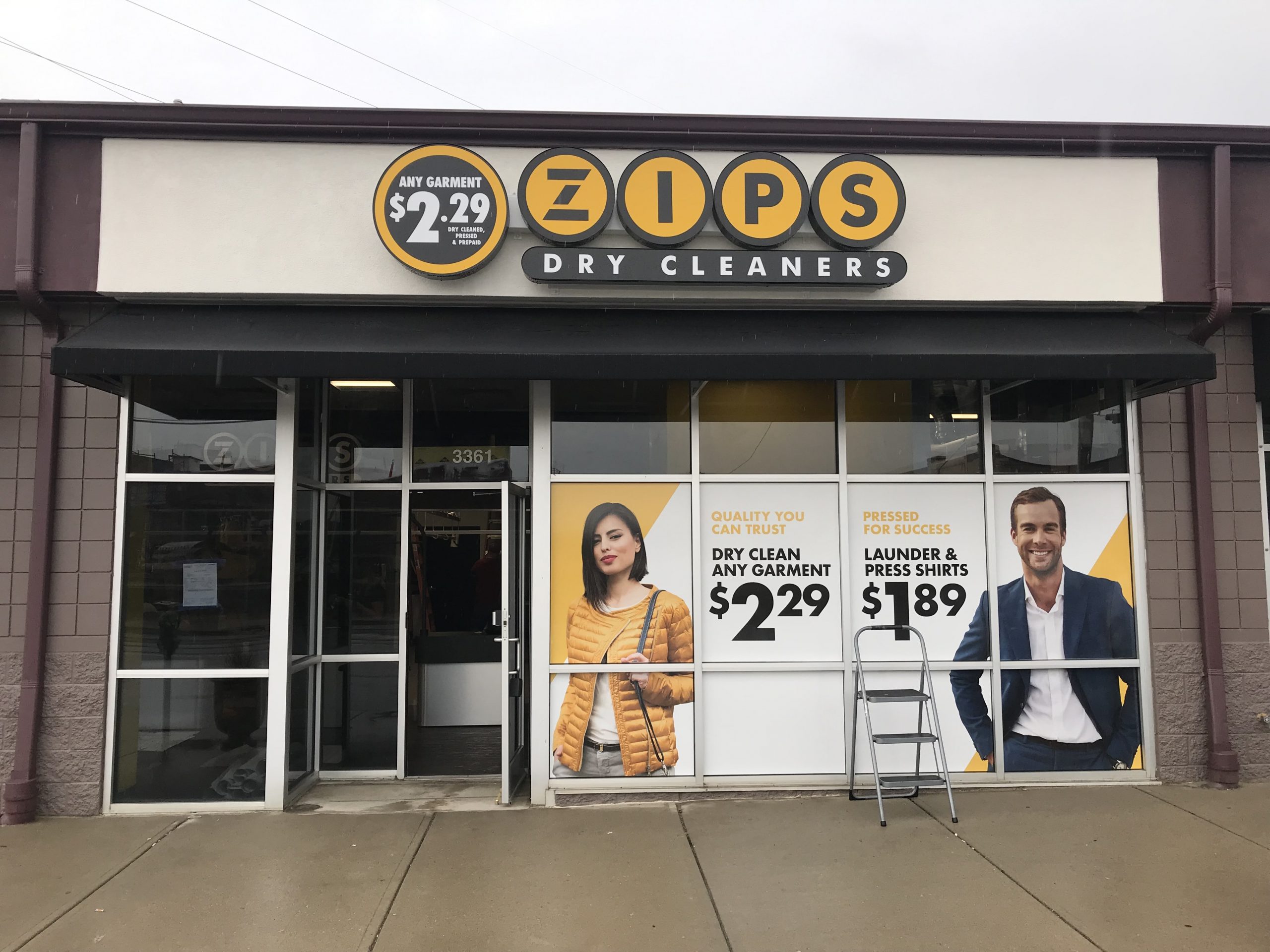
Laundry is a chore that never ends. You finish one load, and another pile magically appears. For most people living near the Baltimore-Washington corridor, finding a reliable spot to drop off professional wear is basically a survival skill. If you've spent any time driving down Route 1 or hanging around the Laurel Shopping Center, you've definitely seen the bright yellow and purple branding of ZIPS Dry Cleaners Laurel.
It's hard to miss.
But there’s a specific reason why this particular franchise location stays packed while smaller, "boutique" cleaners sometimes struggle to keep their doors open. It isn't just about being cheap. Honestly, it’s about the "In by 9, Out by 5" promise that has become the gold standard for commuters hitting the MARC train or driving into D.C. every morning.
The Reality of the Flat-Rate Pricing System
Most dry cleaners use a complex sliding scale. You bring in a silk blouse, and it’s $8. You bring in a heavy wool blazer, and suddenly you’re looking at $15 plus a "handling fee." It’s annoying. ZIPS flipped that script years ago by popularized the flat-rate model. In Laurel, this means you know exactly what your bill is going to be before you even hand over your clothes.
Is it the absolute best choice for a $5,000 bespoke suit? Maybe not.
If you ask any garment care expert, they'll tell you that high-volume plants—which is exactly what the Laurel ZIPS is—prioritize speed and efficiency. They use massive machines and standardized pressing stations. It’s an industrial approach to fashion. For your daily work slacks, button-downs, and skirts, it’s a lifesaver. For an heirloom wedding dress with hand-sewn pearls? You might want a specialist who spends three hours on a single garment. But for the 90% of stuff in your closet, the math just makes sense.
How the Laurel Location Handles the Commuter Rush
The geography of Laurel is unique. You've got a mix of government employees from Fort Meade, NSA contractors, and people who commute to Baltimore or Annapolis. This creates a massive surge of volume on Monday mornings and Friday afternoons.
The staff here has to be fast.
I’ve seen the line at the counter move quicker than a fast-food drive-thru during lunch hour. They use a computerized garment tracking system that basically acts like a conveyor belt for your wardrobe. When you drop off your items at the ZIPS Dry Cleaners Laurel location, they’re tagged with a heat-sealed barcode. This isn't just for show. It prevents the "lost sock" syndrome that plagues smaller mom-and-pop shops. Your clothes are scanned at every stage: sorting, cleaning, pressing, and bagging.
Environmental Concerns and Modern Solvents
One thing people get wrong about dry cleaning is the "dry" part. Your clothes get wet; they just don't get wet with water. Traditionally, the industry used perchloroethylene (Perc), which is pretty nasty stuff for the environment and your skin.
ZIPS has been vocal about moving toward more eco-friendly practices. While specific solvent use can vary by franchise upgrades, the brand generally leans into "GreenEarth" cleaning or similar hydrocarbon solvents that are biodegradable. It’s a bit of a relief. You don’t get that harsh, chemical smell that used to be synonymous with dry cleaning in the 90s.
If you have sensitive skin, this is a major factor. The newer solvents are much gentler on fibers, which actually helps your clothes last longer. Instead of stripping the natural oils out of fabrics, these methods lift dirt while keeping the integrity of the material intact.
Why Same-Day Service is a Logistics Nightmare (That They Solve)
Ever wonder how they actually get a shirt cleaned and pressed in eight hours? It’s kind of a frantic ballet behind the scenes.
- Sorting: Clothes are separated by color and weight immediately after you leave.
- Pre-spotting: A technician looks for that coffee stain you forgot to mention.
- The Cycle: Large batches go into the machines, which look like high-tech versions of what you have at home but cost as much as a luxury car.
- Finishing: This is the most important part. High-pressure steam mannequins "blow out" the wrinkles from shirts, while pants are hit with a heavy press to get that crisp crease.
If you miss the 9:00 AM cutoff at the Laurel store, don't expect a miracle. The machines run on a strict schedule. If you show up at 9:15 AM, your clothes are likely sliding into the next day's queue. It’s a rigid system, but that rigidity is why they can keep the prices so low. Efficiency is the only way they stay profitable at a flat rate.
Common Misconceptions About Budget Cleaning
Some people think "cheap" means "bad." That’s a bit of a simplification.
The real difference between a budget cleaner like ZIPS Dry Cleaners Laurel and a high-end valet service is the level of individual attention. At a high-end place, they might hand-press your linings or use tissue paper in the sleeves. At ZIPS, they are focused on a clean, crisp finish that looks great on a hanger.
You’re paying for the convenience.
You also have to be your own advocate. If you have a loose button or a tiny tear, point it out. In a high-volume environment, the checkers are looking for stains, but they might miss a wobbly thread on a cuff. It’s always smart to do a quick scan of your items when you pick them up. If something isn't right, they’ll usually re-do it for free right then and there.
Tailoring and Household Items
A lot of people forget that the Laurel location does more than just suits. They handle comforters, rugs, and even some leather.
Washing a king-sized down comforter at home is a recipe for a broken washing machine. The industrial extractors at ZIPS can handle the bulk without clumping the feathers. It’s honestly worth the $20-$30 just to avoid the headache of a damp, musty blanket sitting in your dryer for six hours.
They also offer basic alterations. It's not where you'd go to have a suit custom-tapered for a gala, but for a simple hem on a pair of new jeans or fixing a broken zipper? It’s incredibly convenient to handle it all in one stop.
Practical Tips for Getting the Most Out of ZIPS Laurel
If you want the best results, you've gotta play the game right. Don't just dump a bag of tangled clothes on the counter.
- Empty your pockets. Seriously. A stray stick of gum or a ballpoint pen can ruin an entire load of clothes—not just yours, but potentially other customers' too.
- Identify stains. If you spilled red wine or oil, tell them. Different stains require different chemical pre-treatments. If they don't know what it is, they're just guessing.
- Use the bag. If you're a regular, get one of the express bags. It makes the drop-off process almost instant.
- Timing matters. Tuesday and Wednesday are usually the "slow" days. If you want the staff to have a little more breathing room with your garments, avoid the Monday morning madness.
ZIPS Dry Cleaners Laurel stays relevant because it solves a specific problem: the need for fast, predictable, and affordable clothing care. In a town where everyone is rushing to get somewhere else, having a reliable spot to drop off a blazer and pick it up on the way home is invaluable. It’s not about luxury; it’s about utility.
Check your labels before you go. If a garment says "Spot Clean Only" or "Do Not Dry Clean," believe it. No amount of professional equipment can save a fabric that isn't meant for the process. But for your work-week rotation, this spot is likely your best bet for keeping your wardrobe sharp without draining your bank account.
Actionable Steps for Your Next Visit
Before heading to the Laurel location, take two minutes to button all your shirts and zip up your trousers; this prevents snags during the mechanical agitation process. Always keep your receipt or use their mobile app to track your order, especially during peak holiday seasons when volume spikes. If you have a large order of 15+ items, try to drop them off before 8:30 AM to ensure the staff has ample time to process everything through the specialized sorting stations. Finally, consider bringing your wire hangers back on your next trip; many locations have recycling programs that help reduce the environmental footprint of the business.