You see them everywhere. Those four little numbers dangling off the end of your standard five-digit zip code. Most of us just ignore them. We leave them off our Amazon orders or wedding invitations because, honestly, the mail still gets there, right?
Usually.
But those extra digits—officially known as the ZIP+4 code—aren't just bureaucratic clutter. They’re actually a high-tech shorthand that tells the United States Postal Service (USPS) exactly where you live, down to the side of the street or the floor of your office building.
What those last 4 digits are actually doing
Back in 1983, the USPS was drowning in paper. They needed a way to speed things up without hiring an army of human sorters to squint at messy handwriting all day. Enter the ZIP+4.
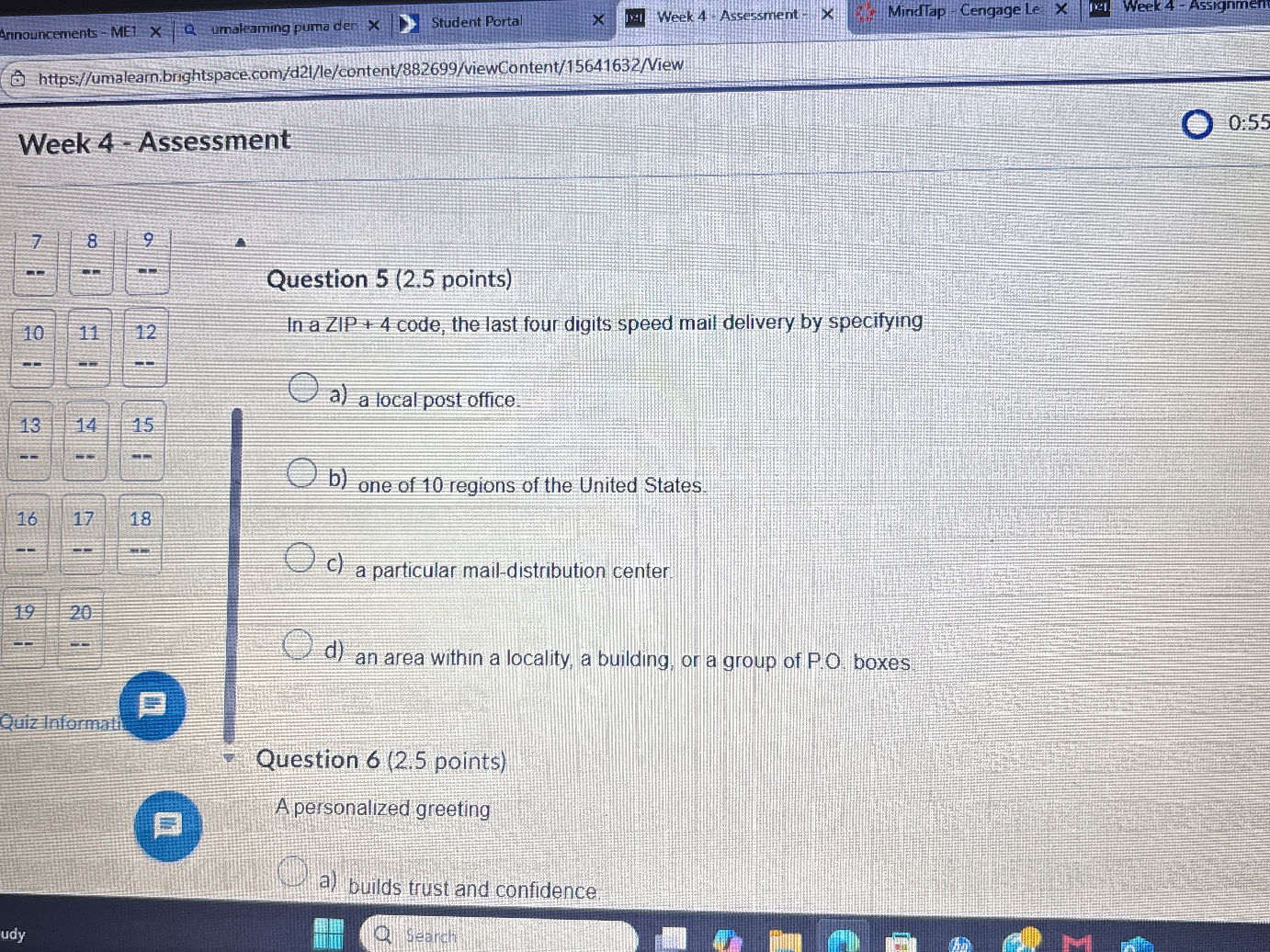
The standard five-digit code is broad. The first digit represents a group of U.S. states, the next two represent a sectional center facility (the big sorting hubs), and the last two identify a specific post office or delivery area. But the last 4 digits? Those get granular.
The sixth and seventh digits represent a "delivery sector." This could be a several-block area, a group of streets, or a large building. The eighth and ninth digits are the "delivery segment." This is the finish line. It might represent one side of a street, a specific floor in a skyscraper, or even a single department in a massive corporation.
Think of it like a GPS coordinate for your mailbox.
The secret life of mail sorting
When you drop a letter in the blue bin, it doesn't just sit there. It goes on a wild ride through a Multi-Line Optical Character Reader (MLOCR). These machines are incredible. They scan the address, verify it against a national database, and then—if the ZIP+4 is there—they spray a barcode on the envelope.
If you don't provide the code, the machine has to work harder to "lookup" the address. Sometimes it fails. When that happens, your birthday card for Grandma ends up in a pile for manual sorting, which adds a day or two to the trip.
Basically, using the last 4 digits is like giving your mail a VIP pass.
It’s not just about speed, though. It’s about accuracy. If you live on "123 Main St" but there’s also a "123 Main Ave" across town, that +4 code is the tiebreaker. It ensures the carrier doesn't accidentally drop your tax documents at the wrong house.
Why businesses are obsessed with them
If you’re a business owner, ignoring these digits is basically lighting money on fire. The USPS offers massive discounts for "presorted" mail. To get those rates, businesses have to use the CASS (Coding Accuracy Support System).
This software takes a mailing list and cleans it up. It appends the correct ZIP+4 to every single address. Why? Because it allows the mail to arrive at the post office already organized in the exact order the mailman walks his route.
It’s called "walk-sequence."
If the mail is already in order, the USPS doesn't have to spend money sorting it. They pass those savings back to the company. We’re talking cents per piece, but when you’re a utility company mailing a million bills a month, that’s a fortune.
Common myths about the +4
Some people think the last 4 digits are permanent. They aren't.
Because the +4 is tied to specific delivery routes, it can change. If a new housing development pops up or a post office changes its boundaries, your +4 might shift. It’s rare, but it happens. This is why you should check the official USPS ZIP Code Lookup tool every once in a while if you’re printing expensive stationery.
Another weird thing? Not every address has a +4 that makes "sense." Some massive buildings, like the Empire State Building, actually have multiple ZIP codes, let alone +4 segments.
Then there are PO Boxes. If you have a PO Box, your ZIP+4 is usually just your box number. If your box is #1234, your code is likely 12345-1234. It’s the simplest version of the system.
How to find yours (without looking at junk mail)
You don't have to wait for a bill to arrive to see your full code. You can find it in seconds.
Most people just Google "my zip code," but that often gives you the generic five-digit version. The better way is to use the USPS website. You put in your street address, city, and state, and it spits back the "standardized" version of your address.
Standardized means it fixes your abbreviations. It changes "Street" to "ST" and "Avenue" to "AVE." And it gives you those golden last 4 digits.
Honestly, it’s worth doing just to see how the government "sees" your house.
The future: Is the +4 becoming obsolete?
With the rise of Intelligent Mail Barcodes (IMb), the visual +4 digits are becoming a bit like the appendix—useful but not strictly necessary for the user to see. The IMb is that long, funky-looking barcode you see on professional mail. It contains a lot more data than just the ZIP+4, including tracking info and sender IDs.
However, for the average person sending a letter, writing the +4 still helps. It acts as a fallback. If the barcode gets smudged or the printer fails, those human-readable digits keep the letter moving.
Practical steps for better mailing
If you want your mail to actually arrive on time, stop treating the +4 as optional.
Start by updating your "autofill" settings on your browser. Most of us have our addresses saved in Chrome or Safari. Go into the settings, use the USPS lookup tool to find your exact +4, and save it that way.
When you’re shipping packages through UPS or FedEx, include the +4 there too. While they have their own internal routing systems, they often hand off "last mile" delivery to the USPS through programs like SurePost or SmartPost. In those cases, having the full code prevents the package from getting stuck in limbo at a local hub.
Lastly, if you’re sending out something high-stakes—like a passport application, a legal check, or a vote-by-mail ballot—always, always use the full nine digits. It provides a level of redundancy that protects your mail from the inevitable hiccups of a system that handles hundreds of millions of pieces of mail every single day.
It takes two seconds to write four numbers. Just do it.
Actionable Next Steps:
- Audit your digital footprint: Check your "My Account" page on your most-used shopping sites (Amazon, Target, eBay). Update your shipping address to include the +4 to reduce the chance of misdelivery during peak seasons.
- Standardize your address: Use the USPS ZIP Code Lookup tool to see the official "standardized" version of your address. Using "ST" instead of "Street" or "APT" instead of "Apartment" alongside the +4 makes your mail significantly more machine-readable.
- Check your PO Box: If you use a PO Box for business, ensure your billing address on file with banks includes the specific +4 associated with that box to avoid verification delays.