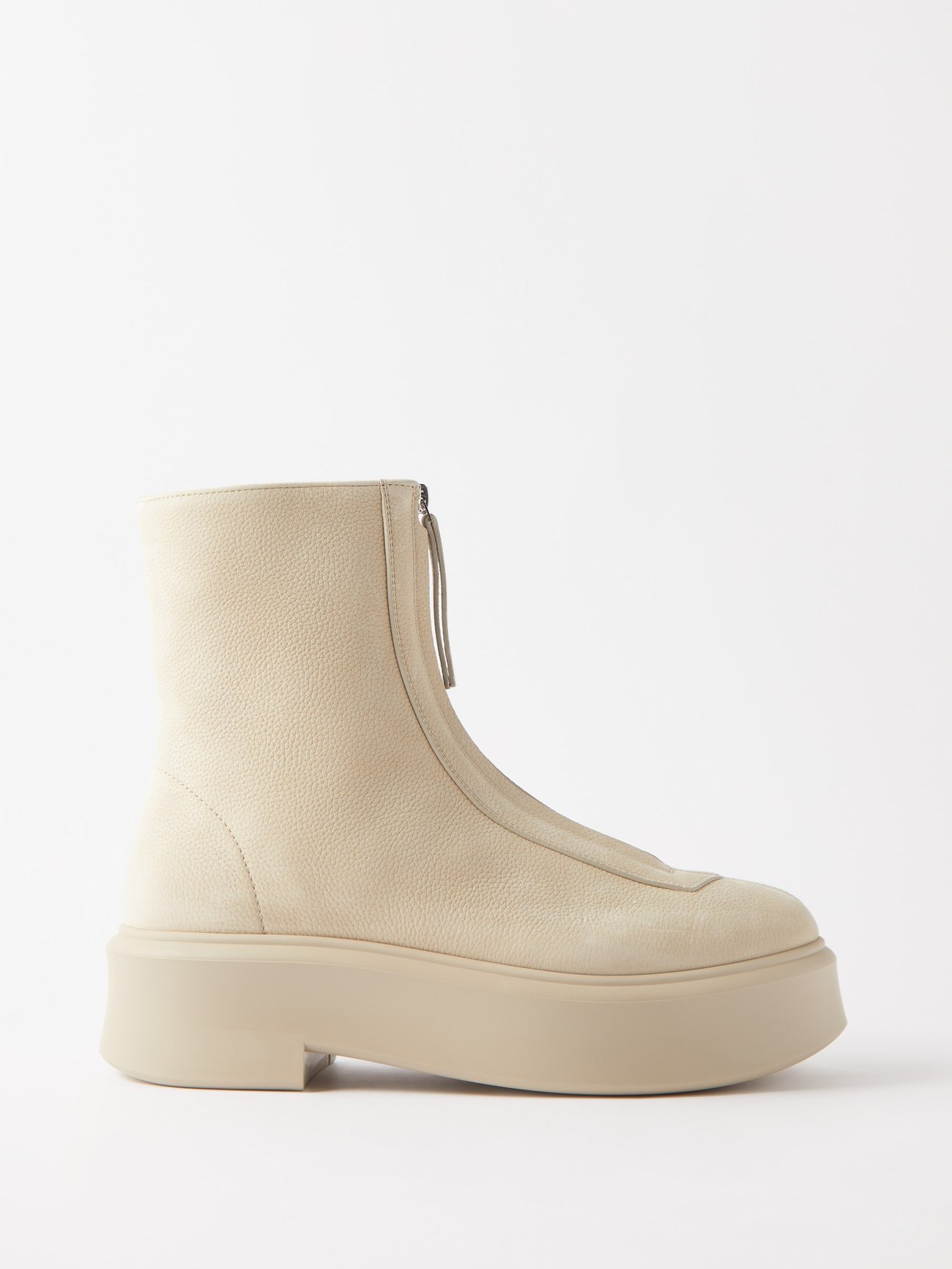
Laces are kind of a scam. Honestly, if you're standing in a mud-slushed driveway at 6:00 AM trying to yank a frozen cotton string through a metal eyelet with numb fingers, you know exactly what I mean. It’s miserable. That’s why zip up winter boots have basically taken over the market, but there’s a massive catch that most "gear guides" won't tell you. People assume a zipper is just a zipper. It isn’t.
Choosing the wrong closure is the fastest way to end up with a literal puddle inside your shoe.
I’ve spent years looking at footwear construction, from the way Goodyear welts handle moisture to why certain YKK zippers fail after three weeks of road salt exposure. If you’re tired of fighting with your footwear, we need to talk about what actually makes a zip-up boot worth the shelf space and why most of the cheap versions you see on Amazon are essentially disposable.
The Massive Zipper Myth: Waterproof vs. Water-Resistant
Here is the truth: a standard zipper is just a series of holes. You’ve got two tracks of teeth and a slider. When it rains or the snow starts melting into that gray, salty slush, a basic zipper acts like a sieve.
Most people buy a pair of boots labeled "waterproof" and feel betrayed when their socks get soaked. Look closer at the zipper. Is there a piece of fabric behind it? That’s called a gusset. If your zip up winter boots don't have a waterproof gusset—a literal fold of material that blocks the gap behind the teeth—you don't have waterproof boots. You have water-resistant boots with a giant leak point.
Brands like Sorel and LaCrosse usually get this right. They use a bellows tongue or a secondary interior flap. But even then, you have to watch out for the zipper quality itself. You want to see the "YKK" branding or a rubberized "aquaguard" coating. If the zipper feels stiff or "toothy" right out of the box, the salt from the sidewalk is going to chew it up by February. I’ve seen $200 boots become useless because a 50-cent zipper slide snapped off in a parking lot.
Warmth Isn't About Thickness Anymore
We need to stop thinking that a "puffy" boot is a warm boot. It’s 2026; we have better tech than just stuffing a boot with cotton batting.
Most high-end zip up winter boots now rely on synthetic insulators like Thinsulate or Primaloft. These are measured in grams. If you see 200g, that’s your standard "car to office" boot. It’s fine for a quick walk, but you’ll freeze if you’re standing still at a kid's hockey game. For real winter—the kind where your nose hairs freeze—you need 400g or 600g.
But here is where it gets weird. If you buy a boot that is too warm and your feet sweat, you're doomed.
Sweat leads to dampness. Dampness leads to conductive heat loss. Suddenly, your $300 boots feel like ice cubes. The zipper actually helps here. One of the best "hacks" for temperature regulation is unzipping your boots halfway once you get into a warm store or onto the train. It lets the moisture escape before it settles into your socks. It’s the "mechanical venting" of the footwear world.
Why Your Soles Are Probably Dangerous
Check the bottom of your boots right now. If the rubber feels hard and plastic-like, you’re basically wearing skates.
Rubber has a "glass transition temperature." This is the point where the material stops being flexible and grippy and starts being a hard, slippery puck. Cheap boots use low-grade rubber that hardens the second it hits 32°F.
Look for Vibram Arctic Grip or Michelin rubber soles. These compounds are engineered to stay soft in sub-zero temperatures. Some even have microscopic glass fibers embedded in the lugs to "bite" into black ice. If you’ve ever done the accidental "cartoon slip" on a patch of frozen meltwater, you know that the zipper doesn't matter if you're laying on your back.
The Problem With Side-Zips vs. Front-Zips
Not all entry points are created equal.
- Side Zips: These are the most common. Great for aesthetics. They allow the front of the boot to stay sleek. However, they put a lot of lateral stress on the zipper track as you walk.
- Front Zips: Think of the classic duck boot style. These are often easier to get into if you have high arches or mobility issues.
- Rear Zips: Avoid these if you can. They look cool in fashion editorials, but the heel is the highest-friction area of the foot. Rear zippers tend to break or cause massive blisters if the interior lining isn't perfect.
Honestly, a side-zip with a secondary lace-up front is the "gold standard." You set the laces once to fit your calf and foot shape, then never touch them again. You just use the zipper for daily entry. It gives you the custom fit of a lace-up with the speed of a slip-on.
Let’s Talk About Salt (The Boot Killer)
Road salt is basically acid for your shoes. It eats through leather, corrodes metal zippers, and dries out rubber until it cracks. If you buy a pair of leather zip up winter boots, you have to treat them.
I’m a big fan of Otter Wax or Sno-Seal. You rub it in, hit it with a hair dryer so the leather soaks it up, and you’ve created a chemical barrier. For the zippers, keep a bit of paraffin wax or even a graphite pencil handy. Rubbing it along the teeth every few weeks keeps the slide moving smoothly even when the salt tries to gunk it up.
If you see a white line forming on your boots, that’s salt. Wipe it off immediately with a 50/50 mix of water and white vinegar. If you leave it, it will permanently "burn" the leather.
Real-World Examples: What to Actually Buy
If you're looking for something that won't fail you, look at what people in professional "on-your-feet" jobs wear.
- Merrell Thermo Rogue: This is basically a hiking boot with a zipper. It’s light, has a Gore-Tex membrane, and uses the Vibram Arctic Grip I mentioned. It’s for people who actually have to walk through woods or deep snow.
- Ugg Adirondack III: Don't laugh. Ugg’s "fashion" boots are hit or miss, but the Adirondack is a tank. It’s rated for -32°C and uses a high-quality interior zipper with a massive gusset.
- Baffin Boots: If you live in the Yukon or Minnesota, Baffin is the king. They are bulky, sure. You’ll look like an astronaut. But you won't lose a toe to frostbite.
Many people lean toward the "fashion-first" brands. I get it. You want to look good at the office. But if the brand doesn't list a temperature rating or the specific type of insulation used, you're paying for a look, not a tool.
The Mobility Factor
One thing nobody talks about is the accessibility of zip up winter boots.
For people with arthritis, back pain, or even just a late-stage pregnancy, bending over to tie laces is a chore. A zipper changes the game. It allows for independence in weather that usually keeps people indoors. When looking for accessibility, look for a "pull tab" on the zipper—a loop of cord or leather that makes it easier to grab if your grip strength isn't 100%.
Buying Checklist: Don't Leave Without Checking These
- The "Tug" Test: Pull the two sides of the zipper apart. Does the track stay closed or does it start to gap? If it gaps under light pressure, it will fail when you're walking.
- The Lining: Feel inside. Is the insulation consistent all the way to the toe? Some brands cheat and only put the "fluff" around the ankle where you can see it.
- Weight: Heavy boots cause fatigue. Modern materials mean a boot shouldn't feel like a lead weight.
- The Gusset: I'll say it again—no gusset, no purchase. Stick your finger behind the zipper. If you can touch your sock, the water can too.
Actionable Steps for Your Next Purchase
Stop buying boots in the morning. Your feet swell throughout the day. If you try on boots at 10:00 AM, they’ll feel tight and uncomfortable by 4:00 PM. Go in the late afternoon.
Bring the socks you actually plan to wear. Don't try on winter boots with thin dress socks. You need the bulk of a wool blend (like Smartwool or Darn Tough) to gauge the true fit. A boot that is too tight cuts off circulation, which—guess what—makes your feet colder. You want enough room to wiggle your toes freely.
When you get your new zip up winter boots home, do the "waterproof test" in the bathtub before you wear them outside. Submerge them up to the bottom of the zipper. If you feel a leak, return them. It’s much easier to get a refund on a clean boot than one that’s been through a salty parking lot.
Check the hardware every November. A quick scrub with an old toothbrush and some wax on the zipper will save you from a "broken boot emergency" in the middle of a blizzard. Good gear isn't just about what you buy; it's about how you keep it from falling apart.