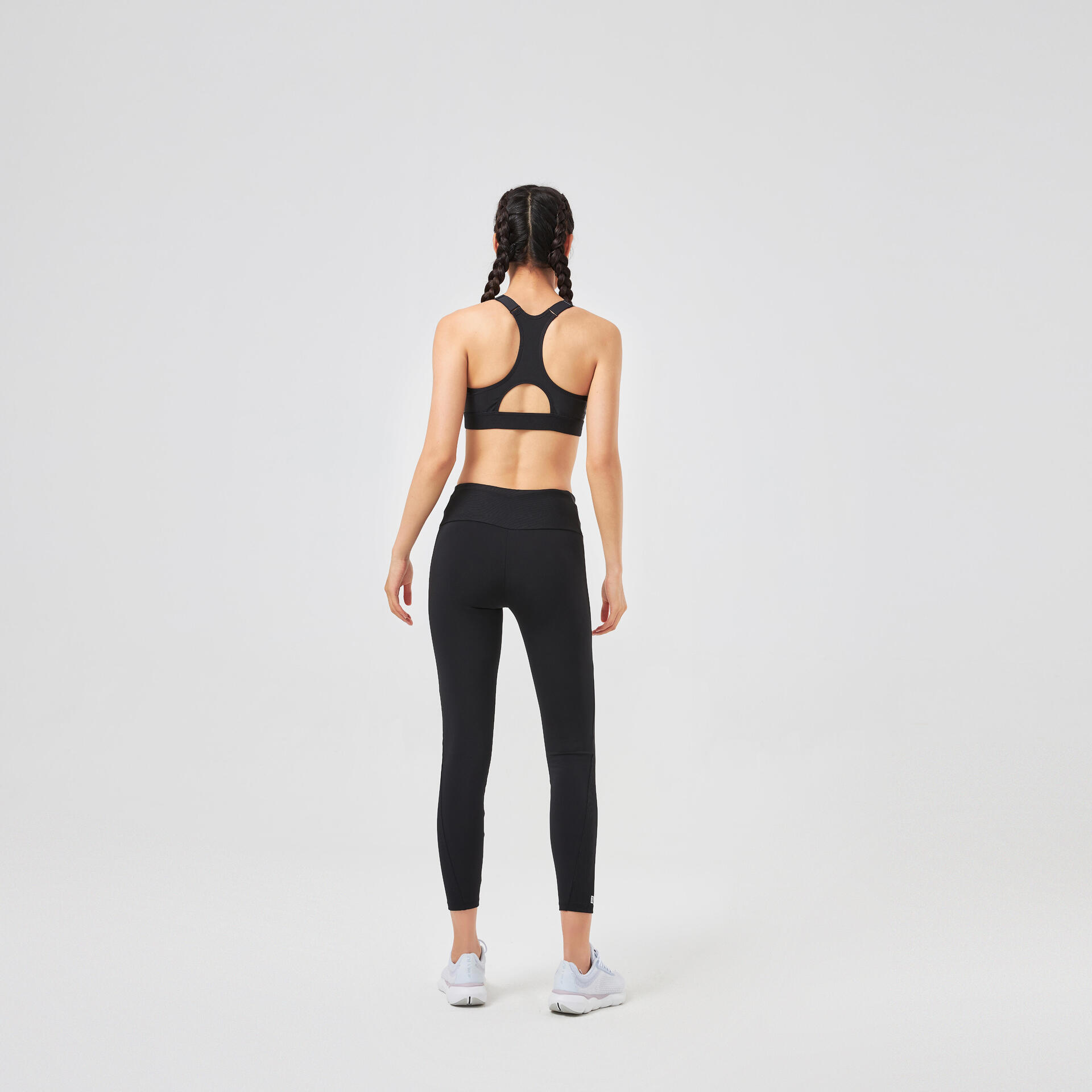
You know that feeling. You just finished a brutal upper body session or a long, sweaty run, and now you have to peel a soaking wet, high-compression sports bra over your head. It’s basically an unscheduled wrestling match with spandex. Sometimes it feels like you might actually dislocate a shoulder just trying to get undressed. Honestly, it’s the worst part of the gym.
That’s exactly why the zip up sports bra has transitioned from a niche post-surgery garment into a mainstream fitness staple. It isn't just about making life easier—though it definitely does that—it’s about how front-loading the closure changes the entire engineering of the support system. When you move the fastening mechanism to the front, you change how the tension is distributed across your back and shoulders.
Why the zip up sports bra is winning the locker room war
Traditional sports bras rely on a "pullover" or "racerback" design that requires high elasticity just to get the thing on. The problem? Elasticity is the enemy of high-impact support. If a fabric stretches enough to go over your head, it’s probably going to stretch when you're doing burpees. By using a zip up sports bra, manufacturers can use stiffer, more high-performance fabrics because the bra doesn't need to expand to fit over your shoulders.
You’ve probably seen brands like Lululemon, Shefit, and Nike leaning heavily into this. Take the Shefit Ultimate Flex, for example. It uses a chunky front zipper combined with velcro straps. It looks aggressive, but it’s one of the few bras on the market that truly stops vertical displacement (the "bounce") for larger cup sizes.
Most people think these are just for "easy on, easy off." That’s a huge part of it, sure. But the real secret is the stability. A front zipper allows for a solid back panel. Without a hook-and-eye closure digging into your spine while you’re doing floor work or bench presses, the pressure is more evenly distributed. It’s a literal relief.
The "Zipper Fail" Myth vs. Reality
I hear this all the time: "What if the zipper pops open during a HIIT class?"
It’s a valid fear. Nobody wants a "wardrobe malfunction" in the middle of a set. However, modern textile engineering has mostly solved this with two specific features: the zipper garage and the safety hook.
- The Garage: That little fabric flap at the top. It keeps the metal from chafing your skin and, more importantly, keeps the zipper pull tucked down so it can't slide.
- The Internal Hook: If you look inside a high-quality zip up sports bra from a brand like Brooks or Under Armour, you’ll see a tiny hook-and-eye closure halfway up the chest. You hook that first to keep the tension off the zipper while you’re pulling it up.
If your zipper is sliding down, it’s usually because you’re wearing a size too small, or the bra lacks that internal hook. Don't blame the tech; blame the fit.
Choosing the right support for your movement
Not all front-zips are created equal. You can’t just grab a cheap one off a clearance rack and expect it to hold up during a marathon.
For yoga or lounging, a seamless zip up sports bra with a plastic zipper is fine. It’s comfy. It’s soft. It feels like a hug. But for anything involving jumping? You need a "locking" zipper. These are designed so that the pull-tab must be flipped down to lock the teeth in place. If the tab is sticking up, it’s in "slide mode."
Compression vs. Encapsulation
This is where things get technical. Most pullover bras are "compression" bras—they just mash everything down. Many zip up sports bra designs utilize "encapsulation." This means they have individual cups that support each breast separately.
According to research from the University of Portsmouth’s Research Group in Breast Health, breasts move in a figure-eight pattern during exercise, not just up and down. Encapsulation (supported by a sturdy front zip) is significantly more effective at reducing this multi-directional movement than simple compression.
The accessibility factor nobody talks about
We need to be real about who these bras are for. Yes, they’re for athletes. But the zip up sports bra is a massive win for adaptive clothing.
For anyone with limited shoulder mobility, arthritis, or someone recovering from breast surgery (like a mastectomy or augmentation), a rear-closure bra is an impossibility. A front-zip allows for independence. It’s one of those rare instances where a "trend" in the fitness world actually makes life significantly better for people with different physical needs.
Medical professionals often recommend front-closure bras post-op because they don't require the patient to lift their arms. It’s a functional necessity that just happens to work incredibly well for a 5-mile run, too.
How to make it last (Don't kill the elastic)
You spent $60 to $80 on a good bra. Don't ruin it in the dryer.
Heat is the absolute killer of Lycra and Spandex. When you toss your zip up sports bra in a high-heat dryer cycle, the tiny elastic fibers snap. Over time, the bra loses its "rebound," and suddenly that high-impact support feels like a low-impact lounge bra.
- Zip it up before washing. This prevents the teeth from snagging your other clothes.
- Use a mesh bag. It keeps the straps from getting tangled around the agitator.
- Air dry only. Hang it by the bottom band, not the straps, to prevent stretching.
Common misconceptions about front-zips
Some people think a zip up sports bra creates a "unibrow" look or a "uniboob" silhouette. While some lower-end models do this, high-performance versions like the Enell Sport (a favorite of Oprah for years) focus on extreme containment. It might not be the most "fashion-forward" look, but it’s the gold standard for high-impact support for DD+ athletes.
Another weird myth? That the zipper is uncomfortable against the skin. If you can feel the zipper, the bra is poorly made. A quality zip up sports bra will always have a wide fabric placket behind the zipper so the metal never actually touches you.
What to look for when shopping
- A wide bottom band: This provides 80% of the support. The zipper just keeps the "cup" area secure.
- Adjustable straps: Because your torso length isn't the same as everyone else's.
- Fabric weight: It should feel substantial, not like t-shirt material.
The Verdict on the Front-Zip Trend
Is it a gimmick? Kinda, if you're only buying it for the aesthetic. But for the vast majority of people who struggle with the "sweaty bra dance" or need actual, structural support that doesn't rely on thin elastic, the zip up sports bra is a legitimate evolution in athletic wear.
It’s about taking the struggle out of the beginning and end of your workout. You shouldn't have to burn 50 calories just trying to take off your gear.
Next Steps for Your Gear Kit:
- Check your current rotation. If your pullover bras are more than six months old and you use them twice a week, the elastic is likely compromised.
- Test the "Lock." If you buy a zip up sports bra, pull the zipper halfway up and flip the tab down. Give the bra a tug. If it slides, return it. It won't hold up during a run.
- Measure yourself properly. Don't guess. Use a soft tape measure to find your ribcage circumference and your bust peak. Most front-zip brands have specific sizing charts that don't always align with standard "Small/Medium/Large" labels.
Investing in a high-quality front-closure system isn't just a luxury; it’s a way to protect your Cooper’s ligaments (the connective tissue in the breast) from irreversible stretching. Take the support seriously, even if the "easy-on" part is what gets you through the door.