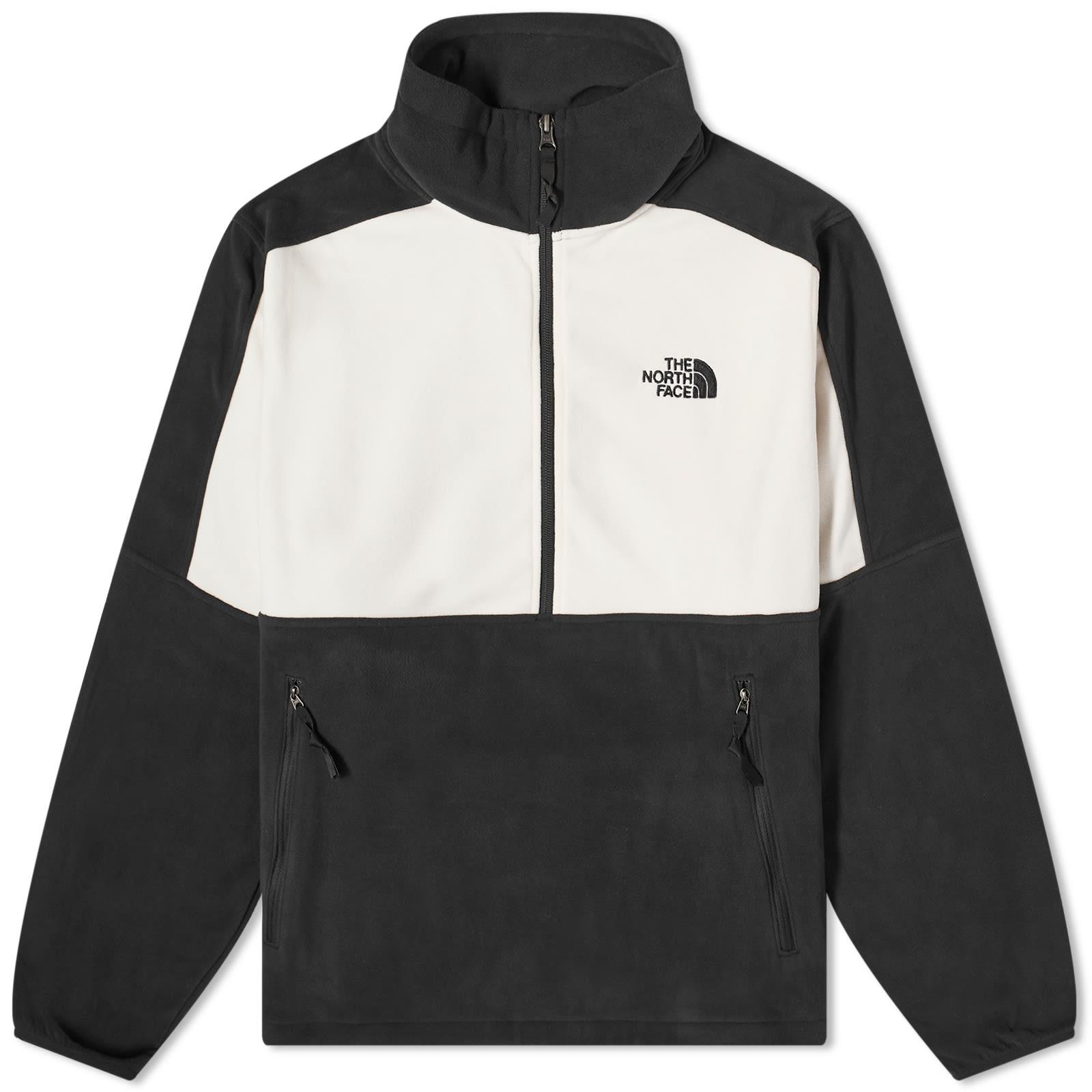
Honestly, it’s a bit ridiculous. We’ve seen a thousand techwear trends come and go, yet the zip up north face fleece is still the undisputed king of the coffee run. It’s been decades. Why? It isn't just about the logo on the left chest, although that’s part of the cult appeal. It’s the fact that these things are built like tanks. You probably know someone who is still wearing a Denali they bought in 2008, and it looks exactly the same, maybe just a little more "lived in."
The North Face didn't just stumble into this. They basically codified the outdoor-to-street pipeline. Back in 1988, when the original Denali was released as a zip-in fleece for the Mountain Jacket, nobody thought it would become a status symbol in Harlem or a uniform on Ivy League campuses. It was just gear. Heavy, recycled Polartec 300 series fleece designed to keep climbers from freezing their toes off. But the design—that specific recycled polyester fleece paired with abrasion-resistant nylon overlays—hit a nerve. It looked rugged. It felt substantial.
The Denali vs. Everything Else
If you're looking for a zip up north face fleece, you're usually choosing between the heavyweight Denali and the lighter, more versatile Osito or TKA Glacier. Most people get this wrong. They buy the heaviest one thinking "warmer is better," then they realize they're sweating bullets the second they step into a heated subway car or a grocery store.
The Denali is a beast. It’s got that iconic color-blocking. The chest pockets are actually useful, originally designed to be accessible while wearing a climbing harness. But let's be real: most of us are using those pockets for AirPods and receipts. The nylon overlay on the shoulders isn't just for aesthetics either; it’s there to prevent your backpack straps from pilling the fleece. Smart. Simple.
Then you have the TKA 100. It’s thin. Like, really thin. It’s the kind of zip up north face fleece you throw in a gym bag or use as a mid-layer under a hard shell when you're actually hiking. It doesn't have the "clout" of the Denali, but for actual high-output activity, it's arguably better because it breathes. If you're sitting at a desk and your office is always 65 degrees, the TKA is your best friend.
What about the Osito?
If you’ve ever touched a fleece and thought it felt like a literal cloud, it was probably an Osito. It’s high-pile. Silky. It’s a favorite for a reason, but it has a massive downside: it attracts lint and pet hair like a magnet. If you have a white dog and a black Osito, you've basically signed up for a second full-time job with a lint roller.
Why the Resale Market is Obsessed
Go on Grailed or Depop. Search for "vintage North Face fleece." You'll see prices that seem insane for used polyester. The "Made in USA" vintage tags are the holy grail for collectors. Collectors like Organiclab.zip have turned these archival pieces into high art.
There's a specific texture to the old Polartec that the new recycled versions sometimes lack. The new ones are better for the planet, sure, but the old ones have this structural stiffness that defines the silhouette. A vintage zip up north face fleece hangs differently. It’s boxy. It’s unapologetic.
- Check the zippers. The North Face uses YKK. If it feels flimsy or catches, it might be a knockoff.
- Look at the logo embroidery. On real fleece, the "half dome" lines are crisp and separate. On fakes, they often bleed together.
- Feel the weight. A real Denali is heavy. If it feels like a cheap blanket from a pharmacy, walk away.
Sustainability or Marketing?
The North Face has been pushing their "Circular Design" initiative hard. Basically, they want your old zip up north face fleece back when you're done with it so they can tear it apart and make new ones. It’s a great sentiment. Most of their current fleece line is made from 100% recycled polyester.
But there’s a nuance here. Synthetic fleece, no matter how "recycled" it is, sheds microplastics in the wash. That’s the dirty secret of the outdoor industry. If you want to be a responsible owner, buy a washing bag like a Guppyfriend. It catches the fibers before they head into the water system. Or, honestly? Just don't wash it that often. Fleece doesn't hold odors the way cotton does. Hang it up. Air it out. Spot clean the nylon panels.
Technical Specs You Actually Care About
When you're browsing the site, you'll see terms like "DWR finish" and "300-weight."
DWR stands for Durable Water Repellent. It’s a chemical coating. It makes water bead up and roll off. On a zip up north face fleece, this is usually only on the nylon chest and shoulder panels. Don't expect to stand in a rainstorm and stay dry. You'll get soaked. The fleece itself is like a sponge for water unless it’s a specific "Windwall" version.
Weight refers to the thickness of the fabric per square meter.
- 100-weight: Base layer or summer nights.
- 200-weight: The sweet spot for daily wear.
- 300-weight: The Denali. Basically a jacket.
The Fit Dilemma
North Face sizing is... inconsistent. One year a Medium fits like a tent, the next it’s tailored. Generally, the "Relaxed Fit" on the Denali is very true to its 90s roots. It’s short in the body and wide in the shoulders. If you want that modern, slim look, you have to size down, but then the sleeves might end up too short.
I’ve found that the "Standard Fit" models, like the Canyonlands, are much more predictable. They have a bit of stretch—usually around 4% to 7% elastane. That makes a huge difference if you're actually moving your arms or, you know, reaching for a latte on a high shelf.
Beyond the Denali: The Hidden Gems
Everyone talks about the big names, but the zip up north face fleece lineup has some weird, cool outliers. The Radium Hi-Loft is one. It looks like something a stormtrooper would wear under their armor. It uses a "grid" pattern to trap heat in little pockets while letting sweat escape through the lines in the grid. It’s technical. It’s ugly-cool.
Then there’s the Shelbe Raschel. It’s windproof. Most fleece lets wind whistle right through the fibers, leaving you shivering. The Shelbe has a bonded lining that stops the wind. It’s the "adult" choice for people who care more about warmth than "Gorpcore" aesthetics.
How to Style It Without Looking Like You’re Going Camping (Unless You Are)
The trick to wearing a zip up north face fleece in the city is contrast. If you wear it with hiking boots and cargo pants, you look like you’re lost on the way to the Appalachian Trail.
Try pairing a black-on-black Denali with wide-leg trousers and a clean pair of loafers. Or throw a TKA Glacier under a wool overcoat. The texture of the fleece peeking out from a formal coat is a classic "insider" move. It says you know how to be comfortable, but you aren't lazy.
Actionable Steps for Your Next Purchase:
- Identify your use case. Are you layering under a shell for skiing? Get a TKA 100. Are you walking the dog in 40-degree weather? Get a Denali.
- Check the "Circular Design" tag. If you care about resale value or the environment, these pieces are designed to be easily disassembled and recycled later.
- Size for the silhouette. For a vintage look, go true to size and embrace the boxiness. For a professional look, size down in a smooth-face fleece like the Canyonlands.
- Invest in a Guppyfriend bag. Stop the microplastics. It's a small price to pay to keep your fleece from polluting the ocean every time it hits the rinse cycle.
- Don't ignore the "smooth-face" options. They don't look like traditional fleece—they look more like a heavy jersey—but they are way more durable and don't pill as easily as the fuzzy stuff.
The reality is that a zip up north face fleece is one of the few items in your closet that will likely outlive your current phone, your current car, and maybe even your current job. It’s an investment in a specific kind of American design heritage. Whether you're actually summiting a peak or just trying to survive a drafty apartment, it works. It just works.