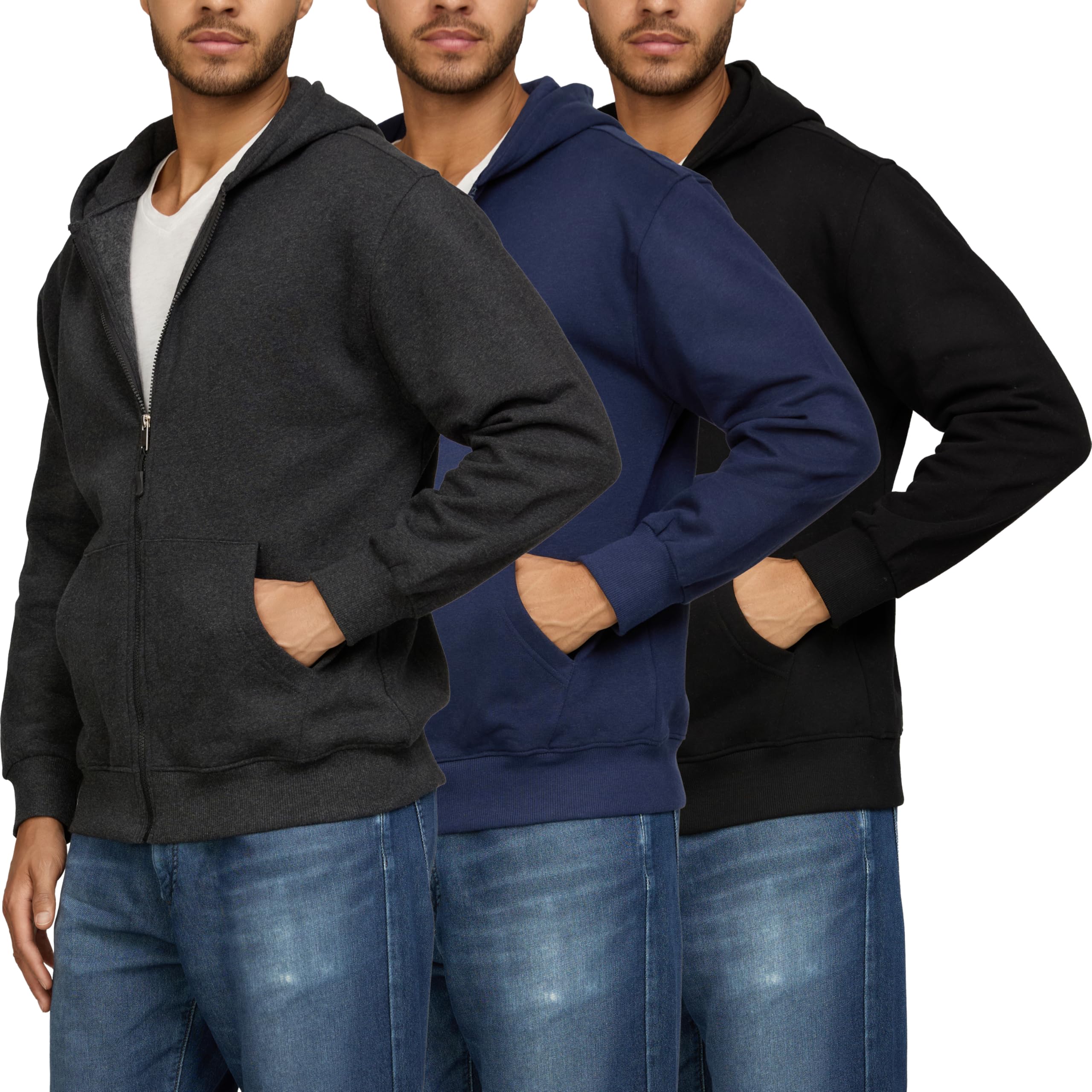
Let’s be real. Most of the zip up mens hoodies sitting in your closet right now are probably doing you zero favors. You bought them because they were easy. Maybe they were on sale at a big-box retailer or you grabbed a cheap one during a panicked airport layover. Now, they've lost their shape, the zipper waves like a restless ocean, and you look more like a slumped-over teenager than a grown man who knows how to dress. It's frustrating.
Fashion is weirdly elitist about the hoodie. High-end designers try to tell us that a "true" gentleman only wears cashmere overcoats, while the streetwear crowd insists you need to drop $400 on a logo. They’re both wrong. The zip-up is the Swiss Army knife of menswear. It’s the layer that actually works when the weather can't make up its mind. But there is a massive difference between a hoodie that functions as a gym rag and one that actually makes you look put together.
The Fabric Trap: It Is Not Just Cotton
Most people assume a hoodie is just "sweatshirt material." That’s a mistake. When you’re looking for quality zip up mens hoodies, you have to look at the GSM—grams per square meter.
If a hoodie feels light and flimsy, it’s likely under 250 GSM. That's fine for a summer breeze, but it’ll look like a wrinkled mess after three washes. You want something in the 350 to 400 GSM range. This is "heavyweight" territory. Brands like Camber USA or American Giant have built entire reputations on this thickness. It provides a structured silhouette. It doesn't cling to your midsection in that unflattering way thin polyester blends do.
Speaking of polyester, check the tag. A 100% cotton hoodie is the gold standard for breathability and aging. It gets better over time. However, a 10% to 20% polyester blend isn't the enemy; it actually helps the garment hold its shape and prevents it from shrinking into a crop top the first time it hits a dryer. Just stay away from those 50/50 blends that pill and itch. Nobody has time for that.
French Terry vs. Brushed Fleece
You’ve seen these terms. You might not know what they mean.
French Terry has those little loops on the inside. It’s moisture-wicking and stays relatively flat. It’s the "classy" choice. If you’re wearing a zip-up under a denim jacket or a casual blazer (yes, people do that, and it works), French Terry is your best friend because it isn't bulky.
Brushed Fleece is that fuzzy, soft interior that feels like a hug. It’s warmer. It’s also bulkier. It’s perfect for a Sunday morning coffee run or a cold garage workout. But be warned: that fuzziness eventually mats down.
The Hardware: Where Cheap Hoodies Go To Die
The zipper. It’s literally in the name of the product, yet it’s often the first thing to break.
If you see a plastic zipper on a $60 hoodie, put it back. You want metal. Specifically, look for YKK zippers. YKK is a Japanese company that produces roughly half of the world's zippers. They are the industry standard for a reason. If a brand went through the trouble of sourcing YKK hardware, they probably didn't skimp on the stitching either.
Double-way zippers—the ones that allow you to unzip from the bottom as well as the top—are a game changer for zip up mens hoodies. Why? Because when you sit down, a standard zip-up bunches up at your stomach, making you look like you have a massive gut. Being able to pull that bottom zipper up a few inches lets the fabric drape naturally. It’s a small detail that separates the pros from the amateurs.
Getting the Fit Right (Without Looking Like a Tent)
We need to talk about the "shoulder drop."
Modern fast fashion loves an oversized fit. That’s cool if you’re 19 and into the "skater" aesthetic. For everyone else, the shoulder seam should sit right where your arm meets your torso. If it’s hanging halfway down your tricep, you’re going to look sloppy.
The Cuff and Hem Test: The ribbing at the wrists and the waist should be firm. If you push your sleeves up to your elbows and they immediately slide back down to your wrists, the ribbing is cheap. It should have some "snap back." A good zip-up should stay put.
Color Theory for the Minimalist
Stop buying neon. Just stop.
If you want a wardrobe that actually works together, your first three zip up mens hoodies should be:
- Oxford Grey: The undisputed king. It goes with everything.
- Navy Blue: Slightly more formal. Looks great with tan chinos.
- Black: Sleek, hides coffee stains, and works for a night out.
Once you have those basics covered, sure, go for a forest green or a burgundy. But those three neutrals will handle 90% of your life.
Why the Hood Shape Matters
Have you ever put on a hoodie and the hood just sits there like a limp pancake? Or worse, it’s so small it looks like a swimming cap?
A well-made hoodie has a "three-piece" or "contoured" hood. This means it’s constructed from multiple panels of fabric so it maintains a round shape even when it’s down. It should have some weight to it. If the hood is too light, it won't stay centered, and you'll spend all day tugging at your collar.
How to Wash It Without Ruining It
Hard truth: The dryer is the enemy of all zip up mens hoodies.
The heat destroys the elastic in the ribbing and causes the zipper tape to shrink at a different rate than the cotton fabric. This is what causes that "wavy zipper" effect that looks so terrible.
The Expert Method:
- Zip it up all the way (this prevents the teeth from snagging the fabric).
- Turn it inside out.
- Wash on cold.
- Hang dry.
If you absolutely must use a dryer, use the lowest heat setting possible and take it out while it’s still slightly damp.
The Versatility Factor
Think about the "High-Low" mix.
You can wear a high-quality grey zip-up hoodie over a crisp white t-shirt, paired with dark denim and clean white leather sneakers. That’s a classic look. You can also throw it under a leather biker jacket for a rugged, layered vibe. The mistake is treating it like an afterthought. Treat it like a piece of knitwear—like a sweater—and you'll start styling it with more intention.
Actionable Steps for Your Next Purchase
Buying a new hoodie shouldn't be a gamble. Follow these specific steps to ensure you’re getting something that lasts.
- Check the Weight: Look for "Heavyweight" or a GSM count of 350+. Feel the fabric between your fingers; it should feel substantial, not thin or gauzy.
- Inspect the Zipper: Look for the YKK stamp on the pull tab. Test the glide. If it catches or feels "scratchy," it’s a red flag.
- Test the "Snap": Stretch the wrist cuffs. They should immediately return to their original shape. If they stay stretched out, the hoodie will look "blown out" within a month.
- Look at the Seams: Turn the garment inside out. You want to see "flatlock" stitching. This is where the seams are sewn flat against the fabric, which prevents chafing and adds massive durability to the construction.
- Evaluate the Hood: Ensure it's double-lined. A single layer of fabric on the hood usually indicates a cheaper manufacturing process and won't hang correctly on your back.
- Verify the Blend: Aim for at least 80% cotton. If the polyester content is higher than 30%, expect the garment to pill (those annoying little balls of fuzz) and hold onto body odors more aggressively.